What Are the Advantages of SSAW Steel Pipes?
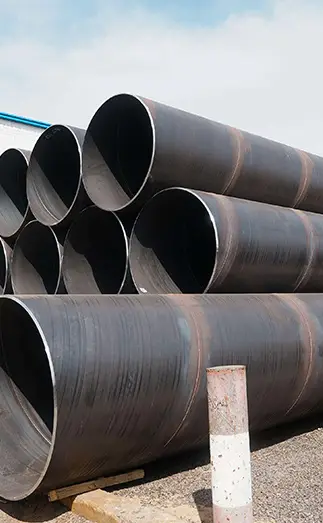
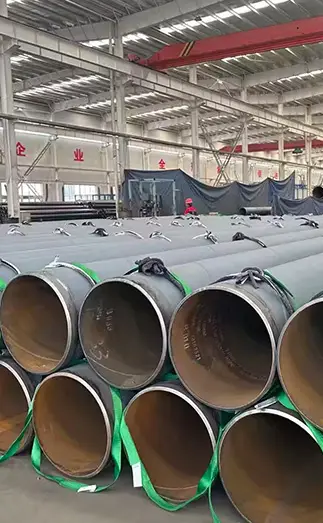
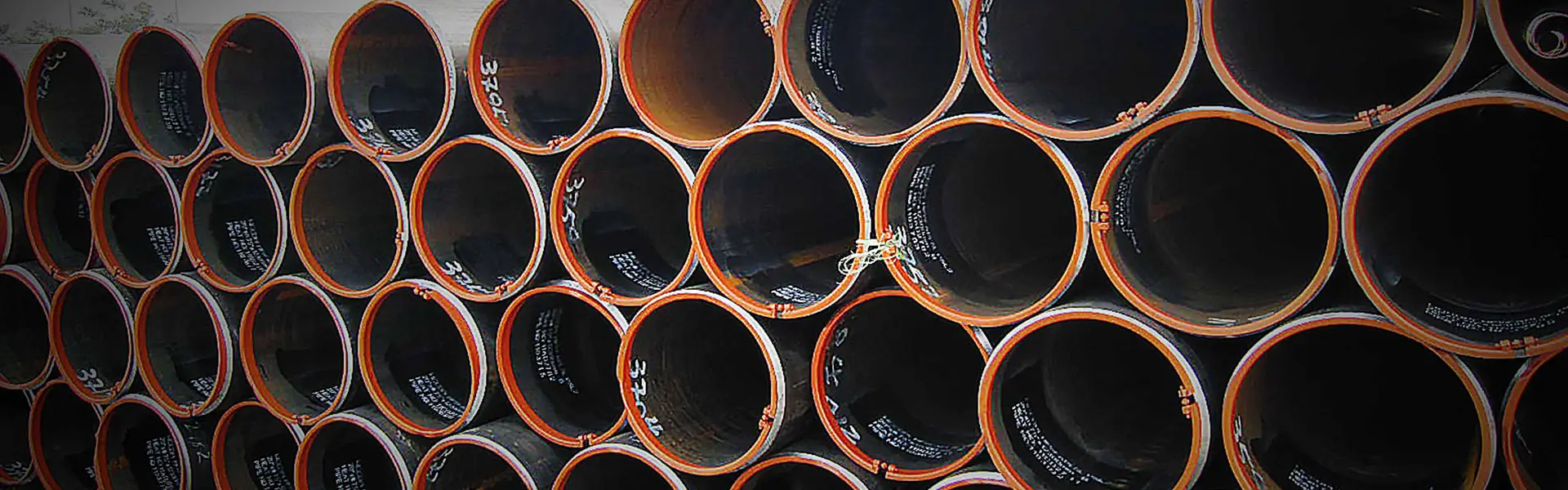
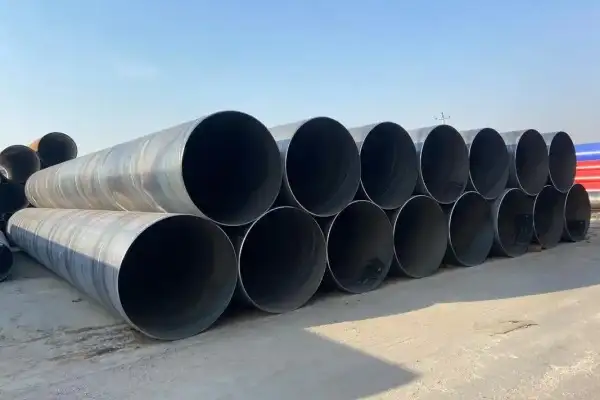
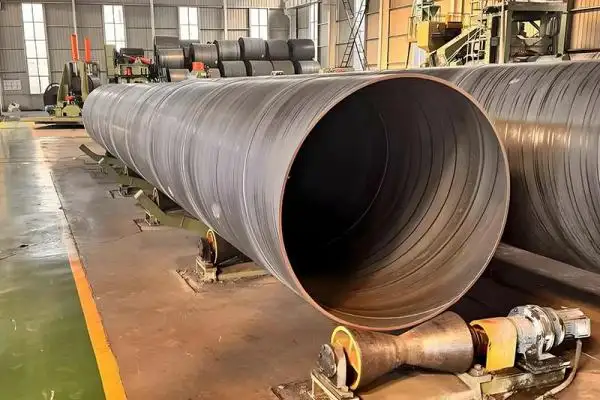
SSAW steel pipes (Spiral Submerged Arc Welded Steel Pipes) are manufactured by forming steel strip into a spiral shape and welding the helical seam using submerged arc welding. They are widely used in water transmission, infrastructure, piling, and other industrial projects that require large-diameter steel pipes.
The main advantages of SSAW steel pipes include flexible diameter options, cost-efficient production, continuous spiral welding, high production efficiency, adaptability to different loading conditions, and efficient material utilization. Actual performance depends on the pipe specifications, steel grade, manufacturing quality, and project requirements.
1. Wide Diameter Range and Flexible Specifications
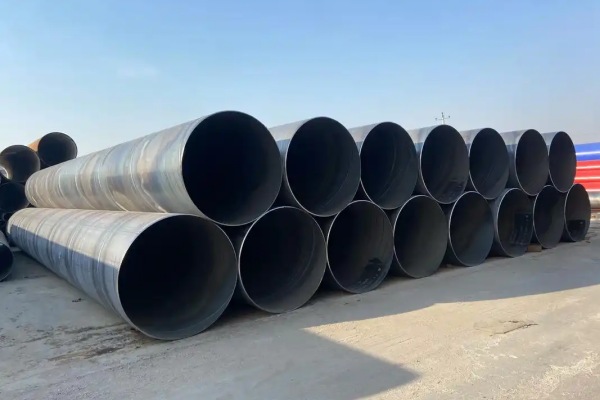
One of the main advantages of SSAW steel pipes is their suitability for manufacturing large-diameter pipes. The supplied reference range of 8–100 inches covers a broad range of potential project requirements.
Spiral forming allows manufacturers to produce pipes in various diameters and wall thicknesses, subject to production equipment and technical specifications. This flexibility makes SSAW pipes suitable for large-scale water transmission systems, infrastructure projects, piling, and industrial pipelines.
The final diameter and wall thickness should be selected according to the design requirements and applicable standards.
2. Cost Efficiency for Large-Diameter Applications
SSAW steel pipes can offer economic advantages in suitable large-diameter applications. Continuous coil feeding and spiral forming support efficient production, which may help reduce manufacturing costs compared with certain LSAW or seamless pipe alternatives of comparable dimensions.
However, the actual cost difference depends on pipe diameter, wall thickness, steel grade, order volume, testing requirements, and delivery conditions. Buyers should compare products based on the complete technical specification rather than manufacturing method alone.
3. Continuous Spiral Weld and Structural Integrity
SSAW pipes feature a continuous helical weld along the pipe body. When the pipe is manufactured and inspected according to the applicable requirements, the welded seam contributes to the overall structural integrity of the finished pipe.
The spiral seam has a different orientation relative to the pipe axis than the longitudinal seam in LSAW pipes. Stress distribution and weld performance depend on loading direction, pipe geometry, material properties, weld quality, and design conditions.
For pressure-service applications, weld inspection and compliance with the specified manufacturing standard are essential.
4. High Production Efficiency
SSAW pipe manufacturing uses continuous steel coil feeding and spiral forming. This production arrangement supports efficient processing and can accommodate high-volume orders within the capabilities of the production line.
For large infrastructure projects requiring substantial quantities of steel pipe, efficient production can help suppliers coordinate manufacturing schedules and manage order delivery.
Actual lead times depend on order quantity, dimensions, material availability, inspection scope, and production capacity.
5. Adaptability to Different Loading Conditions
SSAW steel pipes can be designed for applications involving different structural and operational loads. Depending on the pipe design and installation conditions, they may be used in projects exposed to soil pressure, external loads, hydraulic conditions, and other service demands.
For projects in seismic zones or areas with non-uniform loading, suitability must be established through engineering design. Pipe geometry, steel grade, wall thickness, weld integrity, connections, and soil or foundation conditions all influence performance.
SSAW pipes should therefore be selected according to the project's design calculations and applicable requirements rather than assumed to be inherently superior under every loading condition.
6. Efficient Material Utilization
Spiral forming allows steel strip to be converted into a cylindrical pipe through a continuous forming process. This can support efficient material utilization and help limit waste when the strip width, forming parameters, and required pipe dimensions are properly matched.
Material utilization depends on production planning, cutting allowances, edge preparation, dimensional requirements, and manufacturing controls. Efficient use of steel can contribute to production cost management, particularly for large-volume orders.
SSAW Steel Pipes vs. Other Pipe Types
SSAW, LSAW, and seamless pipes are manufactured using different processes and serve overlapping but distinct applications.
|
Comparison Factor
|
SSAW Pipe
|
LSAW Pipe
|
Seamless Pipe
|
|
Manufacturing Process
|
Spiral forming and submerged arc welding
|
Longitudinal forming and welding
|
Formed without a welded seam
|
|
Typical Strength
|
Depends on material, dimensions, weld quality, and design
|
Depends on material, dimensions, weld quality, and design
|
Depends on material, dimensions, heat treatment, and design
|
|
Large-Diameter Production
|
Well suited to many large-diameter applications
|
Well suited to large-diameter applications
|
Available sizes depend on manufacturing capabilities
|
|
Production Efficiency
|
Continuous coil feeding supports efficient production
|
Depends on forming and welding process
|
Depends on billet processing and pipe dimensions
|
|
Cost Considerations
|
Can be economical for suitable large-diameter orders
|
Depends on specification and production route
|
Depends on size, grade, and manufacturing requirements
|
|
Typical Applications
|
Water transmission, piling, infrastructure, and industrial pipelines
|
Oil and gas pipelines and other specified applications
|
High-pressure, high-temperature, and other applications where seamless pipe is specified
|
No single pipe type is best for every project. Selection should be based on the applicable standard, service conditions, dimensions, inspection requirements, and total project cost.
Conclusion
SSAW steel pipes offer several potential advantages, including a wide diameter range, cost efficiency for suitable projects, continuous spiral welding, efficient production, adaptability to engineered loading conditions, and effective material utilization.
For large-scale industrial and infrastructure projects, the right SSAW pipe specification depends on the required dimensions, steel grade, applicable standards, service environment, and quality requirements. Evaluating these factors together helps project owners and procurement teams choose a suitable piping solution.
FAQ
1. What are the main advantages of SSAW steel pipes?
Key advantages include large-diameter flexibility, potentially competitive production costs, efficient manufacturing, and effective material utilization.
2. What diameter range can SSAW pipes cover?
The supplied reference range is 8–100 inches. Actual availability depends on manufacturing equipment, wall thickness, material, and project specifications.
3. Are SSAW pipes cheaper than LSAW pipes?
They can be more economical for certain specifications, but the cost difference depends on dimensions, material grade, order volume, testing, and delivery requirements.
4. Are SSAW pipes suitable for oil and gas projects?
They may be suitable when the pipe grade, manufacturing standard, weld quality, and inspection requirements meet the project's design and service conditions.
5. How do I choose the right SSAW steel pipe?
Confirm the outside diameter, wall thickness, steel grade, applicable standard, operating conditions, inspection requirements, and total project cost.


 English
 Español
 Français
 بالعربية