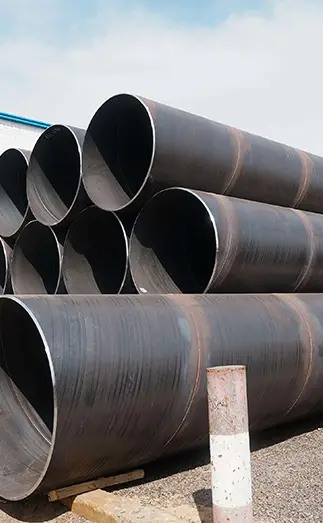
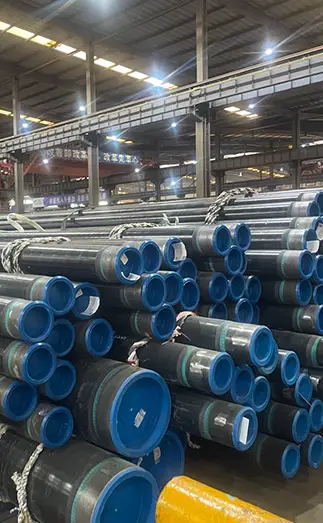
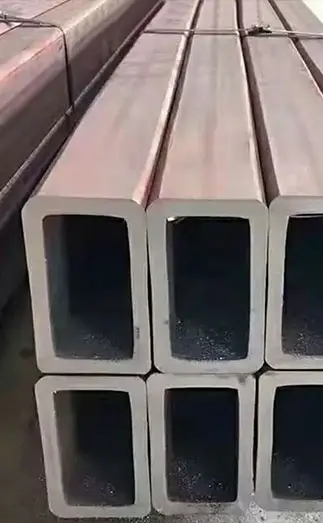
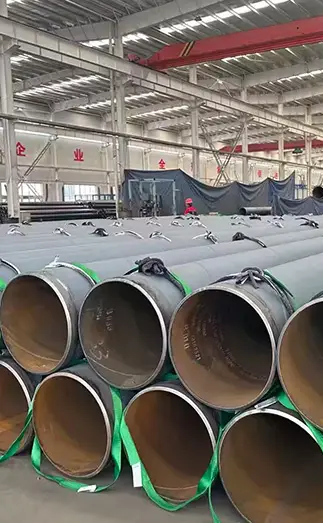
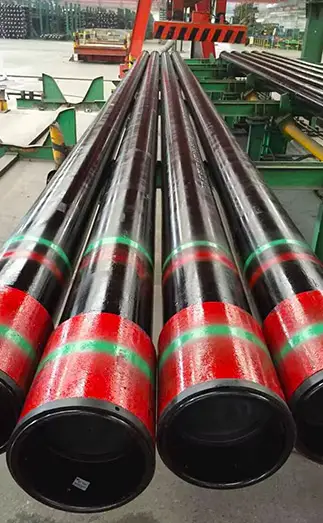
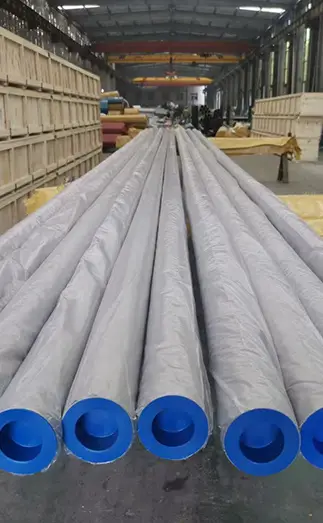
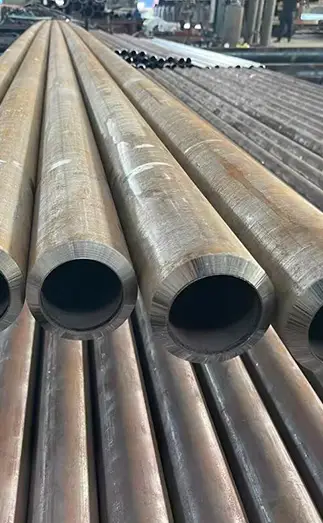
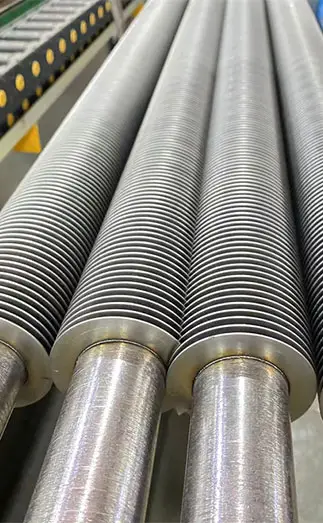
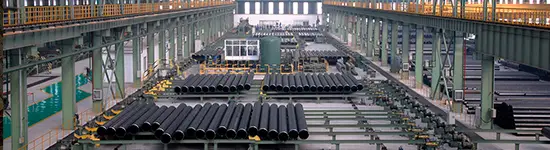
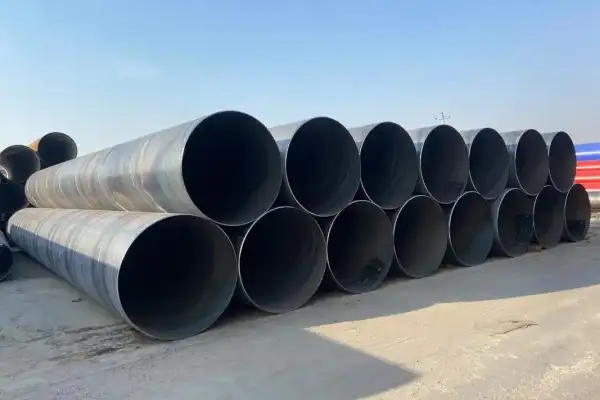
Seamless pipes are widely used in construction, power generation, oil & gas, chemical processing, shipbuilding, and infrastructure projects.
To meet complex routing and installation requirements, seamless pipes often require bending and forming. The bending process directly affects pipe strength, dimensional accuracy, and long-term service performance.
This article provides a structured overview of seamless pipe bending definitions, specifications, common bending methods, bending radius rules, influencing factors, and quality control points.
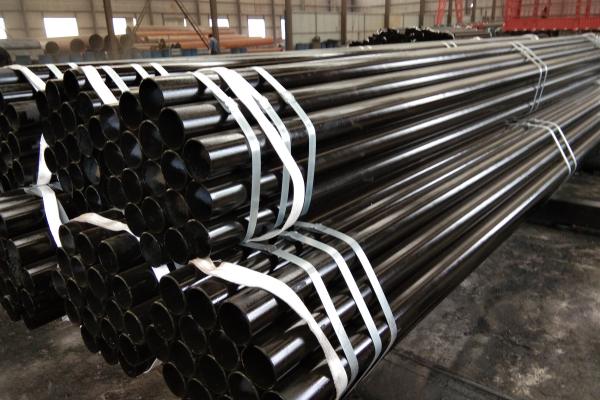
What Is Seamless Pipe Bending?
Pipe bending is the process of forming straight metal pipes (such as seamless steel pipes) into specific curved geometries—such as arcs, elbows, U-shapes, or complex profiles—using mechanical force, hydraulic pressure, or thermal energy.
Seamless pipe bending is commonly used to manufacture:
Pipe elbows and coils
Irregular pipe components
Custom pipeline layouts for confined spaces
Seamless Pipe Bend Specifications (Typical Range)
|
Item
|
Specification
|
|
Outside Diameter
|
Seamless pipe bends: 1/2"–24"
ERW / Fabricated / Welded bends: 2"–36"
|
|
Bending Radius
|
3D, 5D, 10D, or custom radius
|
|
Bending Angle
|
From 1.5D bends up to 180°
|
|
Wall Thickness
|
3–40 mm / SCH5–SCH160, STD, XS, XXS
|
|
Materials
|
Carbon steel, stainless steel, low-temperature steel, alloy steel, duplex & super duplex, nickel alloys
|
Seamless Pipe Bending Processes
1. Cold Bending Process
Cold bending is performed at ambient temperature and is widely used for precision pipe forming.
Key advantages:
No oxidation or scale formation
Better surface finish
High dimensional accuracy
Precise control of bending radius and angle
Common Cold Bending Methods
- Roll Bending
Uses three rollers (two driven, one pressure roller)
Suitable for large-radius bends
Continuous bending with high productivity
- Press Bending
Uses a press machine and bending die
Suitable for U-shaped or V-shaped bends
Lower efficiency; ideal for small batches
- Stretch Bending
Combines axial tension and bending moment
Effectively reduces springback
High bending accuracy for precision applications
2. Hot Bending Process
Hot bending heats the seamless pipe to improve plasticity before forming.
It is suitable for small bending radii and thick-walled pipes.
Common Hot Bending Methods
- Medium-Frequency Induction Heating Bending
Localized heating using induction coils
Fast, uniform, and controllable heating
High bending accuracy and consistent quality
Widely used for industrial pipeline bends
- Flame Heating Bending
Uses oxy-fuel flame heating
Low equipment cost
Uneven heating and lower dimensional accuracy
Suitable for low-precision or on-site work
3. Other Seamless Pipe Bending Technologies
- Hydraulic Bending
High bending force via hydraulic cylinders
Suitable for large-diameter, thick-wall pipes
- CNC Pipe Bending
Computer-controlled automated bending
High repeatability and complex geometry capability
Ideal for mass production and precision pipe systems
Bending Radius of Seamless Pipes
The bending radius is a critical parameter affecting pipe integrity and performance.
1. Minimum Bending Radius Rule
The minimum bending radius depends on pipe material:
|
Material
|
Radius Coefficient
|
|
Carbon Steel
|
1.5 – 2.5
|
|
Stainless Steel
|
2.0 – 3.0
|
|
Alloy Steel
|
2.5 – 3.5
|
Formula:
Minimum Bending Radius = Coefficient × Pipe Outside Diameter
Example:
Φ50 mm carbon steel seamless pipe →
Minimum radius = 2.0 × 50 = 100 mm
Additional rules:
Thin wall (≤5 mm) or large diameter (≥200 mm): increase coefficient by 0.5–1.0
Cold bending radius should be 0.3–0.5 larger than hot bending radius due to lower plasticity
2. Influence of Bending Radius
Too small radius → wall thinning (>10%), cracks, internal wrinkling
Too large radius → increased space occupation, higher cost, assembly deviation
For high-pressure or critical pipelines, bending radius should be verified by bending tests and inspection.
Factors Affecting Seamless Pipe Bending Degree
1. Material Properties
Different materials exhibit different strength, ductility, and toughness, directly influencing bendability.
2. Pipe Diameter
Larger diameters require higher bending force and larger bending radii.
3. Wall Thickness
Thinner walls bend more easily but are more prone to collapse or cracking if improperly controlled.
Seamless Pipe Bending Processing Tips
1. Proper BendingRadius
Larger radius → lower stress, easier forming
Smaller radius → higher risk of defects
2. Proper Lubrication
Reduces friction and surface damage
Common lubricants: graphite, machine oil
3. Control Bending Speed
Too fast → cracks and wrinkles
Too slow → low productivity
4. Stress Relief After Bending
Heat treatment or mechanical vibration
Improves dimensional stability and service life
Key Quality Control Points
Material selection must match application requirements
Bending radius control typically ≥ 3–5 × OD
Die design quality directly affects bending accuracy
Inspection items include angle, radius, wall thinning, surface defects, and NDT if required
Summary
Seamless pipe bending involves multiple forming technologies, each suitable for specific pipe sizes, materials, and engineering requirements.
Selecting the appropriate bending process—combined with correct bending radius control, tooling design, and post-bending inspection—is essential to ensure structural integrity, pressure resistance, and long-term reliability of seamless steel pipelines.
FAQ
Q1: What is the most common bending method for seamless pipes?
A: Cold bending and induction hot bending are the most widely used methods.
Q2: What is the minimum bending radius for carbon steel seamless pipes?
A: Typically 1.5–2.5 times the pipe outside diameter.
Q3: Is hot bending better than cold bending?
A: Hot bending is better for small radii and thick walls; cold bending offers better surface quality and precision.
Q4: How much wall thinning is acceptable after bending?
A: Generally ≤10% of the original wall thickness.
Q5: Is stress relief required after pipe bending?
A: Yes. Stress relief improves pipe performance and service life.


 English
 Español
 Français
 بالعربية