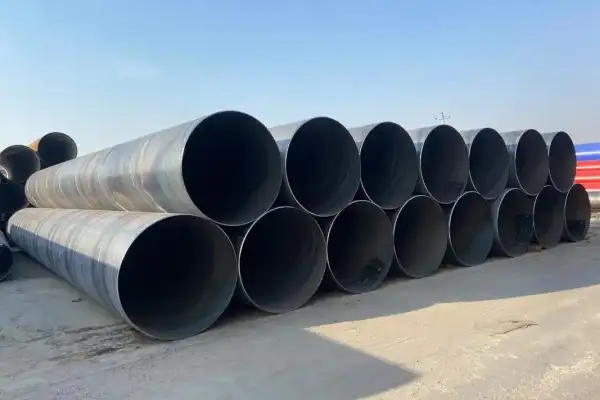
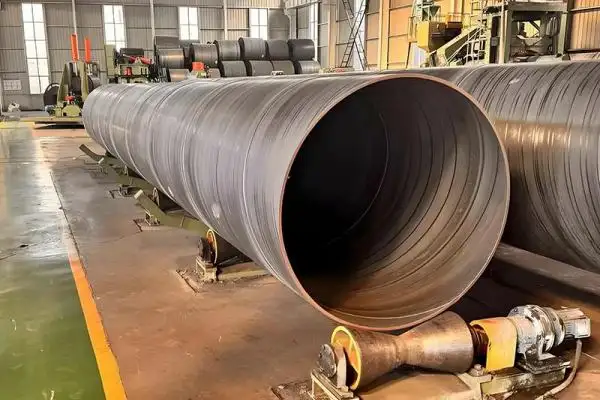
What Is Galvanized Pipe?
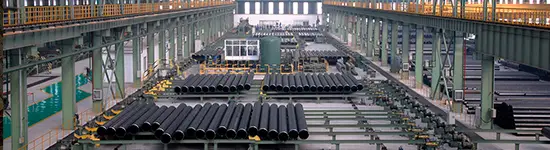
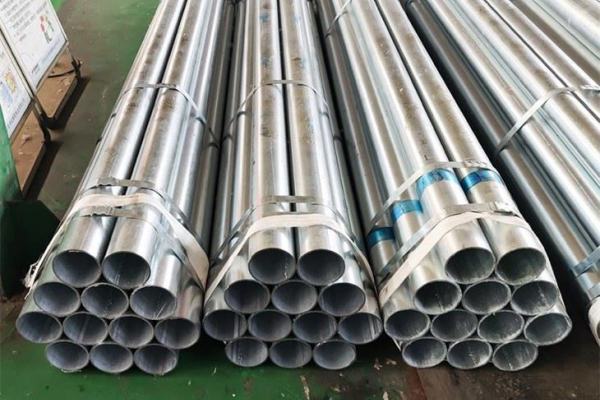
Galvanized pipe is a steel pipe coated with a protective zinc layer to improve corrosion resistance and extend service life. It is widely used in:
Water supply systems
Fire protection pipelines
Construction projects
Agricultural irrigation
Industrial piping systems
The zinc coating helps protect the steel surface from moisture, rust, and environmental corrosion.
Main Types of Galvanized Steel Pipes
Galvanized pipes are generally divided into three categories:
Hot-Dip Galvanized Steel Pipe
Steel pipes are immersed in molten zinc, forming a thick and durable anti-corrosion layer.
Pre-Galvanized Steel Pipe
Steel strip is galvanized before pipe forming, suitable for light-duty applications.
Electro-Galvanized Steel Pipe
Uses electroplating technology to create a thinner zinc coating with smoother appearance.
Common Materials Used for Galvanized Pipes
The base material of galvanized pipes is usually carbon steel or low-alloy steel. Different grades provide different strength and pressure performance.
Q195 / Q215 Steel
Low-carbon structural steel
Good flexibility and formability
Suitable for small-diameter pipes and light-duty applications
Common uses:
Electrical conduits
Low-pressure fluid transport
Q235 Steel
Q235 is one of the most widely used galvanized pipe materials due to its balanced mechanical properties and good weldability.
Common uses:
Scaffolding
Guardrails
Water and gas pipelines
Structural applications
Q345 (16Mn) Steel
Q345 is a low-alloy high-strength steel with better load-bearing performance.
Suitable for:
High-pressure systems
Heavy structural applications
Low-temperature environments
International Standard Materials of Galvanized Steel Pipes
ASTM A53 Gr.B
Commonly used for:
Structural applications
Water and fluid transportation
ASTM A106
Primarily used for:
High-temperature service
High-pressure industrial systems
JIS G3444 STK400
Widely used in export and international engineering projects.
Standard Sizes of Galvanized Pipes
Galvanized steel pipes are available in multiple diameter and wall thickness combinations.
Common Pipe Size Range
Diameter: 1/2 inch to 24 inch
DN range: DN15 to DN600
Standard schedules: SCH10, SCH40, SCH80, SCH160
Understanding Pipe Wall Thickness
Pipe wall thickness is classified by “Schedule” numbers.
|
Schedule
|
Features
|
|
SCH 10
|
Thin wall, lightweight
|
|
SCH 40
|
Standard wall thickness
|
|
SCH 80
|
Thick wall, high-pressure use
|
|
SCH 160
|
Extra heavy wall
|
How to Choose the Right Galvanized Pipe?
Selection depends on:
Working pressure
Corrosion environment
Fluid type
Service life requirements
Installation conditions
General Selection Recommendations
SCH40 galvanized pipe → general construction and water systems
SCH80 galvanized pipe → higher pressure applications
Q235 galvanized pipe → standard structural projects
Q345 galvanized pipe → heavy-duty engineering systems
Advantages of Galvanized Steel Pipe
Excellent corrosion resistance
Long service life
Good mechanical strength
Low maintenance cost
Cost-effective solution for infrastructure projects
Hot-dip galvanized pipes can typically last 40–50 years under normal operating conditions.
Common Applications of Galvanized Steel Pipes
Water supply systems
Firefighting pipelines
Structural engineering
Agricultural irrigation
Industrial fluid transportation
Outdoor steel structures
Conclusion
Choosing the correct galvanized pipe material and size is essential for pipeline safety, durability, and long-term performance.
From Q235 carbon steel to ASTM A53 galvanized pipe standards, and from SCH40 to SCH160 wall thicknesses, each specification directly affects pressure capacity, corrosion resistance, and application suitability.
Because of their reliability, strength, and cost efficiency, galvanized steel pipes remain one of the most widely used piping solutions in construction, infrastructure, and industrial engineering.
FAQ
Q1: What material is galvanized pipe made from?
Usually carbon steel such as Q235, Q345, or ASTM A53 steel.
Q2: What is the most common galvanized pipe schedule?
SCH40 is the most widely used standard wall thickness.
Q3: What is the difference between hot-dip and electro-galvanized pipe?
Hot-dip galvanizing provides a thicker and more durable zinc coating.
Q4: How long does galvanized pipe last?
Typically 40–50 years under normal conditions.
Q5: What sizes are available for galvanized pipes?
Common sizes range from 1/2 inch to 24 inch depending on the application.


 English
 Español
 Français
 بالعربية