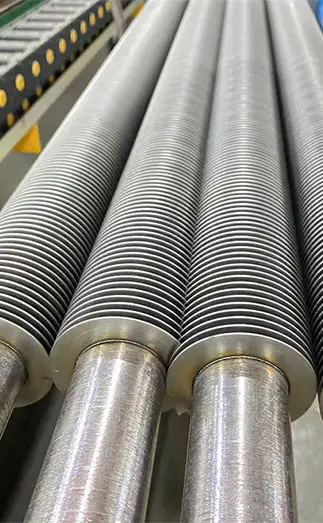
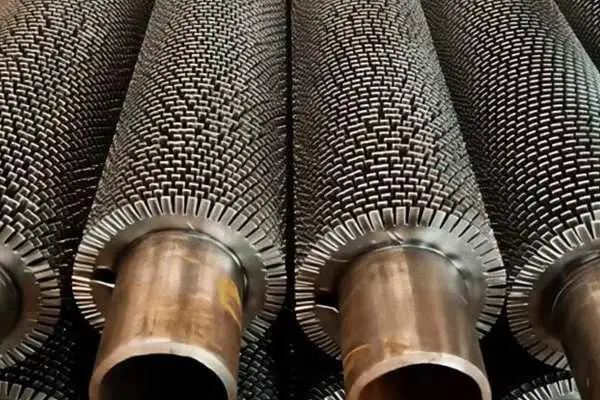
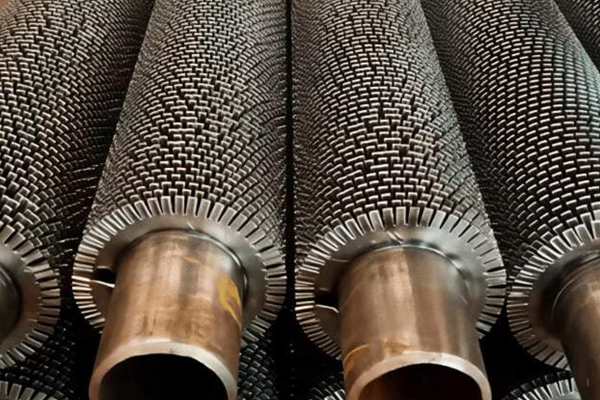
Choosing between different finned tube manufacturers involves more than comparing quotations. A reliable manufacturer should be able to meet your thermal performance requirements, provide the correct finned-tube construction, maintain consistent manufacturing quality, and deliver products on schedule.
This is particularly important for heat exchangers, air-cooled heat exchangers, boilers, economizers, condensers, and industrial process equipment. The wrong tube design or inconsistent manufacturing quality can reduce heat-transfer efficiency, increase maintenance requirements, and affect equipment reliability.
For procurement teams, the best choice is not necessarily the supplier offering the lowest initial price. It is the manufacturer that delivers the right technical solution and the best overall value throughout the product's service life.
1. Six Key Factors to Evaluate Finned Tube Manufacturers
Before selecting a supplier, evaluate its technical capabilities, quality management, manufacturing processes, and supply reliability.
1.1 Product and Engineering Capabilities
First, confirm that the manufacturer can produce the exact finned tube required for your application. Different finning processes offer different advantages, and products with similar appearances may have different performance characteristics.
Key specifications to check include:
Fin type: Extruded, embedded, G-type, L-footed, LL-footed, high-frequency welded, or integral fin.
Base tube materials: Carbon steel, stainless steel, alloy steel, or other specified materials.
Fin materials: Confirm compatibility with the base tube and operating environment.
Dimensions: Tube outside diameter, wall thickness, fin height, fin thickness, fin pitch, and overall length.
Operating conditions: Design temperature, pressure, vibration, corrosion exposure, and service environment.
A qualified manufacturer should be able to review your drawings and specifications and identify any technical limitations before production.
1.2 Thermal Performance
Thermal performance is one of the most important considerations when comparing finned tube manufacturers. A larger heat-transfer surface does not automatically mean better overall performance.
Ask suppliers to provide relevant heat-transfer calculations and explain their design assumptions. Depending on the application, you should also evaluate:
Heat-transfer capacity under specified operating conditions.
Air-side pressure drop and associated fan power.
Fin efficiency and fin-to-tube thermal contact.
Fouling behavior and cleaning requirements.
Performance under the same inlet conditions and allowable pressure drop.
For a fair comparison, all manufacturers should evaluate the same design duty and operating conditions.
1.3 Manufacturing Quality and Certifications
Consistent manufacturing quality is essential for long-term equipment reliability. Look for documented quality controls rather than relying solely on supplier claims.
Important items to review include:
ISO 9001 quality management certification, where applicable.
Material test reports and material traceability.
Dimensional inspection records.
Fin attachment or bond-integrity verification.
Required nondestructive examination and pressure-testing records.
Compliance with applicable ASTM, ASME, API, or project-specific requirements.
The exact inspection scope should be defined in the purchase specification or inspection and test plan (ITP).
1.4 Durability and Service Life
Finned tubes operate under different thermal, chemical, and mechanical conditions. Their service life depends on both material selection and manufacturing quality.
Evaluate the manufacturer's ability to meet requirements related to:
Corrosion and oxidation resistance.
Fin attachment strength and thermal cycling.
Erosion, fouling, and mechanical damage.
Operating temperature and pressure.
Warranty coverage and replacement availability.
The selected fin type and material combination should be appropriate for the actual service environment.
1.5 Delivery and Supply Reliability
A technically qualified manufacturer must also be able to meet your project schedule.
Before placing an order, confirm:
Available manufacturing processes and product dimensions.
Material availability and realistic production lead times.
Minimum order quantities and production scheduling.
Packaging and protection during transportation.
Export documentation and shipping experience, where required.
Ability to maintain consistent specifications for repeat orders.
For project-based procurement, delivery reliability can be just as important as the initial product quotation.
1.6 Total Cost of Ownership
Comparing only the unit price can lead to an incomplete purchasing decision. A lower-priced product may result in higher energy consumption, more frequent maintenance, or earlier replacement.
Consider the following cost components:
|
Cost Factor
|
What to Evaluate
|
|
Purchase price
|
Tube materials, finning process, tooling, and setup charges
|
|
Logistics
|
Freight, duties, packaging, and transportation
|
|
Installation
|
Installation requirements and associated labor
|
|
Operating costs
|
Energy consumption and pressure-drop-related costs
|
|
Maintenance
|
Cleaning, inspection, and repair requirements
|
|
Replacement
|
Expected service life, replacement costs, and downtime risks
|
A lifecycle-cost comparison provides a more realistic basis for selecting a manufacturer.
2. Match the Finned Tube Type to Your Application
Different manufacturers may specialize in different finning processes. Make sure the suppliers being compared can meet the same technical requirements.
|
Fin Type
|
Typical Advantages
|
Key Considerations
|
|
L-foot / LL-foot
|
Economical and commonly used in air-cooling applications
|
Mechanical attachment and operating-temperature limitations
|
|
Extruded fin
|
Good fin-to-tube contact and potential corrosion protection when properly specified
|
Material compatibility and temperature limitations
|
|
G-type / Embedded
|
Mechanical fin retention for demanding applications
|
Groove depth and remaining tube-wall thickness
|
|
High-frequency welded
|
Strong metallurgical attachment for industrial service
|
Weld quality and inspection capability
|
|
Integral fin
|
Fins formed directly from the tube material
|
Geometry and material limitations
|
These are general comparisons rather than universal performance rankings. Actual suitability depends on the base-tube material, fin material, manufacturing quality, design, and operating conditions.
When requesting quotations, specify the required fin type instead of allowing each manufacturer to quote a different construction without clearly identifying the deviation.
3. Use a Weighted Scorecard to Compare Manufacturers
A structured evaluation scorecard helps procurement teams compare suppliers objectively rather than selecting the lowest bidder.
The following weighting system can serve as a starting point. Adjust the percentages according to the technical complexity and risk of your project.
Finned Tube Manufacturer Evaluation Scorecard
|
Evaluation Criteria
|
Suggested Weight
|
What to Check
|
|
Technical compliance
|
25%
|
Drawings, dimensions, materials, and operating requirements
|
|
Manufacturing quality and traceability
|
25%
|
Quality procedures, inspection records, and material certificates
|
|
Thermal performance and service life
|
20%
|
Heat-transfer calculations, fin efficiency, and durability
|
|
Delivery reliability and capacity
|
10%
|
Lead time, material availability, and production scheduling
|
|
Total cost
|
15%
|
Purchase price, logistics, operating, and maintenance costs
|
|
Engineering support and warranty
|
5%
|
Technical communication, problem-solving, and after-sales support
|
|
Total
|
100%
|
|
Score each manufacturer from 1 (poor) to 5 (excellent), using documented evidence wherever possible.
A weighted score can be calculated as:
Weighted Score = Σ (Individual Score ÷ 5 × Criterion Weight)
The final result is expressed as a score out of 100.
Important: A high overall score must never compensate for a critical technical failure. Suppliers that cannot meet mandatory material, pressure-boundary, applicable code, or inspection requirements should be rejected before commercial scoring.
4. Questions to Ask Every Finned Tube Manufacturer
To make supplier quotations comparable, send the same request for quotation (RFQ) to each shortlisted manufacturer.
Your RFQ should address the following questions:
Can you manufacture according to our drawings and specifications, including all dimensional tolerances?
Which base-tube and fin materials will you use, and what material certificates can you provide?
What fin-attachment process do you use, and how do you verify attachment integrity?
Can you provide inspection and test plans, dimensional reports, and required NDT records?
What technical calculations or test data support your thermal-performance claims?
What are your confirmed lead time, production capacity, and minimum order quantity?
What are your warranty terms and procedures for handling nonconforming products?
Can you provide references or relevant experience from comparable applications?
For projects in the United States, identify the exact ASTM material specification and applicable ASME code requirements in the RFQ. A general statement such as "ASTM/ASME compliant" is not sufficient to establish compliance because requirements depend on the equipment and service conditions.
5. Warning Signs When Selecting a Finned Tube Supplier
During supplier evaluation, pay attention to the following potential risks.
Unusually Low Quotations
A substantially lower price may reflect differences in material grade, tube-wall thickness, fin geometry, inspection scope, or transportation costs. Ask the supplier to explain the quotation rather than assuming the price difference comes from manufacturing efficiency.
Unsupported Thermal-Performance Claims
Manufacturers should be able to explain the operating assumptions and technical data behind their performance claims. Request calculations or test evidence that can be compared against your design requirements.
Missing Certification and Inspection Documents
Check the scope and validity of relevant certifications. Request material traceability and the inspection records specified in your purchase requirements.
Unclear Defect Detection Procedures
A reliable supplier should be able to explain how manufacturing defects are identified, what acceptance criteria apply, and how nonconforming products are handled.
6. A Practical Process for Selecting the Right Manufacturer
A systematic selection process can reduce procurement risks and make supplier comparisons more transparent.
Shortlist three to five manufacturers with experience relevant to your equipment and application.
Screen technical compliance first to eliminate suppliers that cannot meet mandatory specifications.
Issue a standardized RFQ containing identical drawings, quantities, material requirements, inspection criteria, and delivery terms.
Compare technical deviations and lifecycle costs instead of focusing only on the quoted unit price.
Verify the leading candidates through factory audits, reference checks, sample inspections, or first-article approval when appropriate.
Finalize quality and delivery requirements in the purchase contract, including acceptance criteria and documentation.
This approach helps ensure that the selected manufacturer can meet both the technical and commercial requirements of the project.
7. Finned Tube Supply Solutions from Super Steel
Selecting a finned tube supplier requires a clear understanding of the relationship between product construction, material selection, manufacturing quality, and operating conditions.
Super Steel focuses on steel pipe and tubular product solutions for industrial applications. When evaluating finned tube requirements, buyers should clearly define the base-tube material, fin configuration, dimensions, operating conditions, inspection requirements, and delivery schedule before requesting a quotation.
For project procurement, providing complete technical specifications and drawings helps establish whether a proposed product meets the required application and allows suppliers to assess the scope more accurately.
Whether the requirement involves heat exchangers, boilers, economizers, or other industrial equipment, technical compliance and documented quality should remain the foundation of supplier selection.
FAQ
1. What should I check when choosing a finned tube manufacturer?
Evaluate product capability, finning processes, material quality, thermal performance, inspection procedures, delivery reliability, and total cost.
2. Which finned tube type is best?
There is no universally best type. Extruded, embedded, L-footed, welded, and integral fins have different characteristics and should be selected according to operating conditions.
3. Why is fin-to-tube attachment quality important?
Poor attachment can increase thermal contact resistance and affect heat-transfer performance and long-term reliability.
4. Should I choose a finned tube manufacturer based on price?
No. Compare technical compliance, quality documentation, service life, delivery, and lifecycle costs alongside the initial quotation.
5. What information should I provide when requesting a finned tube quotation?
Provide the tube and fin materials, dimensions, fin type, operating conditions, applicable standards, inspection requirements, quantities, drawings, and delivery destination.


 English
 Español
 Français
 بالعربية