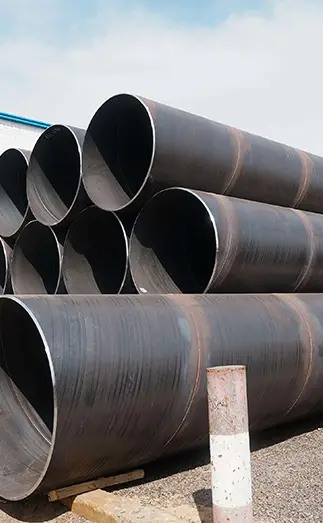
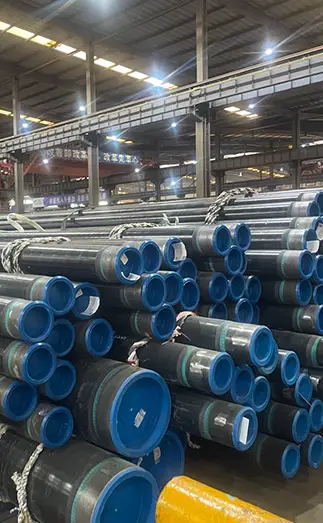
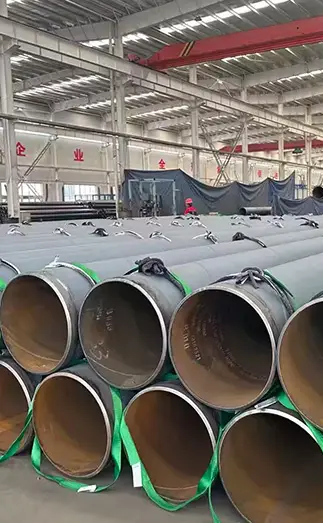
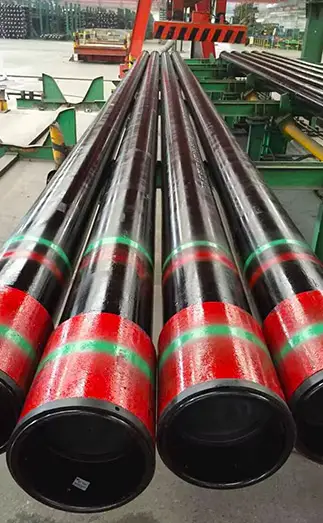
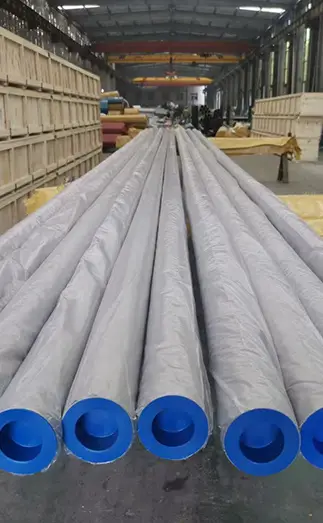
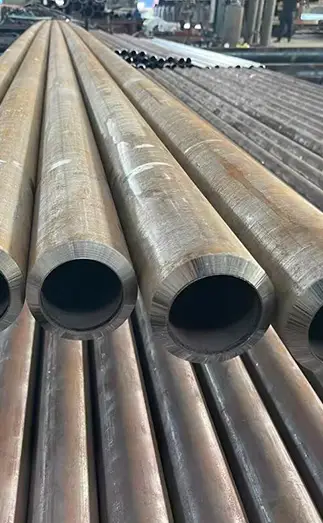
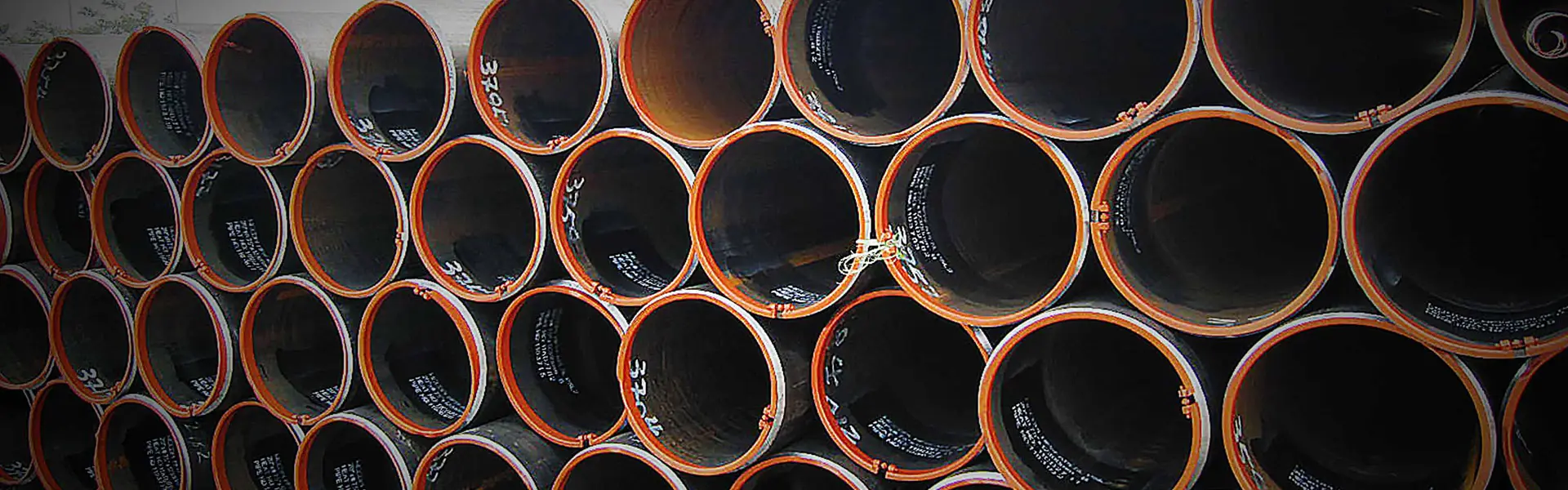
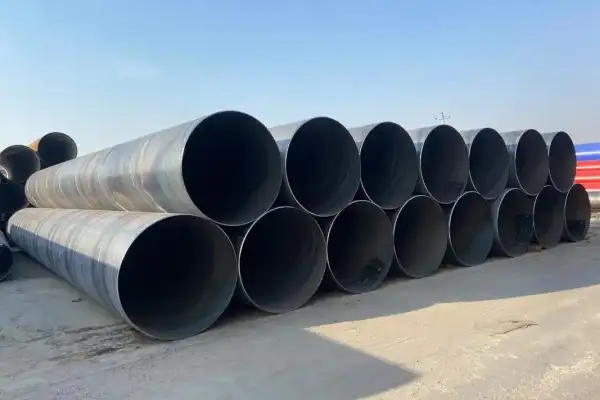
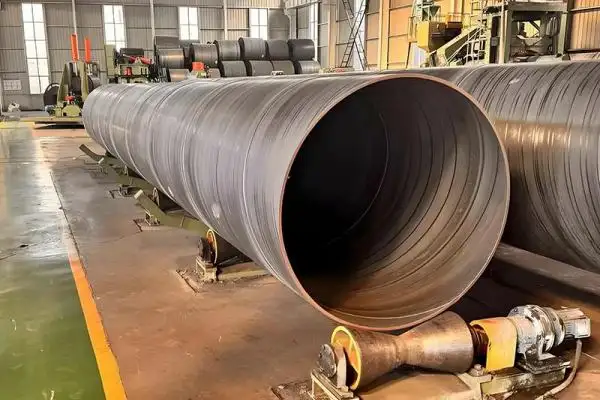
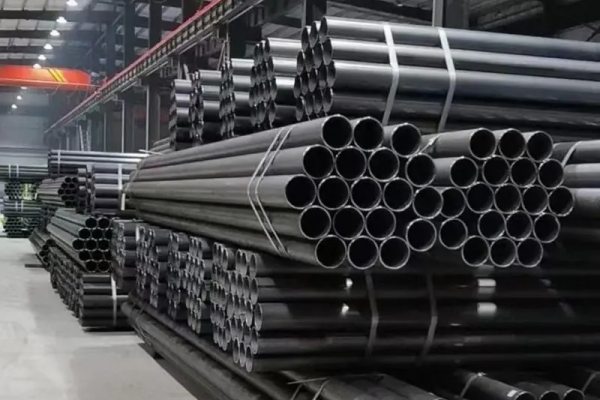
When purchasing American standard seamless steel pipes, specifications such as ASTM A106 Gr.B 6" SCH40 are commonly seen. In this designation, “SCH40” refers to the pipe’s wall thickness schedule.
“SCH” stands for Schedule, a wall thickness classification system defined by American pipe standards. It is one of the most important parameters for identifying the pressure-bearing capability and application range of seamless steel pipes.
Quick Answer
SCH (Schedule) is the wall thickness grading system used for American standard steel pipes.
Higher SCH number = thicker wall
Thicker wall = higher pressure resistance
Common grades: SCH40 and SCH80
SCH is widely used in ASTM, ASME, and ANSI pipe standards for carbon steel, alloy steel, and stainless steel pipes.
What Does SCH Mean in Steel Pipes?
SCH is not simply a thickness measurement. It represents a complete engineering design concept related to pressure and temperature resistance.
The calculation principle is:
Sch=P / [σ]t × 1000
Where:
P = Design pressure
[σ]t = Allowable stress at design temperature
This means the SCH number is directly related to the pipe’s ability to withstand internal pressure under specific operating conditions.
In general:
Lower SCH = thinner wall = lower pressure capability
Higher SCH = thicker wall = stronger pressure resistance
SCH Wall Thickness Standards
American standard seamless steel pipe wall thickness classifications mainly follow two standards:
|
Standard
|
Applicable Material
|
|
ANSI / ASME B36.10
|
Carbon steel & alloy steel pipes
|
|
ANSI / ASME B36.19
|
Stainless steel pipes
|
SCH Grades for Carbon Steel and Alloy Steel Pipes
According to ANSI / ASME B36.10, common SCH grades include:
SCH10
SCH20
SCH30
SCH40
SCH60
SCH80
SCH100
SCH120
SCH140
SCH160
Among them, SCH40 and SCH80 are the most widely used in industrial piping systems.
SCH40 Pipe
SCH40 is considered the standard wall thickness series for many conventional industrial applications.
Features
Moderate wall thickness
Good balance between strength and cost
Suitable for medium-pressure service
For pipes below 6 inches, SCH40 is approximately equivalent to STD (Standard Weight) pipe.
Typical Applications
Water pipelines
Structural piping
General industrial systems
Oil & gas transportation
SCH80 Pipe
SCH80 has a thicker wall and higher pressure resistance compared with SCH40.
Features
Higher strength
Better pressure resistance
Improved corrosion allowance
For pipes below 8 inches, SCH80 is roughly equivalent to XS (Extra Strong) pipe.
Typical Applications
High-pressure pipelines
Chemical processing systems
Steam systems
Industrial plants
SCH160 and XXS Pipes
SCH160 and XXS belong to the ultra-heavy wall series.
Applications
Extremely high-pressure systems
Critical industrial environments
Refinery and petrochemical applications
These pipes are designed for severe operating conditions requiring maximum strength and safety margins.
SCH Grades for Stainless Steel Pipes
Stainless steel pipes follow ANSI / ASME B36.19 standards.
Common stainless steel schedules include:
SCH5S
SCH10S
SCH40S
SCH80S
The suffix “S” indicates stainless steel material.
Although the naming system is similar to carbon steel schedules, the actual wall thickness values may differ for the same nominal pipe size. Therefore, stainless steel SCH data should not be directly substituted with carbon steel pipe schedules.
Engineering Significance of SCH
Understanding SCH allows engineers, purchasers, and project managers to quickly evaluate three critical factors:
1. Wall Thickness Identification
SCH directly determines pipe wall thickness.
Example for 6-inch pipe:
SCH40 ≈ 7.11 mm wall thickness
SCH80 ≈ 10.97 mm wall thickness
2. Pressure Resistance Estimation
Higher SCH grades provide greater pressure-bearing capability.
This is critical in:
Boiler systems
Petrochemical pipelines
High-temperature processing systems
Pressure vessel connections
3. Material Recognition
The “S” suffix identifies stainless steel schedules.
Examples:
SCH40 → carbon steel or alloy steel
SCH40S → stainless steel
SCH vs Pipe Size: Important Clarification
SCH does not change the outside diameter (OD) of the pipe.
For the same nominal pipe size (NPS):
OD remains constant
Increasing SCH increases wall thickness
Internal diameter becomes smaller
This design allows compatibility with standard fittings and flanges.
Common Industrial Applications of SCH Steel Pipes
|
SCH Grade
|
Common Application
|
|
SCH10
|
Low-pressure fluid systems
|
|
SCH40
|
General industrial piping
|
|
SCH80
|
High-pressure systems
|
|
SCH160
|
Extreme pressure service
|
FAQ
1. What does SCH40 mean?
SCH40 refers to a standard pipe wall thickness schedule commonly used in industrial piping systems.
2. Is SCH80 stronger than SCH40?
Yes. SCH80 has a thicker wall and higher pressure resistance.
3. Does SCH affect pipe outer diameter?
No. SCH changes wall thickness, not outside diameter.
4. What does the “S” mean in SCH40S?
The “S” indicates stainless steel pipe schedules under ASME B36.19.
Conclusion
SCH American standard seamless steel pipes are defined by a standardized wall thickness system used to determine pressure-bearing capability and service suitability.
When selecting seamless steel pipes, confirming the following parameters is essential:
Material grade (e.g., ASTM A106 Gr.B)
Pipe size (NPS / OD)
SCH wall thickness grade (e.g., SCH40, SCH80)
Understanding SCH standards helps ensure proper pipe selection, improved system safety, and long-term operational reliability in industrial piping applications.


 English
 Español
 Français
 بالعربية