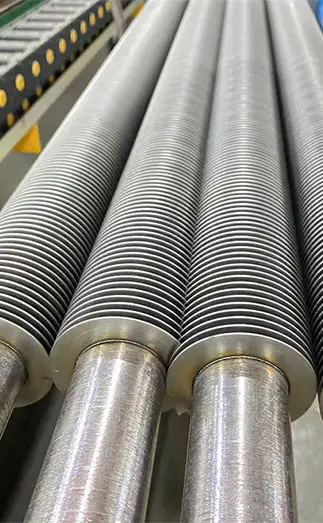
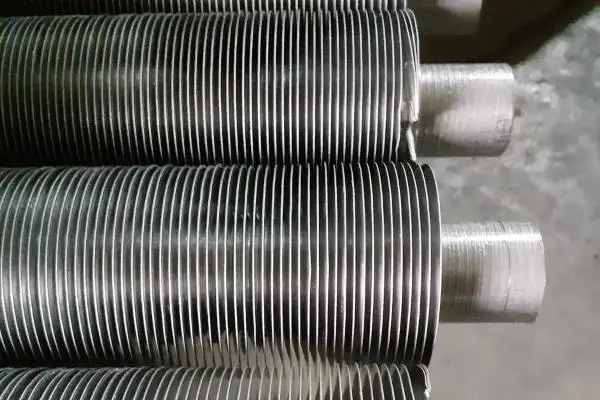
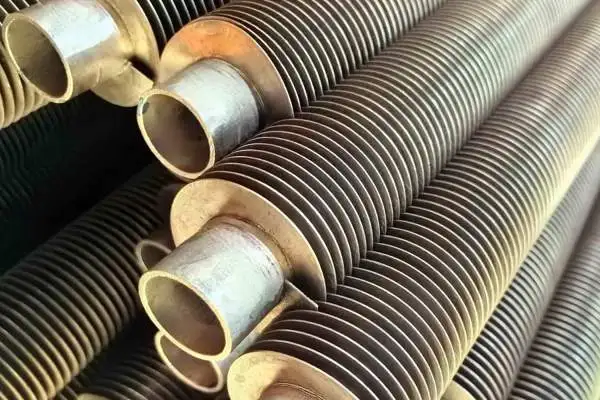
LL fin tubes and G fin tubes are two common types of finned tubes used in industrial heat exchangers and air-cooled systems. Their main difference is the fin attachment method: LL fin tubes use overlapping double-L-shaped fin feet wrapped around the base tube, while G fin tubes have fin strips mechanically embedded into grooves on the tube surface. This structural difference affects thermal contact, operating temperature, corrosion protection, and manufacturing cost.
For industrial buyers, the choice depends on operating conditions, heat transfer requirements, and project specifications. Super Steel supports finned tube sourcing and specification coordination for different industrial heat exchanger applications.
1. What Are LL Fin Tubes?
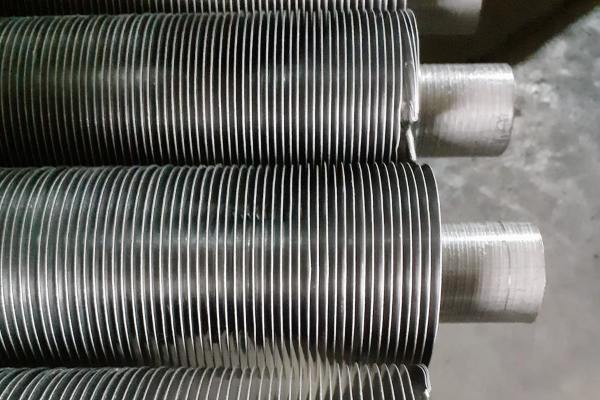
LL fin tubes are manufactured by forming a metal fin strip into a double-L-shaped profile and winding it around the base tube under tension. The fin feet overlap adjacent turns, providing extensive coverage of the tube surface.
Key characteristics:
Overlapping fin feet help protect the base tube from direct atmospheric exposure.
Mechanical winding provides a relatively economical manufacturing process.
Suitable for low- to moderate-temperature applications.
Commonly used in air-cooled heat exchangers, HVAC equipment, and industrial cooling systems.
Their main advantage is the combination of surface coverage and cost-effective construction. However, fin attachment relies on contact pressure rather than a mechanically embedded connection.
2. What Are G Fin Tubes?
G fin tubes, also called embedded fin tubes, are manufactured by machining a helical groove into the base tube. A metal fin strip is then wound into the groove and mechanically secured by deforming the surrounding tube material.
Key characteristics:
The fin is mechanically locked into the base tube.
The embedded structure provides more stable fin-to-tube contact.
Suitable for higher-temperature applications than conventional LL fin tubes.
Commonly used in industrial air coolers, gas coolers, and waste heat recovery equipment.
G fin tubes require more specialized manufacturing because groove machining and fin embedding must be carefully controlled.
3. LL Fin Tubes vs. G Fin Tubes: Key Differences
|
Comparison Factor
|
LL Fin Tubes
|
G Fin Tubes
|
|
Fin structure
|
Overlapping double-L-shaped fin feet
|
Fin strip embedded in helical grooves
|
|
Attachment method
|
Mechanical winding and contact pressure
|
Mechanical groove embedding
|
|
Manufacturing
|
Fin forming and spiral winding
|
Groove machining and fin embedding
|
|
Thermal contact
|
Depends on winding tension and contact pressure
|
More stable mechanical connection
|
|
Typical temperature range
|
Approximately 155–180°C
|
Up to approximately 400°C
|
|
Tube surface coverage
|
Extensive coverage from overlapping fin feet
|
Base tube remains exposed between fins
|
|
Corrosion protection
|
Better coverage against atmospheric exposure
|
Does not provide the same continuous coverage
|
|
Manufacturing cost
|
Generally lower
|
Generally higher
|
|
Typical applications
|
Moderate-temperature cooling systems
|
Higher-temperature industrial heat exchangers
|
Note: These temperature figures are indicative industry references, not universal limits. Actual operating temperatures depend on the base tube material, fin material, design, and manufacturer's qualification.
3.1 Fin Attachment and Thermal Contact
The most important difference is how the fins connect to the base tube.
LL fin tubes rely on the tension of the wrapped fin strip to maintain contact. Their overlapping structure provides good surface coverage, but thermal cycling may affect contact pressure over time.
G fin tubes use a machined groove to secure the fin mechanically. This provides more stable fin retention and thermal contact, particularly under elevated-temperature conditions.
3.2 Temperature and Corrosion Performance
LL fin tubes are generally selected for moderate-temperature service. Their overlapping fin feet also help reduce direct exposure of the base tube to the surrounding atmosphere.
G fin tubes are designed for higher-temperature applications, with some commercial designs suitable for temperatures approaching 400°C. However, their exposed base tube sections require consideration when corrosion is a concern.
Neither design is automatically suitable for every operating environment. Material selection and actual service conditions remain essential.
4. Typical Applications of LL and G Fin Tubes
The two fin tube types serve different industrial requirements.
|
Fin Tube Type
|
Typical Applications
|
|
LL Fin Tubes
|
Air-cooled heat exchangers, HVAC systems, industrial air coolers, selected refrigeration equipment
|
|
G Fin Tubes
|
High-temperature air coolers, gas cooling systems, waste heat recovery equipment, petrochemical process heat exchangers
|
LL fin tubes are often preferred when moderate operating temperatures, surface coverage, and economical manufacturing are priorities. G fin tubes are more suitable when higher temperatures and secure fin attachment are required.
5. How to Choose Between LL and G Fin Tubes?
Before selecting a fin tube, buyers should evaluate several technical factors:
Operating temperature: Confirm the normal and maximum operating temperatures. G fin tubes are generally more suitable for higher-temperature service.
Corrosion conditions: Consider atmospheric exposure, humidity, and corrosive substances. LL fin tubes offer greater coverage of the base tube surface.
Heat transfer requirements: Check fin height, fin pitch, fin thickness, tube diameter, airflow, and required heat transfer duty.
Material compatibility: Select suitable base tube and fin materials according to temperature, corrosion conditions, and process fluid requirements.
Project cost and manufacturing quality: Compare not only unit prices but also dimensional consistency, fin attachment quality, inspection requirements, and expected service life.
6. What Specifications Should Buyers Provide?
Complete technical information helps suppliers recommend the appropriate fin tube configuration and avoid specification errors.
|
Specification
|
Required Information
|
|
Fin tube type
|
LL or G
|
|
Base tube material
|
Carbon steel, stainless steel, alloy steel, etc.
|
|
Fin material
|
Aluminum, copper, or other specified material
|
|
Tube dimensions
|
Outside diameter and wall thickness
|
|
Fin dimensions
|
Height, thickness, and pitch (FPI)
|
|
Tube length
|
Overall length and finned length
|
|
Operating conditions
|
Temperature, pressure, and environment
|
|
Quantity
|
Required quantity and delivery schedule
|
|
Inspection
|
Material certificates and dimensional inspection requirements
|
For customized projects, buyers should also provide technical drawings, applicable standards, and inspection specifications.
7. Finned Tube Supply for Industrial Projects
For industrial heat exchanger projects, selecting the correct fin tube involves more than choosing LL or G construction. Material compatibility, dimensional accuracy, operating conditions, and quality documentation must also be considered.
Super Steel supports industrial customers with finned tube sourcing and technical specification coordination, including:
Confirming fin type, tube dimensions, and fin geometry.
Coordinating base tube and fin material requirements.
Reviewing technical drawings and project specifications.
Coordinating material certificates and inspection documentation.
Supporting project quantities, packaging, and delivery requirements.
By evaluating the application requirements before procurement, buyers can reduce specification mismatches and select a more suitable fin tube configuration.
Conclusion
The main difference between LL fin tubes and G fin tubes is their fin attachment structure. LL fin tubes feature overlapping double-L-shaped fin feet, offering greater base tube coverage and an economical solution for moderate-temperature applications. G fin tubes use mechanically embedded fins, providing more stable attachment and better suitability for higher-temperature service.
The right choice depends on operating temperature, corrosion exposure, heat transfer requirements, material compatibility, and project cost. A complete review of these factors helps ensure that the selected fin tube meets the actual requirements of the heat exchanger.
FAQs
1. What is the main difference between LL and G fin tubes?
LL fin tubes use overlapping fin feet, while G fin tubes have fins mechanically embedded in grooves.
2. Which fin tube is suitable for higher temperatures?
G fin tubes generally support higher operating temperatures, with some designs rated up to approximately 400°C.
3. Are LL fin tubes more corrosion-resistant?
Their overlapping fin feet provide greater coverage of the base tube surface, helping reduce atmospheric exposure.
4. Do G fin tubes provide better heat transfer?
They offer more stable fin-to-tube contact, but overall performance depends on the complete heat exchanger design.
5. Which is more economical, LL or G fin tubes?
LL fin tubes are generally more economical because their manufacturing process is less complex.


 English
 Español
 Français
 بالعربية