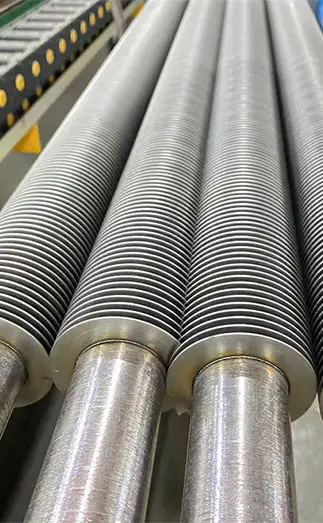
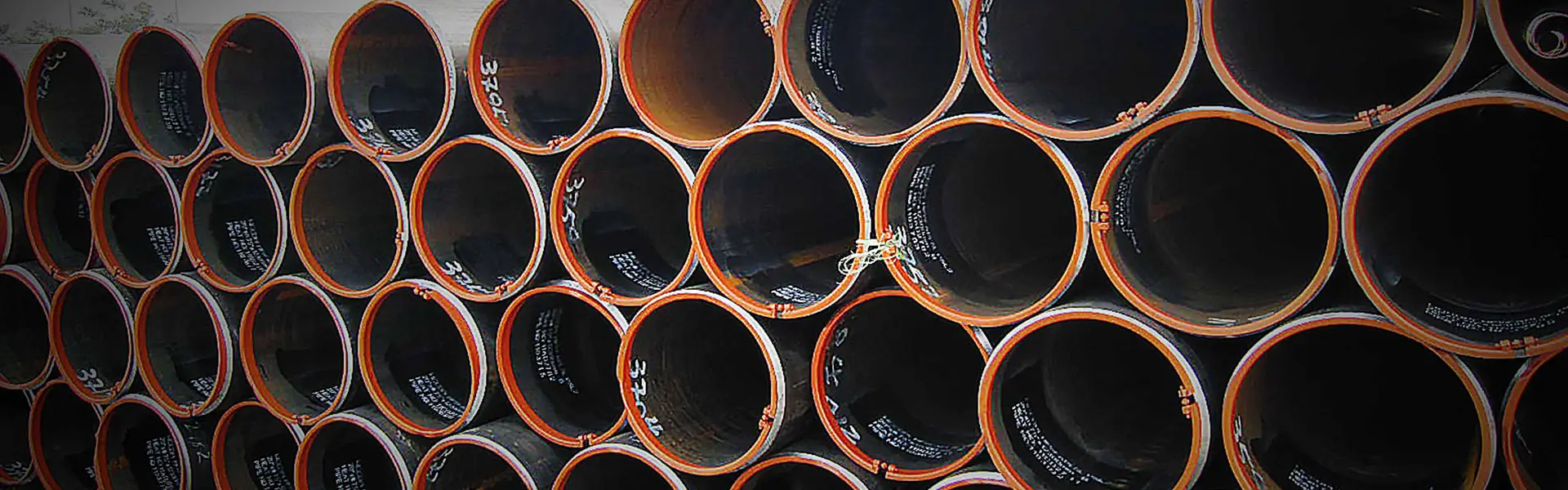
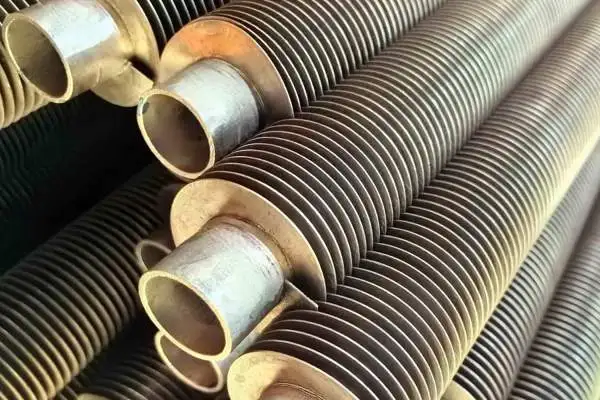
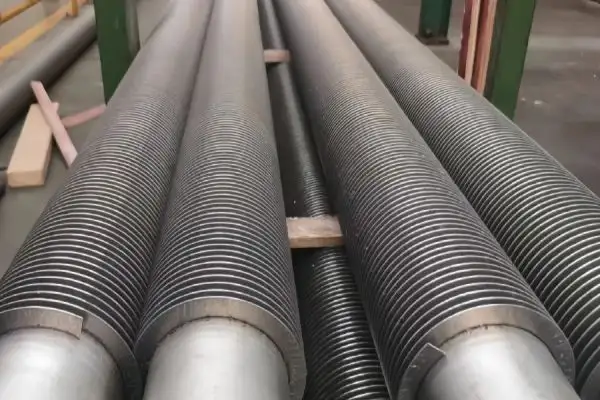
Choosing the best finned tubes for industrial cooling systems depends on operating temperature, heat transfer requirements, working environment, and equipment design. Common options include L-type, LL-type, KL-type, G-type embedded, extruded, and high-frequency welded finned tubes. Each type offers different advantages in heat transfer performance, mechanical bonding, corrosion protection, and temperature resistance.
Finned tubes are widely used in air-cooled heat exchangers, industrial coolers, condensers, boilers, and refrigeration equipment. By increasing the external heat transfer surface area, they improve heat exchange between the fluid inside the tube and the surrounding air or gas.
As an industrial steel tube manufacturer and supplier, Super Steel focuses on finned tube products and project-oriented supply solutions, helping customers select suitable tube materials, fin configurations, dimensions, and manufacturing requirements for different industrial heat exchange applications.
What Are the Main Types of Finned Tubes for Industrial Cooling Systems?
The best finned tube depends on the specific cooling application. Low-temperature air coolers may use L-type or LL-type finned tubes, while applications requiring stronger fin-to-tube bonding may benefit from KL-type or G-type designs. Extruded finned tubes are often selected for outdoor corrosion protection, whereas high-frequency welded finned tubes are suitable for demanding high-temperature heat recovery applications.
The following table compares the most common finned tube types:
|
Finned Tube Type
|
Manufacturing Method
|
Main Advantages
|
Typical Applications
|
|
L-Type Finned Tube
|
Aluminum fin strip wound around the tube with an L-shaped foot
|
Economical and suitable for low-temperature service
|
HVAC, air coolers, refrigeration
|
|
LL-Type Finned Tube
|
Overlapping L-shaped fin feet
|
Provides greater base-tube coverage
|
Outdoor air coolers and industrial cooling coils
|
|
KL-Type Finned Tube
|
Fin wound onto a knurled tube surface
|
Improved mechanical bonding compared with conventional L-type
|
Industrial air coolers and heat exchangers
|
|
G-Type Finned Tube
|
Fin strip embedded into a machined tube groove
|
Strong mechanical attachment and higher-temperature capability
|
Air-cooled heat exchangers and heat recovery systems
|
|
Extruded Finned Tube
|
Fins formed by extruding an outer sleeve
|
Integral fin structure and good base-tube protection
|
Coastal, marine, and outdoor cooling systems
|
|
High-Frequency Welded Finned Tube
|
Spiral fin continuously welded to the base tube
|
Strong metallurgical bonding and suitability for demanding thermal conditions
|
Boilers, economizers, and industrial heat recovery
|
The final selection should consider the manufacturer's qualified operating limits, fin material, base tube material, and project design conditions.
Which Finned Tubes Are Best for Different Industrial Cooling Applications?
Different industrial cooling systems have different thermal and environmental requirements. Selecting a suitable fin structure helps balance heat transfer performance, equipment reliability, and maintenance costs.
1. L-Type and LL-Type Finned Tubes for Low-Temperature Cooling
L-type and LL-type finned tubes are commonly used in relatively low-temperature air cooling applications.
L-type finned tubes are manufactured by winding an aluminum strip around the base tube. The L-shaped foot provides contact between the fin and tube surface.
LL-type finned tubes use overlapping fin feet to provide more complete coverage of the base tube.
Typical applications include:
HVAC cooling coils
Refrigeration systems
Lubricating oil coolers
Industrial air coolers
Low-temperature heat exchangers
These finned tubes are economical options for applications where operating temperatures and mechanical requirements are compatible with their fin attachment methods.
2. KL-Type Finned Tubes for Improved Mechanical Bonding
KL-type finned tubes combine a knurled base tube with an L-shaped fin strip. During manufacturing, the fin is wound onto the prepared tube surface, creating an improved mechanical connection.
Compared with conventional L-type finned tubes, the knurled surface helps increase fin retention and contact stability.
KL-type finned tubes are commonly considered for industrial cooling systems requiring better fin attachment under moderate operating temperatures.
Their suitability should be evaluated according to thermal cycling, vibration, and manufacturer-specific performance limits.
3. G-Type Embedded Finned Tubes for Higher-Temperature Applications
G-type finned tubes are manufactured by machining a helical groove into the base tube and mechanically embedding the fin strip into it.
The groove is then closed around the fin root to secure the connection.
This construction provides stronger mechanical attachment than conventional tension-wound fin designs and is suitable for applications involving higher temperatures and thermal cycling.
Typical applications include:
Air-cooled heat exchangers
Industrial process coolers
Economizers
Heat recovery systems
High-temperature air cooling equipment
G-type finned tubes are often selected when the operating conditions exceed the practical limits of conventional L-type designs.
4. Extruded Finned Tubes for Corrosive Outdoor Environments
Extruded finned tubes, also called integral or bimetallic finned tubes, are produced by forming fins from an outer metal sleeve around a base tube.
Aluminum is commonly used as the fin material, while the inner liner can be selected according to the process fluid and corrosion requirements.
Because the fins are formed from the outer sleeve rather than attached as a separate wound strip, extruded designs provide continuous fin construction and good protection of the underlying tube surface.
Typical applications include:
Air-cooled heat exchangers
Gas processing facilities
LNG cooling equipment
Coastal industrial cooling systems
Outdoor heat exchange installations
Extruded finned tubes are particularly useful when atmospheric corrosion protection and stable fin-to-tube contact are important selection factors.
5. High-Frequency Welded Finned Tubes for Demanding Industrial Conditions
High-frequency welded (HFW) finned tubes are manufactured by continuously welding a spiral fin strip to the outer surface of a steel tube using high-frequency resistance heating.
The welding process creates a metallurgical bond between the fin and base tube.
Compared with mechanically attached fin designs, HFW finned tubes offer strong fin attachment and are suitable for demanding thermal and mechanical conditions.
Typical applications include:
Industrial boilers
Economizers
Waste heat recovery systems
Refinery heat exchangers
High-temperature gas cooling equipment
Carbon steel, stainless steel, and other specified materials may be selected according to operating temperature, corrosion conditions, and project requirements.
How Do You Choose the Right Finned Tube for an Industrial Cooling System?
Selecting a suitable finned tube requires evaluating heat transfer requirements, operating conditions, and manufacturing specifications together.
The following factors should be considered before placing an order.
1. Operating Temperature
Operating temperature is one of the most important factors affecting finned tube selection.
Different fin attachment methods have different temperature limitations. Conventional L-type finned tubes are generally used for lower-temperature service, while G-type and welded finned tubes can accommodate more demanding thermal conditions.
Extruded finned tubes are also suitable for many industrial air cooling applications, but their allowable temperature depends on the fin material and bimetallic construction.
2. Base Tube and Fin Materials
Material selection affects corrosion resistance, thermal conductivity, mechanical strength, and service life.
Common material combinations include:
|
Base Tube Material
|
Fin Material
|
Typical Application
|
|
Carbon Steel
|
Aluminum
|
General industrial air cooling
|
|
Stainless Steel
|
Aluminum
|
Applications requiring improved base-tube corrosion resistance
|
|
Stainless Steel
|
Stainless Steel
|
More demanding temperature or corrosion conditions
|
|
Alloy Steel
|
Aluminum or specified alloy
|
Specialized heat exchange applications
|
The base tube material should be selected according to internal fluid conditions, while the fin material should be suitable for the external environment and operating temperature.
3. Heat Transfer Surface Area
Fin height, thickness, pitch, and fin density determine the available heat transfer surface area.
Increasing fin density can provide more external surface area within a given tube length. However, excessively close fin spacing may restrict airflow and increase fouling.
Therefore, fin geometry should be determined through thermal design calculations rather than maximizing the number of fins alone.
4. Corrosion and Fouling Conditions
Industrial cooling systems may operate in humid environments, coastal areas, or facilities containing corrosive gases and contaminants.
In these conditions, buyers should consider fin material, base tube protection, fin attachment, and cleaning requirements.
For dusty or fouling-prone environments, wider fin spacing or alternative fin configurations may be more practical because they facilitate cleaning and reduce blockage.
5. Manufacturing Quality and Inspection
Finned tube performance depends not only on material selection but also on manufacturing consistency.
Important quality control items include:
Base tube outside diameter and wall thickness.
Fin height, thickness, pitch, and density.
Fin-to-tube bonding quality.
Straightness and overall dimensions.
Surface condition and coating requirements.
Applicable pressure and leakage testing.
For welded finned tubes, weld continuity and bonding integrity are particularly important. Inspection requirements should be agreed upon according to the product specification and purchase order.
What Specifications Should Buyers Provide When Ordering Finned Tubes?
For industrial projects, incomplete technical specifications can lead to incorrect quotations, manufacturing delays, and installation problems.
Buyers should provide the following information when requesting finned tube quotations:
|
Specification
|
Information Required
|
|
Finned Tube Type
|
L, LL, KL, G-type, extruded, or HFW
|
|
Base Tube Material
|
Carbon steel, stainless steel, or alloy steel
|
|
Fin Material
|
Aluminum, carbon steel, stainless steel, or specified alloy
|
|
Base Tube OD
|
Required outside diameter
|
|
Wall Thickness
|
Required tube wall thickness
|
|
Fin Height
|
Required fin height
|
|
Fin Thickness
|
Required fin thickness
|
|
Fin Pitch
|
Distance between adjacent fins or fins per inch
|
|
Tube Length
|
Total length and bare-end requirements
|
|
Operating Conditions
|
Temperature, pressure, and process medium
|
|
Quantity
|
Total order quantity
|
|
Inspection
|
Dimensional, bonding, pressure, and other specified tests
|
Providing these details allows manufacturers and suppliers to evaluate production feasibility, material availability, and project delivery requirements more accurately.
How Does Super Steel Support Industrial Finned Tube Projects?
For heat exchanger manufacturers, EPC contractors, and industrial procurement teams, choosing a finned tube supplier involves more than comparing product prices. Manufacturing consistency, material selection, dimensional accuracy, and delivery coordination are all important.
Super Steel supports industrial finned tube procurement by focusing on project specifications and application requirements.
Key supply considerations include:
Product Selection: Matching finned tube configurations with operating temperature, heat transfer requirements, and installation conditions.
Material Coordination: Reviewing base tube and fin material combinations according to service environments.
Dimensional Requirements: Confirming tube diameter, wall thickness, fin height, fin pitch, and total length.
Quality Verification: Coordinating dimensional inspection and applicable manufacturing quality checks.
Project Delivery: Supporting order coordination, packaging, and shipment arrangements according to project schedules.
By focusing on technical specification matching and project-oriented supply, Super Steel helps customers source finned tube products for industrial cooling and heat exchange applications.
FAQs
1. Which finned tubes are best for industrial cooling systems?
The best choice depends on operating temperature, environment, heat transfer requirements, and equipment design.
2. What is the difference between L-type and G-type finned tubes?
L-type fins are mechanically wound around the tube, while G-type fins are embedded into a machined groove.
3. Are extruded finned tubes suitable for outdoor cooling systems?
Yes. Their integral fin structure provides good protection for the underlying tube against atmospheric corrosion.
4. Which finned tubes are suitable for high-temperature applications?
G-type embedded and high-frequency welded finned tubes are commonly considered for higher-temperature applications.
5. What materials are used for industrial finned tubes?
Common materials include carbon steel, stainless steel, alloy steel, and aluminum, depending on the base tube and fin requirements.


 English
 Español
 Français
 بالعربية