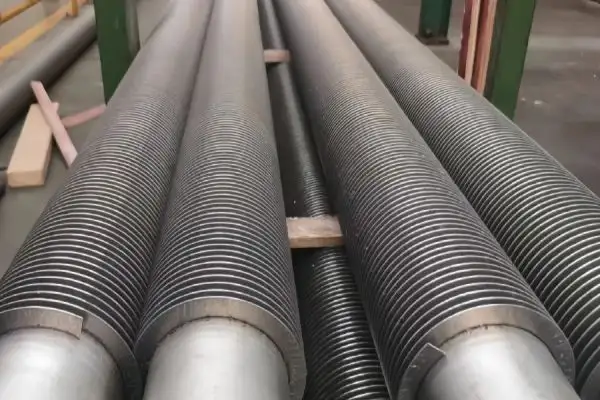
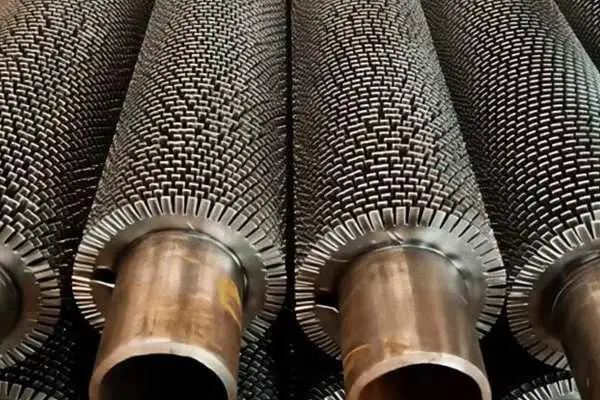
Choosing the most efficient finned tube for heat transfer involves more than comparing fin height, fin density, or total surface area. One of the most important factors is thermal contact resistance between the fin and the base tube. Better thermal contact allows heat to transfer more effectively from the tube wall to the fins and then to the surrounding fluid.
Among commonly used designs, high-frequency welded finned tubes, extruded finned tubes, and integral low-fin tubes are three important options for high-performance heat-transfer applications. Each offers different advantages depending on operating temperature, equipment design, materials, and service conditions.
For heat exchangers, boilers, economizers, air-cooled heat exchangers, and refrigeration systems, selecting the right finned tube construction can improve heat-transfer performance and equipment reliability.
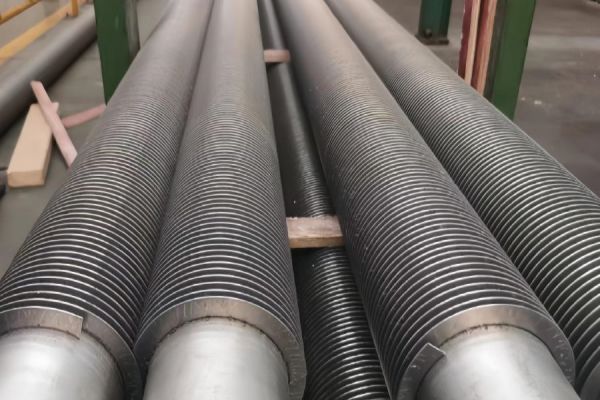
1. What Determines Finned Tube Heat Transfer Efficiency?
The heat-transfer efficiency of a finned tube depends on several interconnected factors.
Thermal Contact Resistance
Thermal contact resistance describes the resistance to heat flow at the interface between the base tube and the fin. If the connection is poor, heat cannot transfer efficiently from the tube wall into the fin, reducing the effective heat-transfer area.
Different manufacturing processes create different types of fin-to-tube connections:
Metallurgical bonding: Welding joins the fin and tube through a metallurgical connection.
Mechanical bonding: Extrusion or embedding creates close physical contact between the fin and tube.
Integral construction: The fin is formed directly from the tube wall, eliminating a separate fin-to-tube interface.
Fin Surface Area and Geometry
A larger fin surface area generally provides more heat-transfer area. However, fin height, thickness, pitch, and geometry must be properly designed to achieve effective heat transfer.
Increasing fin density does not always improve overall performance because closely spaced fins may increase air-side pressure drop and encourage fouling.
Material Thermal Conductivity
The thermal conductivity of both the base tube and fin material affects heat flow. Aluminum is frequently used for fins because of its relatively high thermal conductivity, while carbon steel, stainless steel, and alloy steel may be selected for the base tube according to operating requirements.
Operating Conditions
Temperature, pressure, fluid velocity, corrosion exposure, and fouling conditions also influence the actual performance of a finned tube. The most suitable construction must match the equipment's operating environment.
2. Comparison of the Most Efficient Finned Tube Types
High-frequency welded, extruded, and integral low-fin tubes are widely used in different heat-transfer applications. Their performance advantages depend on the required temperature range and equipment configuration.
|
Fin Type
|
Bond Type
|
Indicative Temperature Range*
|
Efficiency and Typical Applications
|
|
Welded Finned Tubes (High-Frequency / Laser-Welded)
|
Metallurgical bond through welding
|
Up to 500°C or higher, depending on materials and design
|
Strong fin attachment and suitability for high-temperature industrial service, including boilers, economizers, and power plants
|
|
Extruded Finned Tubes
|
Mechanical or bimetallic bond
|
Commonly up to around 300°C, depending on construction
|
Close fin-to-tube contact, high surface area, and good corrosion protection when properly specified; widely used in air-cooled heat exchangers
|
|
Integral Low-Fin Tubes
|
Monolithic construction formed from the tube wall
|
Up to around 300°C or higher, depending on material and design
|
No separate fin-to-tube joint; suitable for compact shell-and-tube heat exchangers, refrigeration, and HVAC applications
|
*Temperature figures are indicative reference values, not universal design limits. Actual allowable temperatures depend on the tube and fin materials, manufacturing process, pressure, and operating conditions.
2.1 Welded Finned Tubes: Suitable for High-Temperature Industrial Applications
Welded finned tubes use high-frequency or laser welding to attach fins to the outer surface of the base tube. This creates a metallurgical connection that provides strong attachment and effective heat transfer.
Their main advantages include:
Strong fin-to-tube bonding.
Good resistance to thermal cycling when properly designed and manufactured.
Suitability for demanding industrial operating conditions.
Flexibility in selecting fin and base-tube materials.
High-frequency welded finned tubes are commonly used in boilers, economizers, waste heat recovery systems, and power generation equipment.
For high-temperature applications, welded finned tubes are often a preferred option because their metallurgical attachment helps maintain fin stability under demanding operating conditions.
2.2 Extruded Finned Tubes: Efficient for Air-Cooled Heat Exchangers
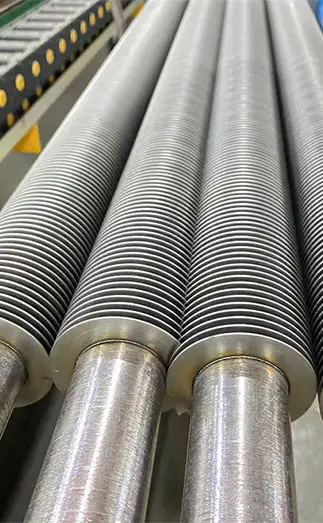
Extruded finned tubes are commonly manufactured by forming fins from an aluminum outer sleeve around a base tube. The extrusion process creates close contact between the fin and tube, providing an effective thermal connection.
Their advantages include:
Large heat-transfer surface area.
Close mechanical contact between the fin and base tube.
Good corrosion protection when the outer sleeve fully covers the specified tube surface.
Lightweight construction and efficient heat-transfer performance.
Extruded finned tubes are widely used in air-cooled heat exchangers, cooling systems, and industrial heat-transfer equipment.
They are particularly suitable when efficient air-side heat transfer and corrosion protection are important. However, the operating-temperature limit and material compatibility must be checked for each design.
2.3 Integral Low-Fin Tubes: Efficient for Compact Heat Exchangers
Integral low-fin tubes are manufactured by forming fins directly from the tube wall. Unlike welded or extruded designs, they do not require a separate fin-to-tube attachment interface.
Key advantages include:
Continuous construction between the tube wall and fins.
No separate fin-to-tube joint.
Compact heat-transfer design.
Potential for improved heat-transfer area within limited equipment space.
These tubes are commonly used in shell-and-tube heat exchangers, refrigeration systems, and HVAC equipment.
Because the fins are formed from the base-tube material, material selection and manufacturing limitations should be considered when evaluating their suitability.
3. Which Finned Tube Type Should You Choose?
There is no single finned tube type that delivers the highest efficiency in every application. The best option depends on the required heat-transfer duty, operating temperature, equipment design, and maintenance conditions.
|
Application
|
Recommended Finned Tube Type
|
Main Selection Consideration
|
|
Boilers and superheaters
|
Welded finned tubes
|
High-temperature performance and fin attachment strength
|
|
Economizers
|
Welded finned tubes
|
Heat recovery efficiency and operating durability
|
|
Air-cooled heat exchangers
|
Extruded finned tubes
|
Air-side heat transfer and corrosion protection
|
|
Compact shell-and-tube heat exchangers
|
Integral low-fin tubes
|
Increased heat-transfer area within limited space
|
|
Refrigeration and HVAC
|
Integral low-fin tubes
|
Compact construction and heat-transfer requirements
|
This table provides general guidance. Final selection should be based on thermal calculations, material compatibility, and the applicable equipment design requirements.
4. How to Improve Finned Tube Heat Transfer Performance
Selecting the correct fin type is only one part of achieving efficient heat transfer. The following factors should also be considered during design and procurement.
Select Appropriate Fin Geometry
Fin height, thickness, pitch, and shape should match the available installation space and required heat-transfer duty. Excessively dense fins may increase pressure drop and fouling.
Ensure Reliable Fin-to-Tube Contact
The bonding or attachment process should be appropriate for the operating temperature and service conditions. Poor attachment can increase thermal contact resistance and reduce effective fin performance.
Choose Compatible Materials
Base-tube and fin materials should be selected according to thermal conductivity, corrosion resistance, operating temperature, and mechanical requirements.
Consider Pressure Drop and Fouling
Heat-transfer efficiency should be evaluated together with fluid-side pressure drop and maintenance requirements. A design with a large surface area may not provide the best overall system performance if it causes excessive pressure drop or frequent fouling.
Require Manufacturing Inspection
Dimensional accuracy, fin attachment quality, material traceability, and required inspection records should be included in the purchasing specification.
5. Finned Tube Solutions from Super Steel
For industrial heat-transfer projects, choosing a suitable finned tube requires more than identifying a preferred fin type. The base-tube material, fin configuration, dimensions, operating temperature, and inspection requirements must all be considered together.
Super Steel provides steel pipe and tubular product solutions for industrial applications. When sourcing finned tube products, buyers should define their required tube materials, fin construction, dimensions, and service conditions clearly to support accurate technical evaluation and quotation.
For applications involving boilers, economizers, air-cooled heat exchangers, and other industrial equipment, matching the tube construction to the actual operating conditions is essential for achieving reliable heat-transfer performance.
FAQ
1. Which type of finned tube has the highest heat-transfer efficiency?
There is no universal winner. Welded, extruded, and integral finned tubes can all provide high performance when properly designed for their applications.
2. Are welded finned tubes better than extruded finned tubes?
Welded finned tubes are generally preferred for demanding high-temperature applications, while extruded finned tubes are widely used in air-cooled heat exchangers.
3. Why is thermal contact resistance important?
Thermal contact resistance affects how efficiently heat moves from the base tube into the fins. Lower resistance generally improves effective heat transfer.
4. What are integral low-fin tubes used for?
They are commonly used in compact shell-and-tube heat exchangers, refrigeration systems, and HVAC equipment.
5. What factors should be considered when selecting finned tubes?
Important factors include fin type, base-tube and fin materials, operating temperature, pressure, fin geometry, corrosion conditions, and required heat-transfer duty.


 English
 Español
 Français
 بالعربية