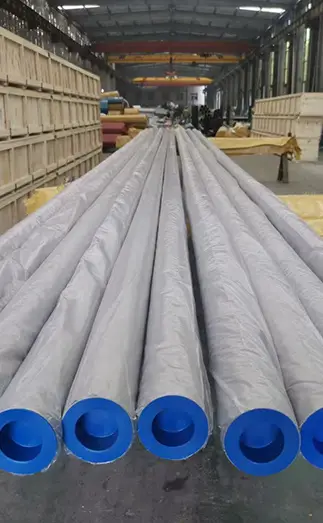
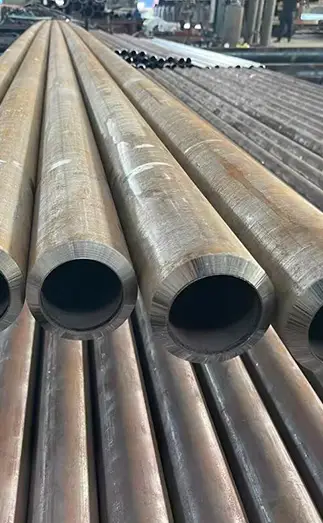
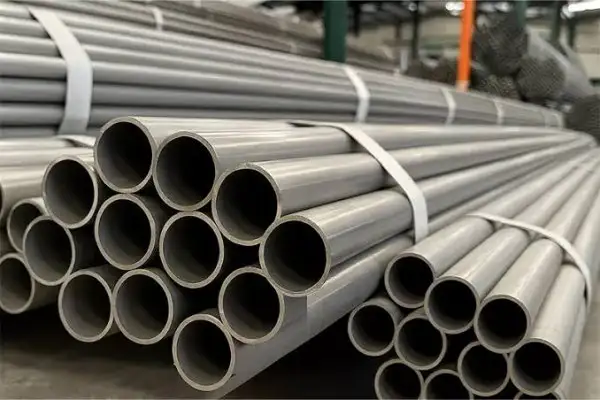
Stainless steel pipes are widely used in industries where corrosion resistance, strength, hygiene, and long service life are essential, including chemical processing, food and beverage, pharmaceuticals, water treatment, and oil & gas applications.
Among various stainless steel pipe schedules, Schedule 40S (SCH 40S) is one of the most commonly specified wall thickness standards. Defined by ASME B36.19, Schedule 40S is designed specifically for stainless steel piping systems. The “S” suffix is important because it differentiates stainless steel pipe dimensions from carbon steel pipe schedules covered by ASME B36.10.
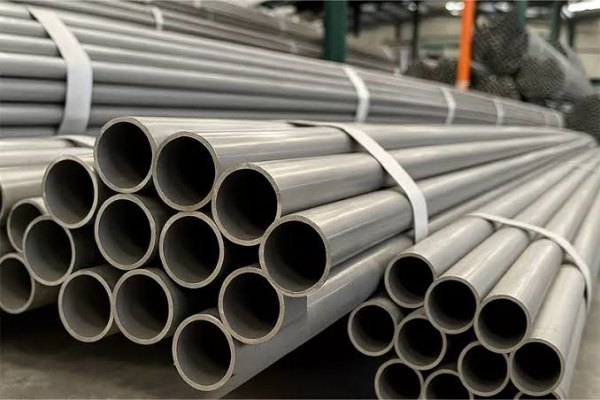
What Is Schedule 40S Stainless Steel Pipe?
The schedule number represents the pipe wall thickness. For the same Nominal Pipe Size (NPS), the outside diameter remains fixed, while the wall thickness changes according to the selected schedule.
Schedule 40S stainless steel pipe is commonly used for general industrial applications requiring moderate pressure capability and excellent corrosion resistance.
A key point when selecting stainless steel pipes is the difference between Schedule 40 and Schedule 40S:
For NPS 8 and smaller, Schedule 40S stainless steel pipe thickness is generally the same as carbon steel Schedule 40.
For NPS 10 and larger, Schedule 40S has a thinner wall thickness than Schedule 40 carbon steel pipe.
Therefore, buyers should always specify SCH 40S when ordering stainless steel pipes to avoid incorrect material selection.
Schedule 40S Stainless Steel Pipe Dimensions (Metric)
The following table provides standard dimensions according to ASME B36.19, including NPS size, DN size, outside diameter, wall thickness, and weight per meter.
|
NPS
|
DN
|
Outside Diameter (mm)
|
Wall Thickness (mm)
|
Weight (kg/m)
|
|
1/8
|
6
|
10.3
|
1.73
|
0.37
|
|
1/4
|
8
|
13.7
|
2.24
|
0.63
|
|
3/8
|
10
|
17.1
|
2.31
|
0.85
|
|
1/2
|
15
|
21.3
|
2.77
|
1.27
|
|
3/4
|
20
|
26.7
|
2.87
|
1.68
|
|
1
|
25
|
33.4
|
3.38
|
2.50
|
|
1 1/4
|
32
|
42.2
|
3.56
|
3.39
|
|
1 1/2
|
40
|
48.3
|
3.68
|
4.05
|
|
2
|
50
|
60.3
|
3.91
|
5.44
|
|
2 1/2
|
65
|
73.0
|
5.16
|
8.63
|
|
3
|
80
|
88.9
|
5.49
|
11.29
|
|
4
|
100
|
114.3
|
6.02
|
16.07
|
|
6
|
150
|
168.3
|
7.11
|
28.26
|
|
8
|
200
|
219.1
|
8.18
|
42.55
|
|
12
|
300
|
323.9
|
9.53
|
73.88
|
|
24
|
600
|
609.6
|
9.53
|
255.41
|
Schedule 40S Stainless Steel Pipe Dimensions (Imperial)
For projects using inch measurements, SCH 40S stainless steel pipe dimensions are typically listed by NPS size, outside diameter, wall thickness, and weight per foot.
|
NPS
|
OD (inch)
|
Wall Thickness (inch)
|
Weight (lb/ft)
|
|
1/8
|
0.405
|
0.068
|
0.245
|
|
1/4
|
0.540
|
0.088
|
0.425
|
|
1/2
|
0.840
|
0.109
|
0.851
|
|
1
|
1.315
|
0.133
|
1.680
|
|
2
|
2.375
|
0.154
|
3.654
|
|
3
|
3.500
|
0.216
|
7.579
|
|
4
|
4.500
|
0.237
|
10.794
|
|
6
|
6.625
|
0.280
|
18.981
|
|
8
|
8.625
|
0.322
|
28.564
|
|
12
|
12.750
|
0.375
|
49.580
|
|
24
|
24.000
|
0.375
|
94.62
|
Common Applications of Schedule 40S Stainless Steel Pipes
Due to their balance of strength, corrosion resistance, and cost efficiency, SCH 40S stainless steel pipes are widely used in:
Chemical and Petrochemical Processing
Used for transporting corrosive fluids, chemicals, and process media where reliable corrosion resistance is required.
Food and Beverage Industry
Stainless steel pipes provide hygienic surfaces and excellent cleaning performance for sanitary processing systems.
Pharmaceutical Manufacturing
SCH 40S pipes are suitable for clean process lines requiring contamination control and high material quality.
Water Treatment Systems
Their corrosion resistance makes them suitable for water supply, wastewater treatment, and industrial water systems.
Common Stainless Steel Grades for SCH 40S Pipes
Schedule 40S stainless steel pipes are commonly manufactured using:
|
Grade
|
Characteristics
|
|
TP304 / 304L
|
General corrosion resistance and wide industrial use
|
|
TP316 / 316L
|
Improved chloride corrosion resistance due to molybdenum addition
|
These pipes are typically produced according to ASTM A312, which covers seamless and welded austenitic stainless steel pipes for high-temperature and corrosive services.
Standards for Schedule 40S Stainless Steel Pipe
The main standards include:
ASME B36.19 – Stainless steel pipe dimensions and wall thickness requirements
ASTM A312 – Seamless and welded austenitic stainless steel pipe specifications
When purchasing stainless steel pipes, confirming both material standard and dimensional standard is essential to ensure compatibility with the application.
Conclusion
Schedule 40S stainless steel pipes are among the most commonly used stainless steel piping solutions for industrial applications. Their reliable wall thickness, corrosion resistance, and compliance with ASME B36.19 make them suitable for a wide range of pressure and process systems.
Understanding SCH 40S pipe dimensions, thickness, weight, and applicable standards helps engineers and buyers select the correct pipe for their projects while improving system safety and long-term performance.
FAQ
1. What is the difference between Schedule 40 and Schedule 40S stainless steel pipe?
Schedule 40S is the stainless steel pipe schedule defined by ASME B36.19, while Schedule 40 applies mainly to carbon steel pipes under ASME B36.10. For larger sizes, SCH 40S has a thinner wall than SCH 40.
2. What are the common grades of Schedule 40S stainless steel pipes?
The most common grades are ASTM A312 TP304/304L and TP316/316L, selected according to corrosion resistance and service conditions.
3. How is stainless steel pipe weight calculated?
The approximate weight can be calculated using: Weight (kg/m) = (OD - WT) × WT × 0.02466, where OD and WT are measured in millimeters.
4. Where are SCH 40S stainless steel pipes commonly used?
They are widely applied in chemical processing, food processing, pharmaceutical systems, water treatment, oil & gas, and industrial piping projects.


 English
 Español
 Français
 بالعربية