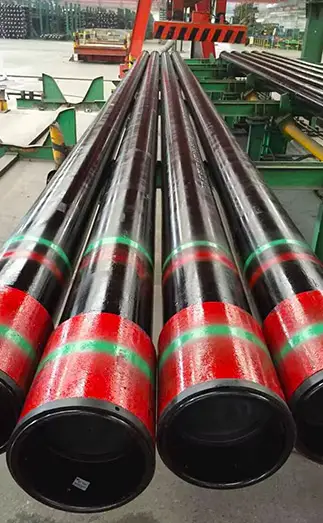
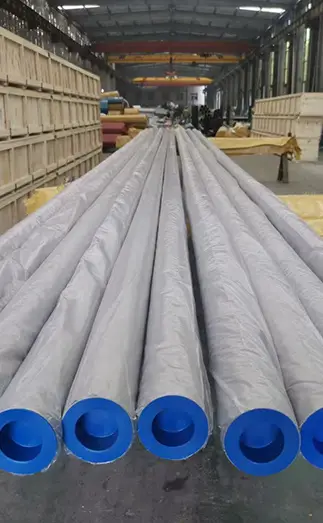
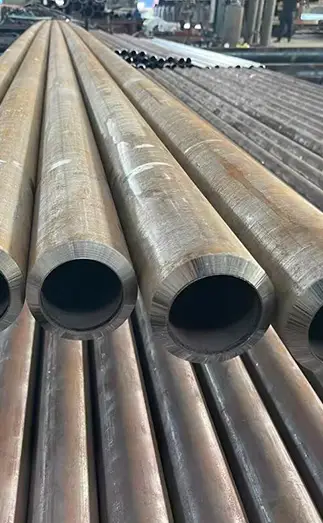
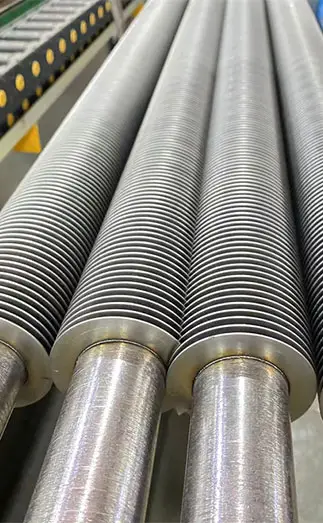
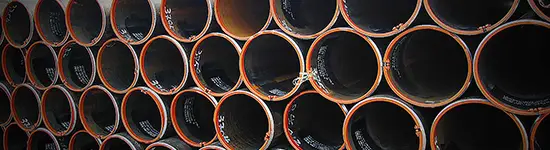
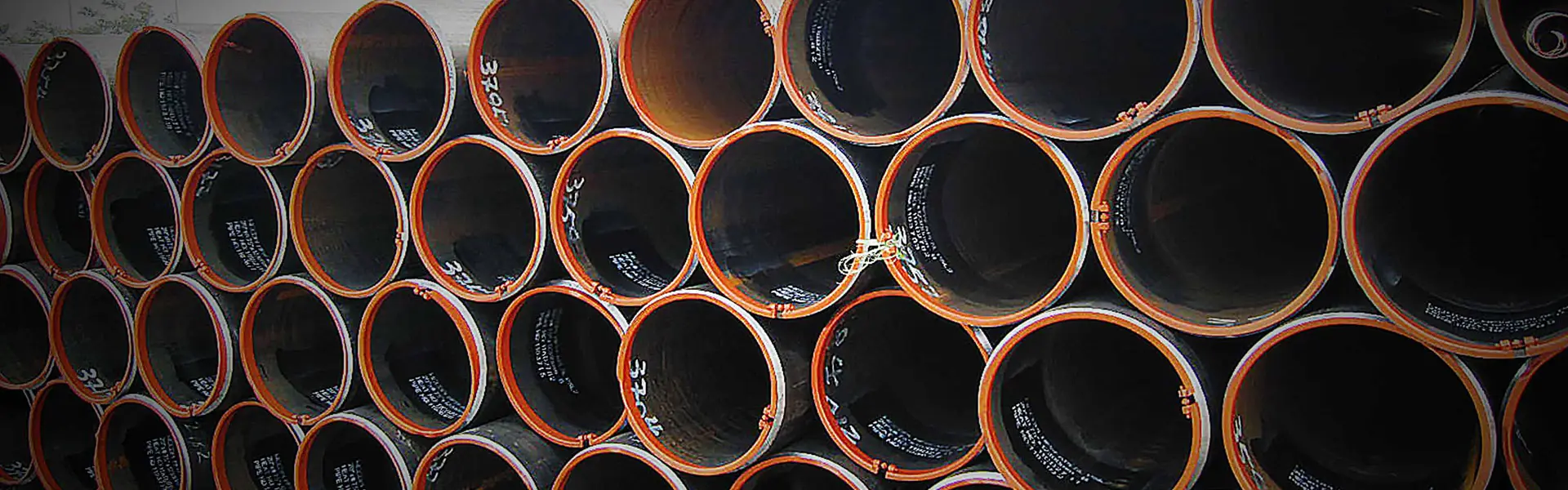
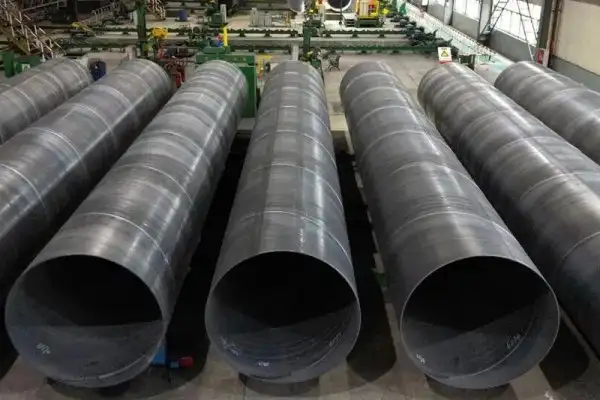
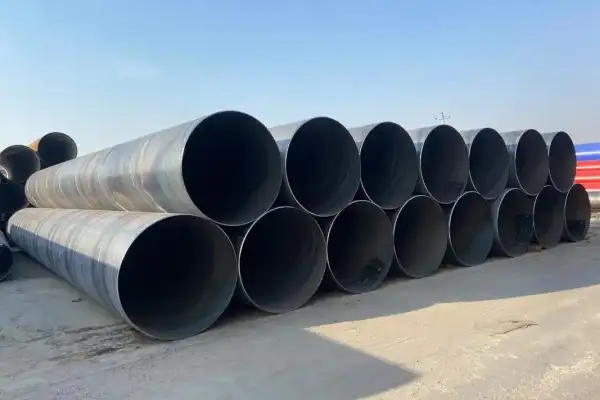
The wall thickness of seamless carbon steel pipes is primarily determined by the pipe’s outer diameter (OD) and its intended application.
In industrial practice, wall thickness is most commonly defined using the Schedule Number system, as specified in ASME B36.10M.
For any given Nominal Pipe Size (NPS), the outer diameter remains constant, while the Schedule number corresponds to a specific wall thickness.
The higher the Schedule number, the thicker the pipe wall and the greater its pressure-bearing capacity.
The most widely used wall thickness grades are SCH 40 and SCH 80.
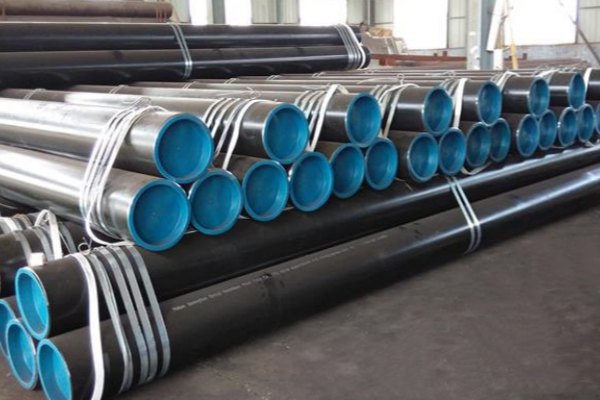
Seamless Carbon Steel Pipe Wall Thickness Series (Schedule System)
1. Standard Weight Series (SCH 40 / STD)
SCH 40 (Standard Wall Thickness) is the most commonly used series for medium- and low-pressure applications.
Typical applications:
Fluid pipelines, general structural use
Example:
DN100 (4″) SCH 40 wall thickness ≈ 6.02 mm
2. Reinforced Series (SCH 80 / XS)
SCH 80 provides increased wall thickness for higher pressure or greater mechanical strength.
Typical applications:
High-pressure pipelines, industrial equipment
Example:
DN100 (4″) SCH 80 wall thickness ≈ 8.56 mm
3. Extra-Strength Series (SCH 160 / XXS)
SCH 160 is used for extreme service conditions requiring maximum strength.
Typical applications:
High-pressure systems, heavy mechanical loads, corrosive environments
Example:
DN100 (4″) SCH 160 wall thickness ≈ 13.49 mm
4. Thin-Walled Series (SCH 5S / SCH 10 / SCH 20)
Thin-wall schedules are designed to reduce weight and cost when pressure requirements are low.
Typical applications:
Low-pressure pipelines, non-critical sealing systems
Seamless Carbon Steel Pipe Sizes by Application
1. Building & Structural Applications
(ASTM A53 / ASTM A500)
Common outer diameter range: 48 mm – 325 mm (2″ – 12″)
Common wall thickness range: 3.5 mm – 16 mm
Application logic:
Wall thickness is determined by structural load calculations and slenderness ratio, not internal pressure.
Example selections:
Φ114 mm column: 4.5 mm or 6 mm
Φ219 mm truss tube: 8 mm or 10 mm
2. Mechanical Manufacturing
(ASTM A513 / ASTM A519)
Common outer diameter range: 6 mm – 219 mm
Common wall thickness range: 1 mm – 12 mm
Applications:
Shafts, rollers, hydraulic cylinders, bearing sleeves
Key requirement:
High dimensional accuracy and surface quality; wall thickness is defined by mechanical design strength, not piping pressure.
3. Fluid Transportation
(ASTM A53 Seamless Pipe)
Common outer diameter range: 21 mm – 610 mm
Common wall thickness: SCH 40 (standard), SCH 80 (high pressure)
Applications:
Water, gas, oil, and general industrial fluid transport
Selection rule:
Schedule number is chosen based on design pressure.
SCH 40 meets most requirements for water, gas, and oil systems.
4. Boiler and Pressure Vessel Applications
(ASTM A213 / ASTM A106)
Common outer diameter range: Small to medium diameters
Wall thickness: Relatively thick, strictly standard-controlled
Applications:
Superheater tubes, boiler tubes, pressure vessels
Typical specifications:
Φ42×5, Φ89×10, etc.
Wall thickness calculation follows strict thermal and pressure design rules.
5. Petrochemical Industry
(API 5L Seamless / ASTM A53 / A106 / A179 / A333)
Common outer diameter range: D15 – D600
Common wall thickness range: SCH 40 – SCH 160
Applications:
From instrument tubing to main transmission pipelines
Selection basis:
Design pressure, operating temperature, and transported medium
Engineering Notes on Wall Thickness Selection of Seamless Carbon Steel Pipe
In real engineering projects, seamless carbon steel pipe specifications cannot be selected arbitrarily.
Minimum required wall thickness must be calculated according to:
ASME B31.1 (Power Piping)
ASME B31.3 (Process Piping)
GB and other national standards
Final confirmation must reference the ASME B36.10M standard size table
The selected Schedule number and wall thickness must be verified by formula-based strength calculations
Summary
The wall thickness of seamless carbon steel pipes is standardized through the Schedule system, ensuring consistent performance across industries.
By understanding Schedule classifications, application-based size ranges, and applicable design codes, engineers and buyers can select the optimal wall thickness to balance safety, performance, and cost.
FAQ
What determines the wall thickness of seamless carbon steel pipes?
The wall thickness is determined by the pipe outer diameter and the Schedule number defined in ASME B36.10M.
What does the Schedule number mean for seamless pipes?
The Schedule number indicates wall thickness; a higher Schedule means a thicker wall and higher pressure capacity.
What are the most common wall thickness grades?
SCH 40 and SCH 80 are the most commonly used wall thickness grades for seamless carbon steel pipes.
When should SCH 80 be used instead of SCH 40?
SCH 80 should be used for higher-pressure, higher-strength, or more demanding operating conditions.
How is the final wall thickness confirmed in engineering projects?
The final wall thickness is verified by strength calculations according to ASME B31.1, ASME B31.3, and ASME B36.10M standards.


 English
 Español
 Français
 بالعربية