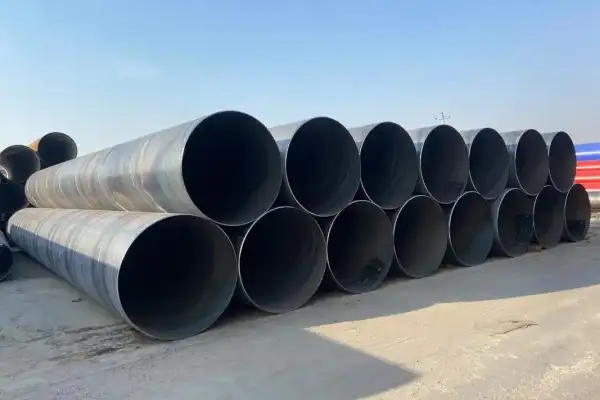
What Are Seamless Pipes?
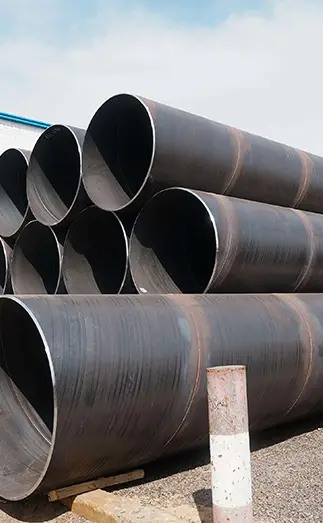
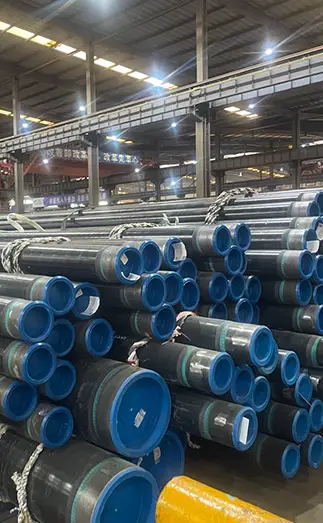
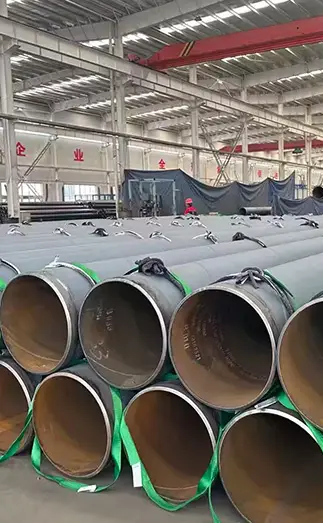
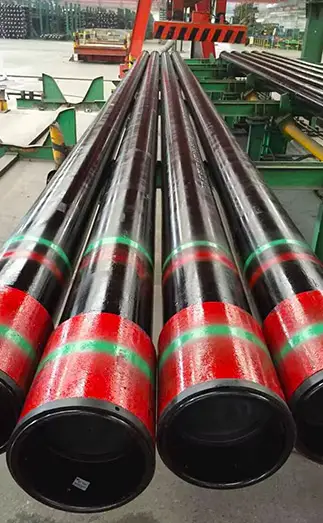
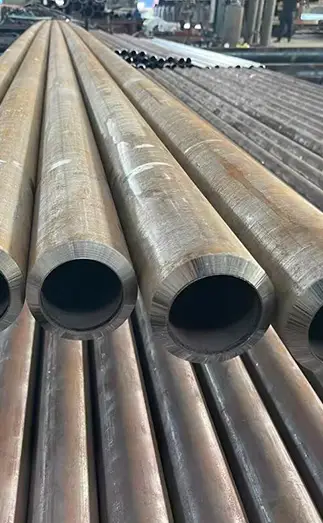
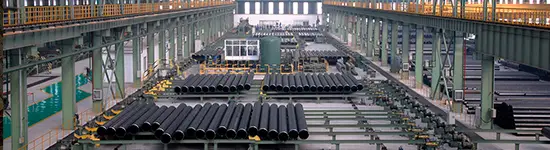
Seamless pipes are tubular products manufactured through piercing and rolling processes, formed integrally without any welding seams.
Because there are no weld joints, seamless pipes offer superior pressure resistance, uniform structure, and higher reliability compared with welded pipes.
Due to these performance advantages, seamless pipes are widely used in petroleum, chemical processing, power generation, machinery manufacturing, automotive systems, boilers, and structural engineering.
The core performance of a seamless pipe is largely determined by its material composition. Different materials directly affect strength, corrosion resistance, temperature tolerance, machinability, and service life. Therefore, material selection is a critical step in seamless pipe applications.
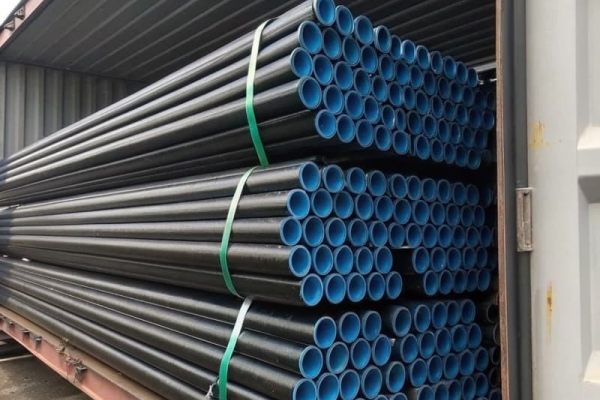
Seamless Pipe Material Classification
Seamless pipes can be broadly classified into carbon steel, alloy steel, stainless steel, and non-ferrous metal pipes.
1. Carbon Steel Seamless Pipes
Carbon steel seamless pipes are primarily composed of iron and carbon. According to carbon content, they are divided into:
Mild steel (low-carbon steel)
Example: ASTM A106 Gr.A
Features: Good weldability, toughness, and formability
Applications: General structures and low-pressure pipelines
Medium-carbon steel
Features: Higher strength and hardness
Applications: Mechanical components and load-bearing parts
High-carbon steel (≥0.6% C)
Features: High hardness and wear resistance
Applications: Cutting tools, molds, and wear-resistant components
2. Alloy Steel Seamless Pipes
Alloy steel seamless pipes are produced by adding alloying elements such as chromium (Cr), nickel (Ni), and molybdenum (Mo) to carbon steel, significantly improving mechanical strength, heat resistance, and corrosion resistance.
Typical materials include:
16Mn: Low-alloy high-strength steel with good overall mechanical properties, widely used in petroleum, chemical, and shipbuilding industries
40Cr: High strength and excellent hardenability, commonly used for shafts, gears, and mechanical parts
3. Stainless Steel Seamless Pipes
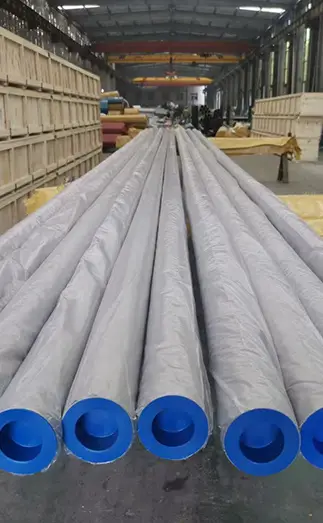
Stainless steel seamless pipes are characterized by their excellent corrosion resistance, achieved through high chromium and nickel content.
Common classifications include:
Austenitic stainless steel (304, 316L)
Features: Excellent corrosion resistance, toughness, and weldability
Applications: Food processing, medical equipment, chemical plants
Ferritic stainless steel (430)
Features: Good oxidation resistance and moderate strength
Martensitic stainless steel (410, 420)
Features: High strength and hardness
Applications: Bearings, cutting tools, mechanical components
4. Non-Ferrous Metal Seamless Pipes
Non-ferrous seamless pipes are made from materials such as copper, aluminum, and titanium, offering unique physical properties.
Copper pipes: Excellent thermal and electrical conductivity
Aluminum pipes: Lightweight and corrosion-resistant
Titanium pipes: Outstanding corrosion resistance and high-temperature performance
These pipes are widely used in power systems, communications, aviation, and aerospace industries.
Common ASTM / EN Seamless Pipe Materials
Carbon Steel Seamless Pipes
|
ASTM Standard
|
EN Equivalent
|
|
ASTM A106 Gr.B
|
EN 10216-2 P235GH
|
|
ASTM A53 Gr.B
|
EN 10216-1 P195TR2
|
|
ASTM A572 Gr.50
|
EN 10210 S355J2H
|
|
ASTM A106 Gr.A
|
—
|
Alloy Steel Seamless Pipes
|
ASTM Standard
|
EN Equivalent
|
|
ASTM A333 Gr.6
|
EN 10216 P355NL1
|
|
ASTM A335 P11
|
EN 10216 13CrMo4-5
|
|
ASTM A335 P12
|
EN 10CrMo9-10
|
|
ASTM A519 4140
|
EN 42CrMo4
|
Stainless Steel Seamless Pipes
|
ASTM Standard
|
EN Equivalent
|
|
ASTM A312 TP304
|
EN 1.4301
|
|
ASTM A312 TP316L
|
EN 1.4404
|
|
ASTM A312 TP321
|
EN 1.4541
|
|
ASTM A268 TP410
|
EN 1.4006
|
Seamless Pipe Material Selection by Industry
1. Petrochemical Industry
Seamless pipes are widely used for pipelines, drilling pipes, and heat exchangers, where resistance to high pressure, high temperature, and corrosive media is essential.
Common materials:
Carbon steel: ASTM A106 Gr.B
Alloy steel: ASTM A335 P11 / P22
Stainless steel: 304 / 316L
2. Machinery Manufacturing
Used for shafts, cylinders, hydraulic systems, and mechanical structures requiring high precision and wear resistance.
Cold-drawn or cold-rolled precision seamless pipes are preferred.
Common materials:
Precision carbon steel seamless pipes
Alloy steels: 40Cr, 20MnV
3. Construction Industry
Applied in structural supports, load-bearing frames, and scaffolding, where weldability and mechanical stability are critical.
Carbon steel seamless pipes: cost-effective and reliable
Alloy steel seamless pipes: suitable for special or high-load environments
4. Automotive Manufacturing
Used for drive shafts, exhaust systems, and structural components, requiring high strength, heat resistance, and corrosion resistance.
Cold-drawn seamless pipes and stainless steel seamless pipes are commonly selected to improve durability and safety.
5. Other Key Applications
Geological drilling: Drill pipes and core pipes with high impact resistance
Shipbuilding: Pressure piping systems and marine boilers
Boiler manufacturing: Superheated steam pipes and water wall tubes for high-temperature, high-pressure service
Key Considerations When Selecting Seamless Pipes
1. Operating Environment and Medium
Material selection should match temperature, pressure, and corrosion conditions.
Corrosive environments → stainless steel or corrosion-resistant alloy steel
High-temperature/high-pressure service → heat-resistant alloy steel
2. Dimensional Accuracy Requirements
Outer diameter, inner diameter, wall thickness, and tolerances must meet system sealing, installation, and processing requirements.
3. Cost vs. Performance Balance
Seamless pipe prices vary significantly by material and specification. Selection should ensure required performance at the lowest feasible cost.
4. Manufacturer Capability and After-Sales Support
Choose manufacturers with proven production capacity, quality management systems, and reliable after-sales service to ensure long-term supply stability.
Seamless steel pipes are indispensable industrial materials across multiple sectors.
By clearly understanding material classifications, standard equivalents, application scenarios, and selection principles, users can make informed decisions and maximize performance, safety, and cost efficiency in real-world projects.
FAQ
- What is a seamless pipe?
A seamless pipe is a pipe manufactured without welding seams, formed by piercing and rolling, offering uniform structure and high pressure resistance.
- Why are seamless pipes used in high-pressure applications?
Seamless pipes are used in high-pressure systems because they have no weld joints, reducing failure risk and improving mechanical reliability.
- What is the most common seamless pipe material?
Carbon steel, especially ASTM A106 Gr.B, is the most commonly used seamless pipe material for industrial pipelines.
- When should alloy steel seamless pipes be selected?
Alloy steel seamless pipes should be selected for high-temperature, high-pressure, or heavy-load service conditions.
- Which seamless pipe grade has the best corrosion resistance?
Stainless steel seamless pipe grades such as 304 and 316L offer the best corrosion resistance in chemical environments.


 English
 Español
 Français
 بالعربية