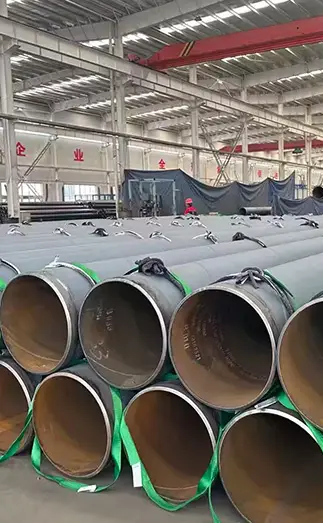
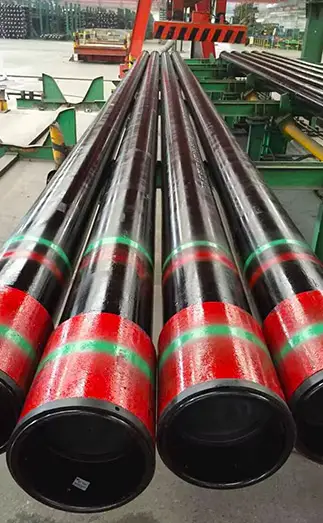
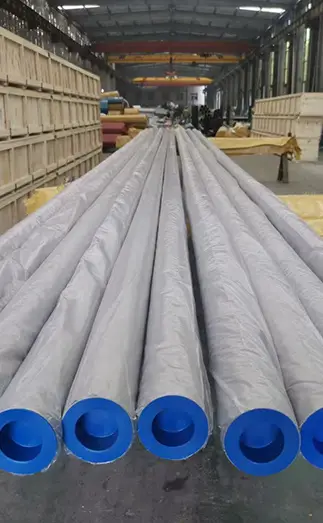
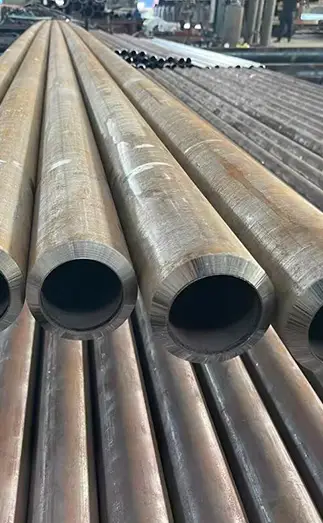
ERW steel pipes are highly suitable for galvanizing due to their smooth surface, stable welding quality, and consistent dimensional accuracy. These characteristics enable strong zinc adhesion, uniform coating thickness, and long-term corrosion resistance. As a result, galvanized ERW pipes are widely used in construction, water systems, and outdoor infrastructure.
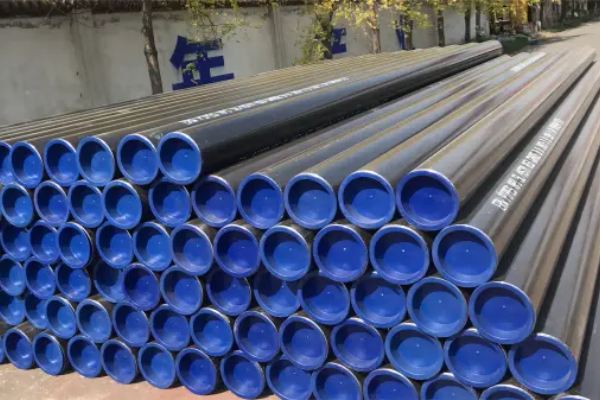
What Makes ERW Steel Pipes Suitable for Galvanizing?
ERW (Electric Resistance Welded) steel pipes are manufactured using high-frequency current to fuse steel strip edges. This process creates a clean, uniform structure that is particularly favorable for hot-dip galvanizing.
Key Technical Advantages of ERW Steel Pipes for Galvanizing
1. Controlled Weld Quality and Uniform Structure
The ERW process uses high-frequency resistance heating combined with extrusion pressure to form a dense and refined weld seam.
Fine grain structure with low impurity segregation
Uniform metallurgical properties across the pipe body
Stable base material for zinc coating adhesion
This ensures consistent coating performance after galvanizing.
2. Optimized Surface Roughness for Coating Adhesion
ERW pipes typically undergo online heat treatment and surface conditioning.
Surface roughness (Ra): approx. 12–25 μm
Loose oxide scale, easy to remove during pickling
Balanced roughness enhances zinc bonding
This microstructure provides ideal “anchor points” for zinc, improving coating adhesion without causing uneven thickness.
3. High Dimensional Accuracy
ERW pipes are produced through continuous forming processes, ensuring tight tolerances:
Outer diameter tolerance: ±0.5%
Wall thickness deviation: ≤ ±10%
This precision allows:
Uniform immersion in molten zinc
Even coating thickness inside and outside
Reduced risk of missed plating or over-coating
Why ERW Pipes Perform Well in Hot-Dip Galvanizing
1. Smooth and Clean Surface
A uniform surface ensures:
Strong metallurgical bonding between zinc and steel
Consistent coating thickness
Improved long-term corrosion resistance
2. Stable and Standardized Production
ERW pipes are manufactured under controlled conditions and commonly comply with:
ASTM A53
ASTM A500
EN 10219
API 5L (selected applications)
This consistency ensures reliable performance during:
Pickling
Fluxing
Hot-dip galvanizing
3. Excellent Compatibility with Zinc Coating
ERW pipes are structurally suitable for full galvanizing:
Steel chemistry supports zinc adhesion
Weld seams can be treated before coating
Geometry allows full internal and external coverage
This results in durable coatings even in:
Humid environments
Industrial atmospheres
Outdoor exposure conditions
Typical Material Properties (Common Grades) of Galvanized ERW Steel Pipes
|
Grade
|
Yield Strength (MPa)
|
Tensile Strength (MPa)
|
Elongation (%)
|
|
Q195
|
≥195
|
315–430
|
33
|
|
Q235
|
≥235
|
375–500
|
26
|
|
Q345
|
≥345
|
475–630
|
22
|
These materials provide a good balance of strength, ductility, and coating compatibility.
Key Benefits of Galvanized ERW Steel Pipes
Enhanced corrosion resistance
Extended service life (20–50+ years depending on environment)
Lower maintenance costs
Strong performance in outdoor and buried applications
Cost-effective compared to other pipe types
Conclusion
ERW steel pipes are an ideal choice for galvanizing due to their controlled manufacturing process, smooth surface quality, and dimensional consistency. After hot-dip galvanizing, they offer superior corrosion resistance and durability, making them widely used in construction, water supply systems, scaffolding, and infrastructure projects.
FAQ
1. Why are ERW pipes better for galvanizing than other pipes?
Because they have a smoother surface and more uniform structure, which improves zinc adhesion and coating consistency.
2. Can ERW pipes be fully galvanized inside and outside?
Yes, their geometry allows complete immersion, ensuring full internal and external coating.
3. What galvanizing method is commonly used for ERW pipes?
Hot-dip galvanizing is the most widely used method due to its strong corrosion protection.
4. Do weld seams affect galvanizing quality?
No, if properly treated, ERW weld seams can achieve uniform coating similar to the base metal.
5. What industries use galvanized ERW steel pipes?
Construction, water supply, scaffolding, infrastructure, and outdoor engineering projects.


 English
 Español
 Français
 بالعربية