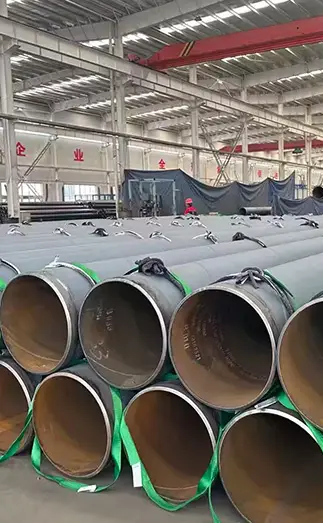
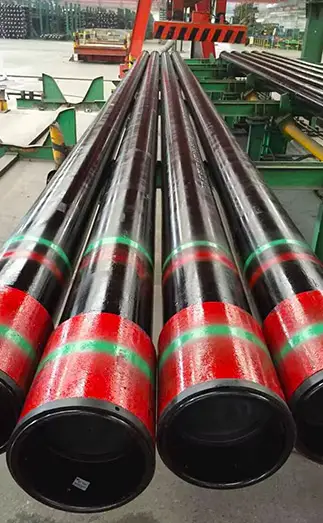
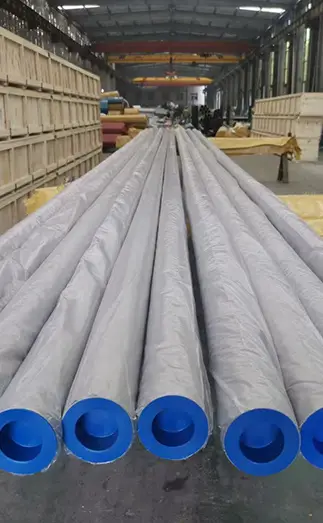
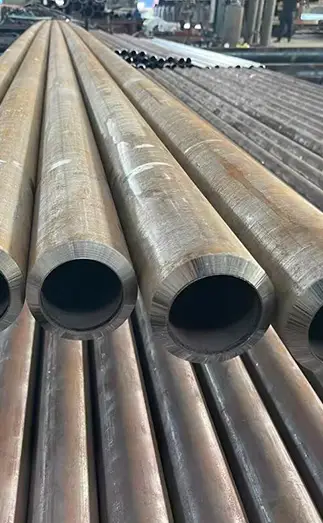
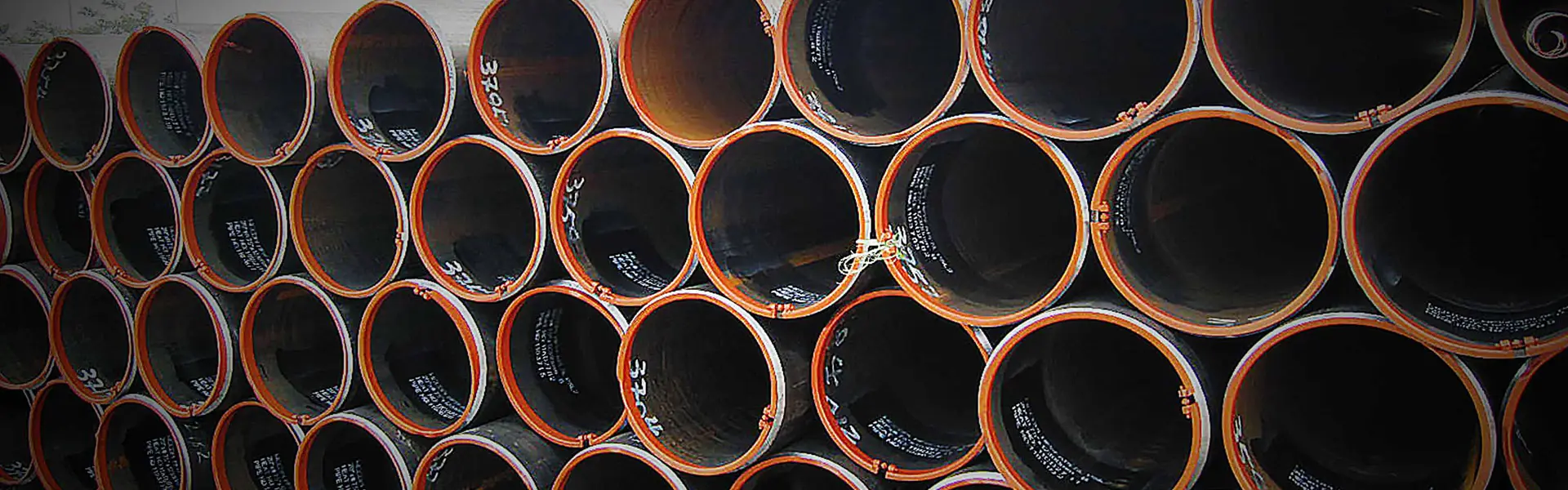
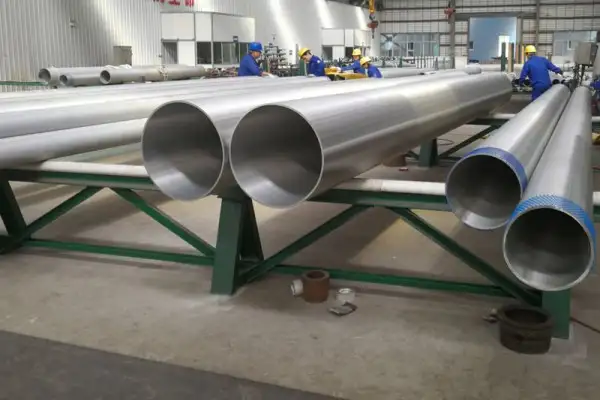
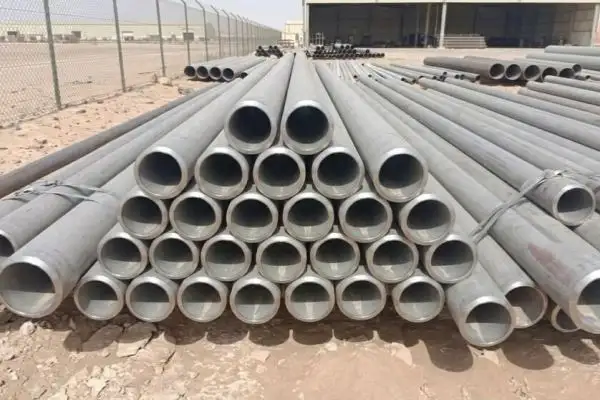
Seamless steel tubes are widely used in industries that demand high pressure resistance, excellent mechanical strength, and superior reliability. Unlike welded pipes, seamless tubes are manufactured from solid steel billets without any welded joints, resulting in a uniform metal structure capable of performing under extreme operating conditions.
The seamless tube extrusion process is one of the core manufacturing methods used to produce high-quality seamless steel pipes for oil and gas, power generation, petrochemical processing, boilers, mechanical engineering, and other critical applications.
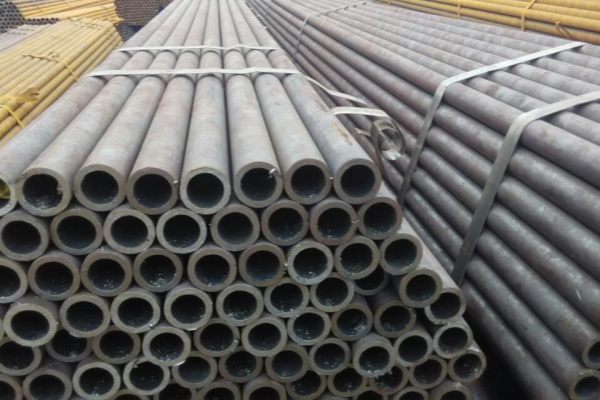
What Is the Seamless Tube Extrusion Process?
The seamless tube extrusion process is a manufacturing technique in which a solid round steel billet is heated and formed into a hollow tube through piercing, extrusion, rolling, sizing, and heat treatment.
Since no welding is involved, the finished pipe provides:
Uniform wall thickness
Excellent pressure resistance
Superior structural integrity
Improved fatigue performance
Long service life
This manufacturing method is especially suitable for applications involving high temperatures, high pressures, or corrosive media.
Main Steps of Seamless Tube Manufacturing
Although production routes may vary depending on the product specification, the typical seamless tube extrusion process includes the following stages.
1. Raw Material Selection
Production begins with carefully selected round steel billets.
Material selection depends on the intended application and may include:
Carbon steel
Alloy steel
Stainless steel
The chemical composition and cleanliness of the billet directly influence the mechanical properties of the finished seamless tube.
2. Billet Heating
The billet is heated to a controlled temperature above its recrystallization point to improve plasticity while maintaining the required metallurgical properties.
Typical heating temperatures include:
|
Steel Grade
|
Heating Temperature
|
Typical Applications
|
|
Carbon Steel
|
1100–1250°C
|
Structural and fluid transportation
|
|
Alloy Steel
|
1150–1280°C
|
High-pressure pipelines
|
|
Stainless Steel
|
1180–1300°C
|
Corrosive environments
|
Accurate temperature control is essential for stable deformation and consistent product quality.
3. Piercing and Extrusion
The heated billet passes through a piercing mill, where a mandrel creates the hollow center.
The tube is then formed through extrusion or rolling equipment, producing the basic seamless pipe shape.
This process eliminates weld seams while creating a continuous metal structure with excellent mechanical strength.
4. Sizing and Dimension Control
After primary forming, the tube enters sizing and reducing mills to achieve the required dimensions.
Typical dimensional control includes:
|
Manufacturing Stage
|
Purpose
|
|
Piercing
|
Create hollow tube
|
|
Elongating
|
Adjust wall thickness and length
|
|
Sizing
|
Achieve final outside diameter and wall thickness
|
Precise sizing ensures compliance with international standards and customer specifications.
5. Heat Treatment
Heat treatment improves the pipe's mechanical performance and relieves internal residual stress generated during forming.
Common heat treatment methods include:
Annealing
Normalizing
Tempering
Quenching and tempering (for selected alloy grades)
Proper heat treatment enhances toughness, ductility, and dimensional stability.
6. Surface Finishing
Following heat treatment, the seamless tube undergoes finishing operations such as:
Straightening
Cutting to length
End beveling or threading
Surface cleaning
Protective coating application
Depending on project requirements, pipes may be supplied with black painting, varnish, anti-rust oil, epoxy coating, or other corrosion-resistant finishes.
Quality Inspection and Testing
Strict quality control is an essential part of seamless steel pipe manufacturing.
Typical inspections include:
Chemical composition analysis
Tensile and mechanical property testing
Dimensional inspection
Ultrasonic testing (UT)
Eddy current testing (ET)
Magnetic particle testing (MT)
Hydrostatic pressure testing
Visual surface inspection
These tests verify product integrity, detect internal or surface defects, and ensure compliance with international standards such as ASTM, API, ASME, and EN specifications.
Applications of Seamless Steel Tubes
Thanks to their excellent mechanical performance, seamless tubes are widely used in:
Oil and gas exploration
Petrochemical plants
Power generation
High-pressure boilers
Heat exchangers
Mechanical engineering
Hydraulic systems
Automotive manufacturing
Offshore platforms
Their weld-free construction makes them particularly suitable for critical service conditions where safety and long-term reliability are essential.
Why Choose High-Quality Seamless Steel Tubes?
The performance of a seamless tube depends not only on its material but also on the precision of the manufacturing process. Premium seamless pipes are produced using advanced equipment, carefully controlled heating, accurate forming technology, and comprehensive inspection procedures.
Working with an experienced manufacturer offers several advantages:
Consistent mechanical properties
Excellent dimensional accuracy
Complete material traceability
Reliable product quality
Compliance with international standards
These factors help reduce installation risks, improve operational safety, and extend the service life of industrial piping systems.
FAQ
1. What is the seamless tube extrusion process?
It is a manufacturing process that transforms a solid steel billet into a hollow seamless tube through heating, piercing, rolling, sizing, and heat treatment without any welded joints.
2. Why are seamless tubes stronger than welded pipes?
Seamless tubes have a continuous metal structure without weld seams, providing better pressure resistance, mechanical strength, and fatigue performance.
3. What tests are performed on seamless steel tubes?
Typical inspections include chemical analysis, tensile testing, ultrasonic testing, hydrostatic testing, dimensional inspection, and other non-destructive tests (NDT).
4. Where are seamless steel tubes commonly used?
They are widely used in oil and gas, petrochemical plants, power generation, boilers, heat exchangers, hydraulic systems, and mechanical engineering where high strength and reliability are required.


 English
 Español
 Français
 بالعربية