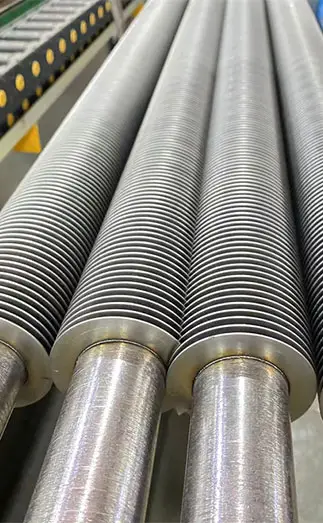
Finned tubes are one of the most efficient heat transfer components used in boilers, heat exchangers, economizers, air coolers, condensers, and waste heat recovery systems. By increasing the external heat transfer area, finned tubes significantly improve thermal efficiency while reducing equipment size and operating costs.
At Super Steel, we manufacture high-quality finned tubes designed for demanding industrial environments, including power generation, petrochemical processing, HVAC, and industrial heat recovery. This guide explains the major classifications of finned tubes to help engineers and procurement professionals select the right solution.
What Is a Finned Tube?
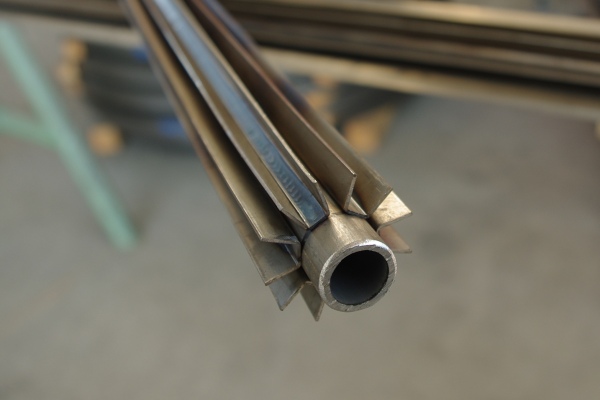
A finned tube is a heat transfer tube with fins attached to its outer (or sometimes inner) surface. The fins enlarge the effective heat exchange area, allowing more efficient transfer of heat between fluids and gases.
Common applications include:
Heat exchangers
Boiler economizers
Air preheaters
Air coolers
Condensers
Waste heat recovery systems
HVAC equipment
Petrochemical plants
Power stations
Classification of Finned Tubes by Manufacturing Process
Different manufacturing methods provide different mechanical strength, thermal conductivity, and operating performance.
|
Manufacturing Method
|
Features
|
Typical Applications
|
|
Extruded Finned Tubes
|
Excellent fin-to-tube bonding and corrosion resistance
|
Marine, offshore, HVAC
|
|
Welded Finned Tubes
|
High-strength metallurgical bond for high-temperature service
|
Boilers, power plants
|
|
Rolled Finned Tubes
|
Economical with reliable mechanical attachment
|
General heat exchangers
|
|
Sleeve-Assembled Finned Tubes
|
Separate fin sleeve fitted onto the base tube
|
Low-pressure heat exchangers
|
|
Cast Finned Tubes
|
High mechanical strength and wear resistance
|
Heavy-duty industrial equipment
|
|
Tension-Wound Finned Tubes
|
Continuous fin strip tightly wound around tube
|
Air coolers and condensers
|
|
Embedded Fin Tubes
|
Fin strip embedded into a machined groove for excellent heat transfer
|
High-performance heat exchangers
|
Classification by Fin Shape
Fin geometry directly affects airflow, heat transfer efficiency, pressure drop, and fouling resistance.
|
Fin Type
|
Characteristics
|
Typical Uses
|
|
Square Finned Tubes
|
Large surface area with simple construction
|
General industrial heat exchangers
|
|
Round Finned Tubes
|
Uniform airflow and balanced heat transfer
|
Air coolers
|
|
Spiral Finned Tubes
|
Continuous spiral fins improve overall efficiency
|
Boilers and economizers
|
|
Longitudinal Finned Tubes
|
Straight fins parallel to the tube axis
|
Shell-and-tube heat exchangers
|
|
Wavy Finned Tubes
|
Enhanced turbulence for improved heat transfer
|
HVAC and refrigeration
|
|
Helical Serrated Finned Tubes
|
Serrated edges reduce fouling and improve convection
|
High-temperature boilers
|
|
Needle Finned Tubes
|
Pin-type fins maximize surface area
|
Compact heat exchangers
|
|
Plate Finned Tubes (Flat Fins)
|
Large heat exchange area for gas cooling
|
Air separation and refrigeration
|
|
Inner Finned Tubes
|
Internal fins improve heat transfer inside the tube
|
Condensers and evaporators
|
Classification by Fin Material Structure
Finned tubes are also categorized according to whether the fins are made from the same material as the base tube.
Single-Metal Finned Tubes
Both the fin and the tube are manufactured from the same material.
Advantages include:
Uniform thermal expansion
Excellent metallurgical compatibility
Simple manufacturing
Good mechanical strength
Bimetallic Composite Finned Tubes
The base tube and fins are manufactured from different materials to combine strength and thermal conductivity.
Typical combinations include:
Carbon Steel + Aluminum
Stainless Steel + Aluminum
Stainless Steel + Copper
Copper + Aluminum
Advantages include:
Better heat transfer
Lower overall cost
Improved corrosion resistance
Reduced equipment weight
Classification of Single-Metal Finned Tubes by Material
Material selection depends on operating temperature, corrosion conditions, and thermal performance requirements.
|
Material
|
Main Advantages
|
Typical Applications
|
|
Copper Finned Tubes
|
Excellent thermal conductivity
|
Refrigeration, condensers
|
|
Aluminum Finned Tubes
|
Lightweight and highly conductive
|
HVAC, air coolers
|
|
Carbon Steel Finned Tubes
|
High strength and economical
|
Boilers, economizers
|
|
Stainless Steel Finned Tubes
|
Outstanding corrosion resistance
|
Chemical and marine industries
|
|
Cast Iron / Cast Steel Finned Tubes
|
Excellent wear resistance and durability
|
Heavy industrial equipment
|
Classification by Application
Finned tubes are widely used across different industries according to operating conditions.
|
Application
|
Function
|
|
Air Conditioning Finned Tubes
|
Improve cooling and heating efficiency in HVAC systems
|
|
Air Cooling Finned Tubes
|
Dissipate heat using ambient air instead of water
|
|
Boiler Finned Tubes
|
Used in water walls, economizers, and air preheaters to improve boiler efficiency
|
|
Waste Heat Recovery Finned Tubes
|
Recover heat from industrial exhaust gases to reduce energy consumption
|
|
Special-Purpose Finned Tubes
|
Designed for customized industrial heat transfer applications
|
How to Select the Right Finned Tube
Selecting the appropriate finned tube depends on several engineering factors:
Operating temperature
Working pressure
Heat transfer efficiency requirements
Corrosive environment
Fluid type
Airflow conditions
Material compatibility
Maintenance requirements
Project budget
A properly selected finned tube can significantly improve equipment efficiency while reducing energy consumption and maintenance costs.
FAQs
1. What is a finned tube?
A finned tube is a heat transfer tube with fins attached to increase surface area and improve thermal efficiency.
2. What are the main types of finned tubes?
Finned tubes are commonly classified by manufacturing process, fin shape, material, and application.
3. What is the difference between single-metal and bimetallic finned tubes?
Single-metal finned tubes use one material for both tube and fins, while bimetallic tubes combine two materials for better heat transfer and corrosion resistance.
4. Which finned tube is best for boilers?
Spiral and welded finned tubes are widely used in boiler economizers, air preheaters, and heat recovery systems.
5. Where are finned tubes used?
They are commonly used in heat exchangers, boilers, condensers, HVAC systems, petrochemical plants, and power stations.


 English
 Español
 Français
 بالعربية