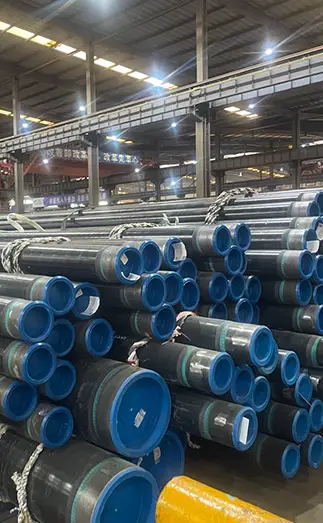
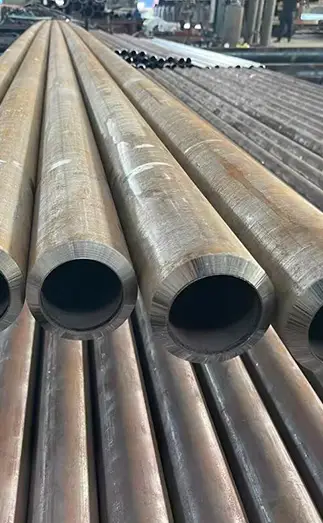
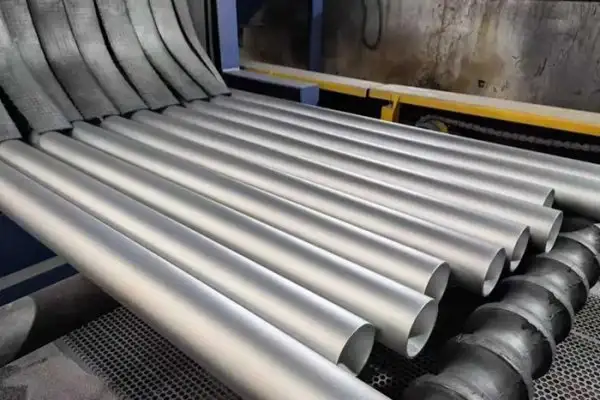
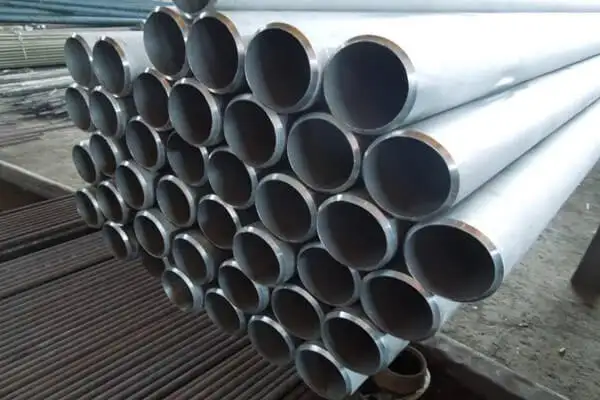
ASTM A106 Grade B is one of the most widely used seamless carbon steel pipes for high-temperature and pressure service. Its carefully controlled chemical composition provides an excellent combination of strength, weldability, and durability, making it suitable for power generation, petrochemical processing, refineries, and industrial piping systems.
Compared with ordinary carbon steel pipes, ASTM A106 Grade B offers improved mechanical performance while maintaining excellent fabrication characteristics.
ASTM A106 Grade B Chemical Composition
The ASTM A106 specification limits the content of key alloying elements to ensure consistent performance under elevated temperatures.
|
Element
|
Specification (%)
|
|
Carbon (C)
|
Max. 0.30
|
|
Manganese (Mn)
|
0.29–1.06
|
|
Phosphorus (P)
|
Max. 0.035
|
|
Sulfur (S)
|
Max. 0.035
|
|
Silicon (Si)
|
Min. 0.10
|
|
Chromium (Cr)
|
Max. 0.40
|
|
Copper (Cu)
|
Max. 0.40
|
|
Nickel (Ni)
|
Max. 0.40
|
|
Molybdenum (Mo)
|
Max. 0.15
|
|
Vanadium (V)
|
Max. 0.08
|
Why Is This Chemical Composition Important?
Each alloying element contributes to the pipe's overall performance:
Carbon provides the required strength while maintaining weldability.
Manganese improves toughness and tensile strength.
Silicon acts as a deoxidizer during steelmaking.
Low phosphorus and sulfur reduce brittleness and improve processing quality.
Residual alloying elements such as chromium, nickel, and molybdenum are strictly controlled to ensure compliance with ASTM requirements.
The balanced chemistry allows ASTM A106 Grade B pipes to perform reliably in high-pressure and high-temperature environments.
Mechanical Properties of ASTM A106 Grade B
The material's mechanical properties are equally important for ensuring long-term service performance.
|
Property
|
Requirement
|
|
Tensile Strength
|
≥415 MPa (60 ksi)
|
|
Yield Strength
|
≥240 MPa (35 ksi)
|
These mechanical properties allow the pipe to withstand demanding operating conditions while maintaining structural integrity.
In addition, ASTM A106 Grade B provides good ductility, making it suitable for bending, machining, threading, and welding during fabrication.
Available Dimensions and Supply Range of ASTM A106 Grade B Seamless Pipe
ASTM A106 Grade B seamless pipes are available in a broad range of sizes to satisfy various industrial applications.
Typical supply range includes:
Outside Diameter: 1/8" to 48" (10.3–1219 mm)
Wall Thickness: Schedule 10 to Schedule 160 (ASME B36.10M)
Length: Single Random, Double Random, or fixed lengths
Pipe Ends: Plain End (PE), Beveled End (BE), Threaded End (TE)
The appropriate wall thickness should be selected according to design pressure, operating temperature, and project specifications.
Quality Testing Requirements of ASTM A106 Grade B Seamless Pipe
To ensure product reliability, ASTM A106 Grade B seamless pipes undergo comprehensive inspection throughout production.
Typical quality control includes:
Hydrostatic pressure testing
Ultrasonic testing (UT)
Eddy current testing (ECT)
Visual inspection
Dimensional inspection
Chemical composition analysis
Mechanical property testing
These inspections help verify compliance with ASTM A106 and ensure every pipe meets customer and project requirements.
Typical Applications of ASTM A106 Grade B Seamless Pipe
Thanks to its excellent combination of strength and heat resistance, ASTM A106 Grade B is widely used in:
High-temperature steam pipelines
Oil and gas transmission systems
Petrochemical plants
Power stations
Boiler piping
Pressure piping systems
Refinery process lines
Industrial fluid transportation
It is particularly suitable for applications involving elevated temperatures where welded or ordinary carbon steel pipes may not provide sufficient performance.
How to Select ASTM A106 Grade B Pipe
When specifying ASTM A106 Grade B seamless pipe, buyers should confirm:
Pipe size (OD × WT)
Schedule (SCH)
Length requirements
End preparation
Heat treatment condition
Inspection and testing requirements
Surface coating
Material Test Certificate (MTC)
Providing complete specifications helps ensure the supplied pipe matches both design requirements and operating conditions.
Conclusion
ASTM A106 Grade B seamless pipe remains one of the industry's preferred materials for high-temperature and pressure applications. Its controlled chemical composition, dependable mechanical properties, and strict quality requirements provide outstanding performance in demanding industrial environments.
Whether used in power plants, refineries, or process piping systems, selecting certified ASTM A106 Grade B pipes helps improve system safety, reduce maintenance costs, and extend equipment service life.
FAQs
1. What is the maximum carbon content of ASTM A106 Grade B?
ASTM A106 Grade B specifies a maximum carbon content of 0.30%, providing a balance between strength and weldability.
2. What is the minimum yield strength of ASTM A106 Grade B pipe?
The minimum yield strength is 240 MPa (35 ksi), while the minimum tensile strength is 415 MPa (60 ksi).
3. Is ASTM A106 Grade B suitable for high-temperature service?
Yes. ASTM A106 Grade B is specifically designed for seamless carbon steel piping used in elevated-temperature service, including boilers, power plants, and refinery piping systems.
4. What standards govern ASTM A106 Grade B dimensions?
Pipe dimensions are generally manufactured in accordance with ASME B36.10M, with wall thickness available in multiple schedules such as SCH 10, SCH 40, SCH 80, and SCH 160.
5. What tests are commonly performed on ASTM A106 Grade B seamless pipes?
Common inspections include chemical composition analysis, tensile testing, hydrostatic testing, ultrasonic testing, eddy current testing, dimensional inspection, and visual examination to ensure compliance with ASTM requirements.


 English
 Español
 Français
 بالعربية