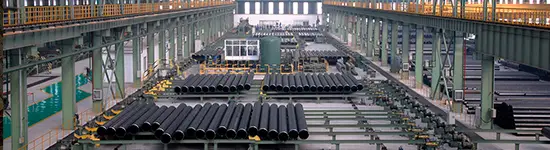
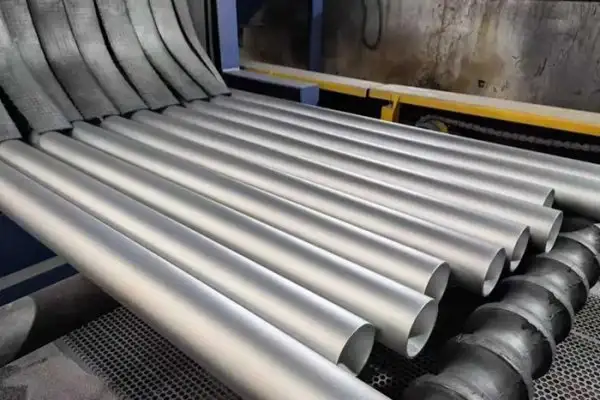
Residual stress is an often-overlooked factor that can significantly influence the performance, reliability, and service life of seamless steel pipes. In demanding applications such as oil and gas production, power generation, petrochemical processing, and aerospace systems, uncontrolled residual stress may contribute to dimensional distortion, cracking, fatigue failure, and reduced corrosion resistance.
For steel pipe manufacturers, effective residual stress control is an essential part of producing high-quality seamless pipes that meet stringent industry standards and long-term performance requirements.
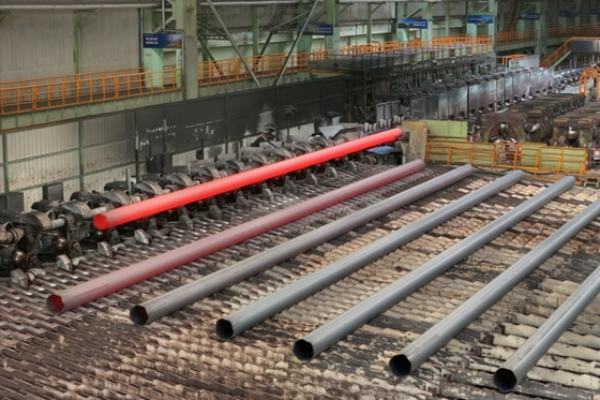
What Is Residual Stress in Seamless Pipes?
Residual stress refers to internal stresses that remain locked within a material after manufacturing processes have been completed, even when no external force is applied.
During seamless pipe production, various thermal and mechanical operations can create uneven stress distributions throughout the pipe wall. If these stresses are not properly managed, they may negatively affect product performance during fabrication, transportation, installation, or service.
Residual stress can be either:
Tensile Residual Stress – increases the risk of cracking and fatigue failure.
Compressive Residual Stress – can improve fatigue resistance and surface durability.
The goal of stress control is to minimize harmful tensile stress while maintaining dimensional stability and mechanical integrity.
Main Causes of Residual Stress in Seamless Pipe Manufacturing
1. Non-Uniform Cooling During Heat Treatment
One of the most common sources of residual stress is uneven cooling after heat treatment.
During quenching, normalizing, or solution annealing, the outer surface of the pipe often cools faster than the inner wall. This difference in cooling rates creates internal stress within the material.
Potential consequences include:
Pipe distortion
Ovality issues
Dimensional instability
Increased cracking risk
Proper temperature control and cooling procedures are essential for reducing thermal stress.
2. Cold Working Processes
Cold deformation operations can also introduce significant residual stress.
Examples include:
Cold drawing
Cold rolling
Pilgering
Sizing operations
These processes improve dimensional accuracy and surface finish but generate plastic deformation within the steel structure.
Without appropriate stress-relief treatment, residual stress may remain trapped inside the pipe wall.
3. Phase Transformation Stress
Certain alloy steels and stainless steel grades experience phase transformations during heating and cooling cycles.
As the microstructure changes, volume expansion or contraction may occur, generating additional residual stress.
This phenomenon is particularly important in:
Alloy steel pipes
Duplex stainless steel pipes
Super duplex stainless steel pipes
High-strength casing and tubing products
Careful control of heat treatment parameters helps minimize transformation-induced stress.
Why Residual Stress Control Matters
Improved Structural Integrity
Excessive residual tensile stress can weaken the pipe structure and increase susceptibility to cracking under operating loads.
Proper stress management improves:
Mechanical reliability
Load-bearing capability
Service life
Better Fatigue Performance
Many pipelines and tubing systems experience cyclic loading caused by pressure fluctuations, vibration, or thermal expansion.
Residual stress reduction helps improve:
Fatigue resistance
Crack propagation resistance
Long-term durability
Enhanced Corrosion Resistance
Residual stress can contribute to stress corrosion cracking (SCC) in aggressive environments.
Reducing tensile stress lowers the risk of:
Stress corrosion cracking
Sulphide stress cracking (SSC)
Hydrogen-induced cracking (HIC)
This is especially important for offshore pipelines and sour service applications.
Improved Dimensional Stability
Stress-relieved pipes maintain tighter tolerances during machining, welding, and installation.
Benefits include:
Reduced distortion
Improved straightness
Better fit-up during fabrication
Methods for Residual Stress Reduction
Post-Manufacturing Annealing
Stress-relief annealing is one of the most widely used techniques in seamless pipe manufacturing.
The pipe is heated to a controlled temperature below the critical transformation point and then cooled gradually.
Benefits include:
Reduced internal stress
Improved ductility
Enhanced dimensional stability
Lower risk of cracking
Stress-relief annealing is commonly applied to carbon steel, alloy steel, and stainless steel seamless pipes.
Shot Peening
Shot peening is a mechanical surface treatment that introduces beneficial compressive stress into the outer layer of the pipe.
The process involves impacting the surface with small metallic or ceramic media at controlled velocities.
Advantages include:
Improved fatigue strength
Reduced crack initiation
Increased surface durability
Enhanced resistance to stress-related failures
Shot peening is often used in critical engineering applications requiring high reliability.
Cryogenic Treatment
Cryogenic treatment involves exposing materials to extremely low temperatures after manufacturing.
This process can:
Reduce internal stress
Improve dimensional stability
Refine microstructure
Enhance wear resistance
Cryogenic treatment is particularly useful for precision tubing and specialized engineering components.
FAQ
1. What causes residual stress in seamless pipes?
Residual stress is mainly caused by uneven cooling, cold working processes, and phase transformations during manufacturing.
2. Why is residual stress harmful?
Excessive residual tensile stress can increase the risk of cracking, fatigue failure, and stress corrosion cracking.
3. How can residual stress be reduced?
Common methods include stress-relief annealing, shot peening, controlled cooling, and cryogenic treatment.
4. Which industries require strict residual stress control?
Aerospace, offshore oil and gas, petrochemical processing, power generation, and OCTG applications require rigorous stress management.


 English
 Español
 Français
 بالعربية