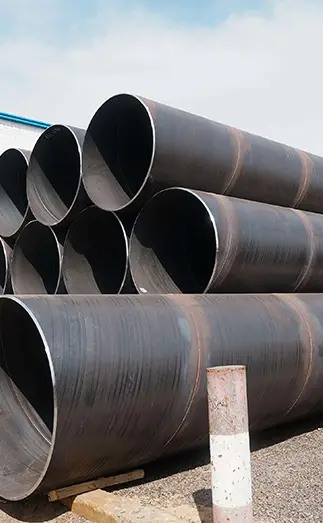
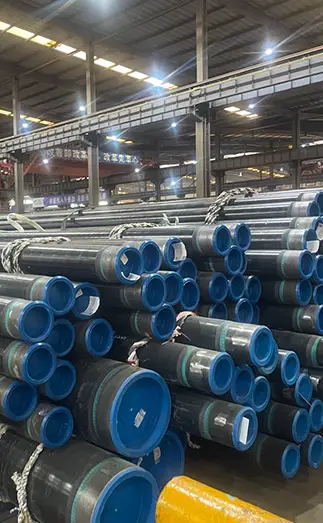
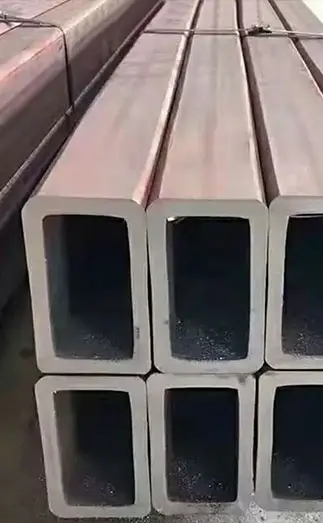
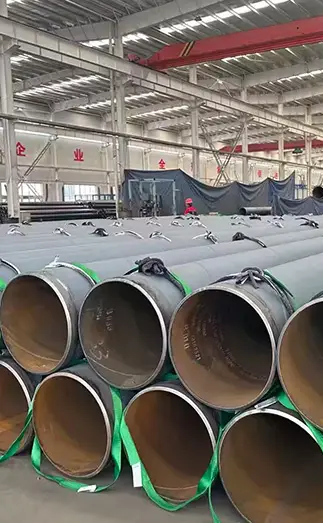
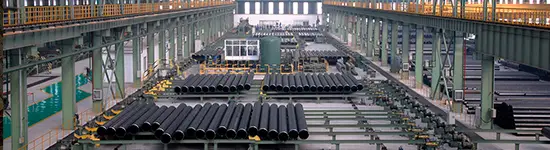
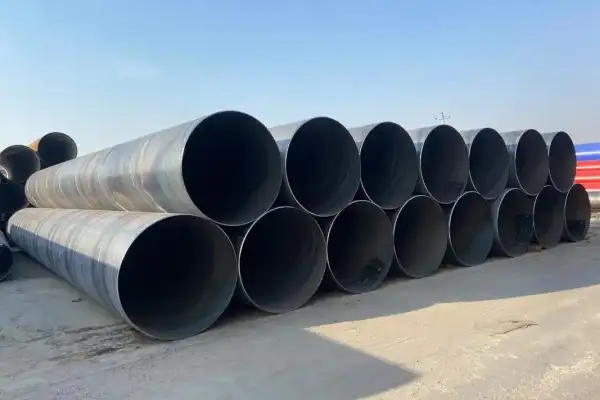
ERW (Electric Resistance Welded) pipes are widely used in construction, oil & gas, water transmission, and structural applications.
When selecting ERW pipes, outer diameter (OD) and wall thickness are the two most critical dimensional parameters, as they directly determine pressure capacity, mechanical strength, pipe weight, and compliance with international standards.
This guide explains ERW pipe OD and wall thickness specifications, covering size systems, wall thickness series, material limitations, applicable standards, and selection considerations.
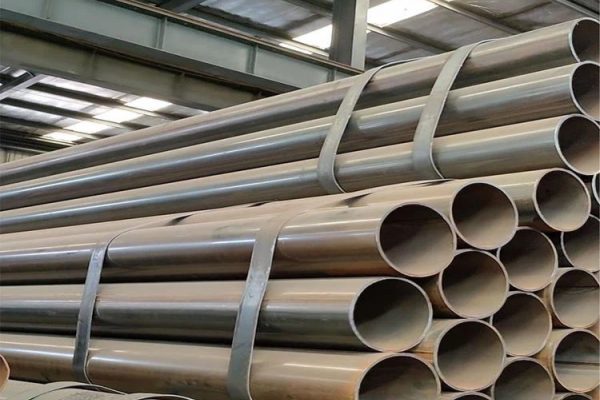
ERW Pipe Outer Diameter and Wall Thickness Overview
ERW pipe dimensions are mainly defined by international standards such as API 5L and GB/T 3091.
While standard size ranges are well established, actual OD and wall thickness may vary slightly depending on:
Steel grade
Manufacturing process
Applicable standard
Customer or project requirements
For critical projects, the governing product standard or purchase contract should always take precedence.
Small Diameter ERW Pipe Outer Diameter and Wall Thickness Specifications (Outer Diameter ≤ 114mm)
|
Nominal Size (inch)
|
Outside Diameter (mm)
|
Common Wall Thickness Range (mm)
|
Standard Wall Thickness Series (mm)
|
|
1/2"
|
21.3
|
2.0–4.0
|
2.77, 3.73, 4.78
|
|
3/4"
|
26.7
|
2.5–5.0
|
2.87, 3.91, 5.56
|
|
1"
|
33.4
|
3.0–6.0
|
3.38, 4.55, 6.35
|
|
1-1/4"
|
42.2
|
3.5–6.5
|
3.56, 4.85, 6.35
|
|
1-1/2"
|
48.3
|
3.5–7.0
|
3.68, 5.08, 7.14
|
|
2"
|
60.3
|
3.5–8.5
|
3.91, 5.54, 8.74
|
|
2-1/2"
|
73
|
4.0–10.0
|
5.16, 7.01, 9.53
|
|
3"
|
88.9
|
4.5–12.0
|
5.49, 7.62, 11.13
|
|
3-1/2"
|
101.6
|
5.0–12.5
|
5.74, 8.08
|
|
4"
|
114.3
|
5.0–14.0
|
6.02, 8.56, 13.49
|
Specifications of Medium and Large Diameter ERW Pipes (Outer Diameter 114 - 508mm)
|
Nominal Size (inch)
|
Outside Diameter (mm)
|
Common Wall Thickness Range (mm)
|
Standard Wall Thickness Series (mm)
|
|
5"
|
141.3
|
5.5–16.0
|
6.55, 9.53, 15.88
|
|
6"
|
168.3
|
6.0–18.0
|
7.11, 10.97, 18.26
|
|
8"
|
219.1
|
7.0–23.0
|
8.18, 12.70, 23.01
|
|
10"
|
273
|
8.0–28.0
|
9.27, 15.09, 28.58
|
|
12"
|
323.8
|
9.0–33.0
|
10.31, 17.48, 33.32
|
|
14"
|
355.6
|
9.5–19.0
|
9.53, 11.13, 19.05
|
|
16"
|
406.4
|
9.5–22.0
|
9.53, 12.70, 22.00
|
|
18"
|
457
|
10.0–25.0
|
10.00, 14.30, 25.00
|
|
20"
|
508
|
11.0–28.0
|
11.10, 15.90, 28.00
|
Note: ERW pipes are primarily used for small- and medium-diameter ranges.
For large diameters (typically OD > 508 mm), LSAW pipes are more commonly adopted due to welding and forming limitations.
Relationship Between Nominal Diameter and Outer Diameter
ERW pipes are typically specified using nominal diameter (NPS, in inches), while the actual outer diameter is measured in millimeters.
This inch-based naming system originates from international standards (e.g., API).
As a result, nominal diameter does not equal actual OD.
Example:
A 6-inch ERW pipe has an actual OD of 168.3 mm, not 152.4 mm (6 × 25.4), because OD values are standardized to ensure compatibility with fittings and connections.
ERW Pipe Wall Thickness Series
ERW pipe wall thickness is commonly classified into the following series:
SCH Series (Schedule):
SCH 40, SCH 80, SCH 160, etc.
Higher schedule numbers indicate thicker walls and higher pressure capacity.
STD (Standard Weight):
Suitable for general pressure and structural applications.
XS / XH (Extra Strong / Extra Heavy):
Used for high-pressure or demanding service conditions.
Non-Standard Wall Thickness:
Custom wall thicknesses can be produced to meet specific engineering requirements.
For the same SCH number, actual wall thickness varies by nominal diameter.
For example, SCH 40 thickness increases significantly as pipe diameter increases.
Steel Grade and Wall Thickness Limitations
The maximum achievable wall thickness of ERW pipes is closely related to steel grade and welding capability.
Low-strength steel grades (e.g., Q235, L245):
Allow wider wall thickness ranges, often up to 25 mm or more.
High-strength steel grades (e.g., X70, X80):
Due to ERW process constraints, maximum wall thickness is typically limited to:
~16 mm for small diameters
~22 mm for larger diameters
Special steels (low-temperature, corrosion-resistant, etc.):
Wall thickness must be selected strictly according to the applicable standard and service conditions.
ERW Pipe Standards and Dimensional Tolerances
Common standards defining ERW pipe OD and wall thickness include:
ASTM A53 / ASTM A500 – Structural and pressure applications
API 5L – Oil and gas pipelines (Grades B, X42–X70)
EN 10219 / EN 10217 – European structural and pressure pipe standards
Typical dimensional tolerances:
Outer diameter (OD): ±0.5% to ±1.0%
Wall thickness: ±10% (standard-dependent)
Performance Characteristics of ERW Pipes
ERW pipes offer several technical and economic advantages:
High production efficiency with rapid heating and no filler metal required
Excellent dimensional accuracy, enabling tight OD and wall thickness control
Good toughness and resistance to crushing and bursting, supported by low impurity content
Dense and uniform microstructure due to hot-rolled coil feedstock
Competitive pricing and long service life, especially in standard pipeline systems
Summary: How to Select ERW Pipe OD and Wall Thickness
Outer diameter and wall thickness are fundamental parameters in ERW pipe selection.
In real-world projects, they should be determined by considering:
Conveyed medium
Operating pressure
Environmental conditions
Applicable standards
Overall project economics
While standard size ranges cover most applications, customized ERW pipe dimensions are available when required.
As manufacturing technology and standards continue to evolve, staying updated on ERW pipe dimensional limits and specification changes is strongly recommended.
FAQ
Q1: Why are outer diameter and wall thickness critical when selecting ERW pipes?
Outer diameter determines pipe compatibility with fittings and systems, while wall thickness controls pressure capacity, strength, and safety compliance.
Q2: Does ERW pipe nominal size equal its actual outer diameter?
No. ERW pipes use inch-based nominal sizes, but the actual outer diameter is fixed by standards and expressed in millimeters.
Q3: What wall thickness series are commonly used for ERW pipes?
Common series include SCH (Schedule), STD, XS/XH, and non-standard customized wall thicknesses for specific projects.
Q4: Is there a maximum wall thickness limit for ERW pipes?
Yes. Maximum wall thickness depends on diameter and steel grade; high-strength grades typically have stricter thickness limits due to welding constraints.
Q5: Which standards define ERW pipe OD and wall thickness tolerances?
Standards such as API 5L, ASTM A53/A500, and EN 10219/10217 specify allowable OD and wall thickness tolerances.
Q6: When should LSAW pipes be used instead of ERW pipes?
LSAW pipes are preferred for large diameters and thick walls where ERW welding limitations may affect quality or reliability.


 English
 Español
 Français
 بالعربية