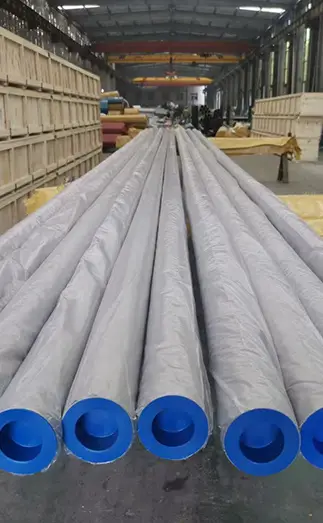
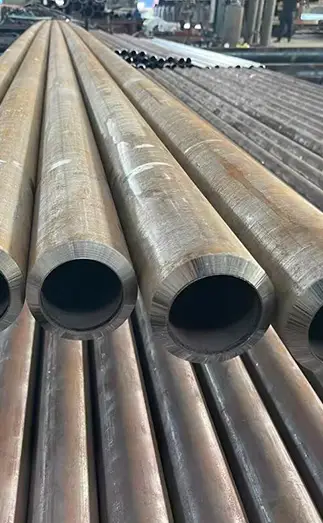
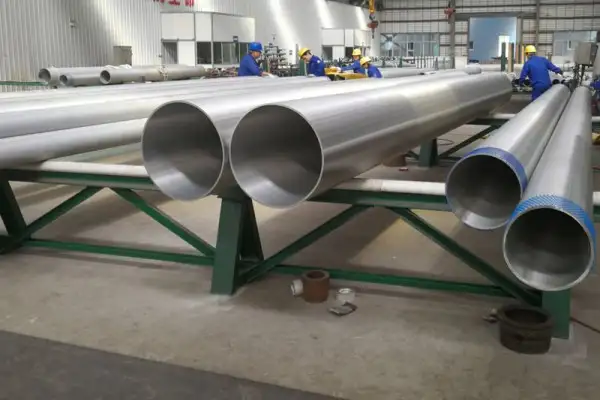
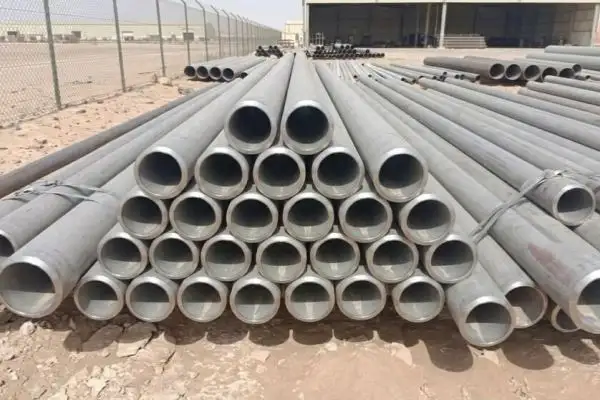
Hastelloy X, Hastelloy C4, Hastelloy C22, and Hastelloy C276 are nickel-based alloys designed for demanding high-temperature, corrosive, and chemical-processing environments. Although all four alloys provide excellent corrosion resistance and mechanical performance, their chemical composition, chromium and molybdenum content, strength, and temperature capability differ significantly.
For buyers specifying Hastelloy pipe, chemical composition and mechanical properties are two of the most important factors when selecting the appropriate grade.
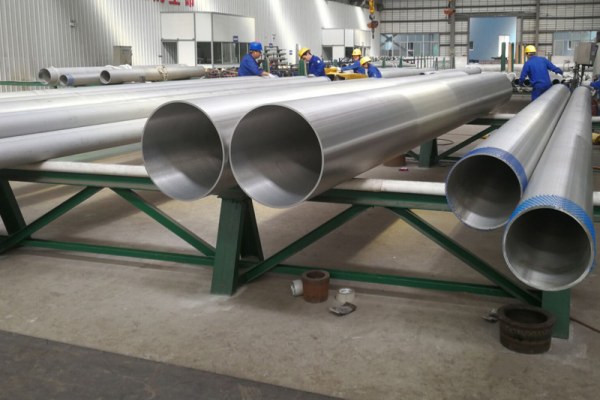
Hastelloy X, C4, C22 and C276: Quick Comparison
In simple terms, Hastelloy X is known for high-temperature strength and oxidation resistance, while Hastelloy C4, C22, and C276 are primarily selected for demanding corrosion-resistant applications.
Hastelloy X: High-temperature nickel-chromium-iron-molybdenum alloy with strong oxidation resistance and good high-temperature strength.
Hastelloy C4: Nickel-molybdenum alloy designed for good corrosion resistance and thermal stability.
Hastelloy C22: Highly corrosion-resistant nickel-chromium-molybdenum alloy suitable for aggressive chemical environments.
Hastelloy C276: Nickel-molybdenum-chromium alloy widely used where resistance to severe general corrosion, pitting, and crevice corrosion is required.
The exact grade should be selected according to the chemical medium, operating temperature, pressure, fabrication requirements, and applicable material specification.
Chemical Composition of Hastelloy X, C4, C22 and C276 Pipe
The following table summarizes the chemical composition provided for the four Hastelloy grades.
|
Grade
|
C (%)
|
Mn (%)
|
Si (%)
|
S (%)
|
Co (%)
|
Ni (%)
|
Cr (%)
|
Fe (%)
|
Mo (%)
|
P (%)
|
|
Hastelloy X
|
0.05–0.15
|
1.00 max
|
0.10 max
|
0.03 max
|
0.50–2.50
|
Bal.
|
20.50–23.00
|
17.00–20.00
|
8.00–10.00
|
0.04 max
|
|
Hastelloy C4
|
0.02 max
|
1.00 max
|
0.10 max
|
0.03 max
|
1.00 max
|
Bal.
|
1.00 max
|
2.00 max
|
26.00–30.00
|
0.04 max
|
|
Hastelloy C22
|
0.010 max
|
0.50 max
|
0.08 max
|
0.02 max
|
2.50 max
|
50.015 min*
|
20.00–22.50
|
2.00–6.00
|
12.50–14.50
|
0.02 max
|
|
Hastelloy C276
|
0.010 max
|
1.00 max
|
0.08 max
|
0.03 max
|
2.50 max
|
50.99 min*
|
14.50–16.50
|
4.00–7.00
|
15.00–17.00
|
0.04 max
|
*Bal. means the balance of the composition after the listed elements are accounted for. The Ni minimum values marked with an asterisk are reproduced from the supplied data and should be verified against the applicable material specification before use in a purchase specification.
Key Chemical Composition Differences
The chemical composition explains many of the performance differences between these grades.
Hastelloy X contains relatively high chromium, iron, and molybdenum contents. Its combination of nickel, chromium, and molybdenum contributes to high-temperature strength and oxidation resistance.
Hastelloy C4 has a particularly high molybdenum content, with relatively low chromium and iron. This composition is designed for corrosion resistance in demanding chemical environments.
Hastelloy C22 combines high chromium and molybdenum with a nickel-rich matrix. Its composition provides broad resistance to various aggressive corrosive environments.
Hastelloy C276 contains significant molybdenum and chromium together with a nickel-rich matrix. This combination makes it a widely used alloy for severe corrosion service.
Mechanical Properties of Hastelloy X, C4, C22 and C276 Pipe
The supplied mechanical-property data are summarized below.
|
Grade
|
Density
|
Melting Point
|
Tensile Strength
|
Yield Strength, 0.2% Offset
|
Elongation
|
|
Hastelloy X
|
8.22 g/cm³
|
1355°C
|
655 MPa
|
240 MPa
|
35%
|
|
Hastelloy C4
|
9.20 g/cm³
|
1370°C (2500°F)
|
760 MPa (110,000 psi)
|
350 MPa (51,000 psi)
|
40%
|
|
Hastelloy C22
|
8.69 g/cm³
|
1399°C (2550°F)
|
690 MPa (100,000 psi)
|
310 MPa (45,000 psi)
|
45%
|
|
Hastelloy C276
|
8.89 g/cm³
|
1370°C (2500°F)
|
790 MPa (115,000 psi)
|
355 MPa (52,000 psi)
|
40%
|
Based on the supplied values, Hastelloy C276 has the highest tensile strength and yield strength among the four grades, while Hastelloy C22 has the highest listed elongation. Hastelloy X has the lowest density in this comparison.
These values are useful for preliminary material comparison, but actual allowable stresses and design limits must be determined according to the applicable product specification, product form, heat treatment, temperature, and engineering code.
Hastelloy X vs C4 vs C22 vs C276
The four grades can be differentiated by their primary performance characteristics.
|
Grade
|
Main Characteristic
|
Typical Selection Consideration
|
|
Hastelloy X
|
High-temperature strength and oxidation resistance
|
High-temperature components and heat-resistant systems
|
|
Hastelloy C4
|
High molybdenum content and corrosion resistance
|
Chemical processing and hot corrosive environments
|
|
Hastelloy C22
|
Broad corrosion resistance
|
Aggressive chemical and mixed corrosive environments
|
|
Hastelloy C276
|
High strength and severe corrosion resistance
|
Chemical processing and highly corrosive service
|
This comparison should be treated as a material-selection starting point, rather than a substitute for engineering evaluation. The most corrosion-resistant alloy is not automatically the best choice for every application.
How to Select the Right Hastelloy Pipe or Tube Grade
Selecting between Hastelloy X, C4, C22, and C276 should start with the actual service conditions.
1. Identify the Corrosive Medium
Determine the chemical composition, concentration, pH, chloride content, and other characteristics of the process fluid. Corrosion resistance is highly dependent on the specific environment.
2. Determine Operating Temperature
Temperature can significantly affect corrosion behavior, mechanical strength, and allowable stress. Hastelloy X is particularly relevant when high-temperature mechanical performance is a major requirement.
3. Check Pressure and Mechanical Loads
Pipe and tube must withstand the required internal pressure, external loads, thermal stresses, vibration, and other mechanical conditions.
4. Confirm Fabrication Requirements
Welding, forming, machining, heat treatment, and post-fabrication requirements should be considered before selecting the alloy.
5. Specify the Complete Product Standard
A purchase specification should identify the Hastelloy grade, pipe or tube type, dimensions, wall thickness, applicable ASTM/ASME specification, heat treatment, testing, surface condition, length, and inspection requirements.
FAQ
1. What is Hastelloy X mainly used for?
Hastelloy X is mainly selected for high-temperature applications requiring oxidation resistance and good mechanical strength.
2. What is the difference between Hastelloy C22 and C276?
C22 contains higher chromium, while C276 contains higher molybdenum and has higher listed tensile and yield strength in the supplied data.
3. Which Hastelloy grade has the highest tensile strength?
Among the four grades in the supplied table, Hastelloy C276 has the highest tensile strength at 790 MPa.
4. Which grade has the highest elongation?
Hastelloy C22 has the highest listed elongation at 45%.
5. Why is molybdenum important in Hastelloy alloys?
Molybdenum contributes significantly to corrosion resistance, particularly in aggressive environments, and is an important alloying element in C4, C22, and C276.


 English
 Español
 Français
 بالعربية