What Is a Steel Truss Structure?
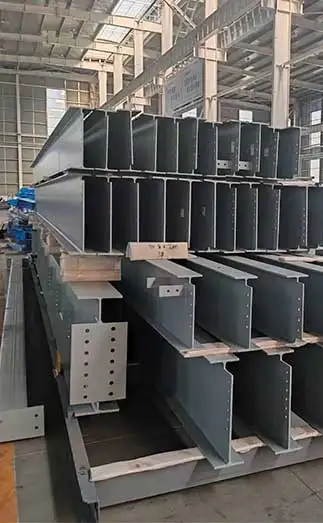
A steel truss structure is a load-bearing framework fabricated from structural steel components arranged in a triangular configuration. It typically consists of a top chord, bottom chord, and web members, which work together to efficiently transfer loads and maintain structural stability.
Steel trusses are widely used in roof structures, industrial buildings, warehouses, bridges, and large-span constructions due to their high strength-to-weight ratio, cost efficiency, and ease of installation.
Key Functions of Steel Trusses in Building Structures
Steel trusses serve as the primary structural skeleton of a roof system. Their main functions include:
Supporting dead loads from roofing materials
Resisting live loads such as wind, snow, and maintenance loads
Allowing long-span designs with fewer internal columns
Reducing overall steel consumption compared to solid beams
To improve performance, bracing systems are installed between trusses to distribute loads evenly and prevent lateral instability or progressive collapse.
Common Types of Steel Truss Structures
- Warren Truss Structure
The Warren truss features a repeating “W” pattern formed by equilateral triangles. Its diagonal members alternate between compression and tension, providing excellent structural efficiency. This truss type is commonly used in large-span buildings and bridges.
Typical applications: industrial halls, bridges, long-span roofs
- Pratt Truss Structure
The Pratt truss has a distinctive “N” configuration and is known for its economical material distribution. Vertical members carry compression while diagonal members carry tension, making it suitable for long-span steel structures.
Typical applications: factories, warehouses, large commercial buildings
- Fink Truss Structure
A Fink truss is widely used in residential and light commercial buildings. Its web system consists of shorter members connected to longer chords, allowing for efficient load transfer with reduced steel usage.
Typical applications: residential roofs, low-rise buildings
- North Light Truss Structure
The North Light truss is an asymmetrical steel truss commonly used in industrial architecture. One side of the truss incorporates glazing, allowing natural daylight into the building and reducing energy consumption.
Typical span range: 20–30 meters
Typical applications: factories, workshops, manufacturing plants
- Queen Post Truss Structure
The Queen post truss consists of two vertical posts connected by a horizontal beam. It is simple to fabricate and suitable for short-span roof structures, typically up to 10 meters.
Typical applications: small industrial buildings, auxiliary structures
- King Post Truss Structure
A King post truss features a central vertical member and two inclined struts. Designed for smaller spans, it is commonly used in residential and small commercial buildings.
Typical span: up to 8 meters
How to Choose the Right Steel Truss Type?
Selecting the appropriate steel truss system depends on several factors:
Required span length
Roof load and environmental conditions
Building function (industrial, residential, commercial)
Cost and fabrication complexity
Professional structural steel fabricators and engineers can recommend the optimal truss type based on project-specific requirements.
FAQ
Q1: What is a steel truss structure used for?
A steel truss structure is used to support roofs and long-span buildings by efficiently transferring loads through triangular steel members.
Q2: Which steel truss is best for long spans?
Warren and Pratt trusses are commonly used for long-span steel structures due to their high load efficiency and structural stability.
Q3: What is the difference between a King post and Queen post truss?
A King post truss is designed for spans up to 8 meters, while a Queen post truss can support spans of up to 10 meters with added mid-span stability.
Q4: Why are steel trusses used instead of solid beams?
Steel trusses provide higher strength-to-weight efficiency, allow longer spans, and reduce material costs compared to solid steel beams.


 English
 Español
 Français
 بالعربية