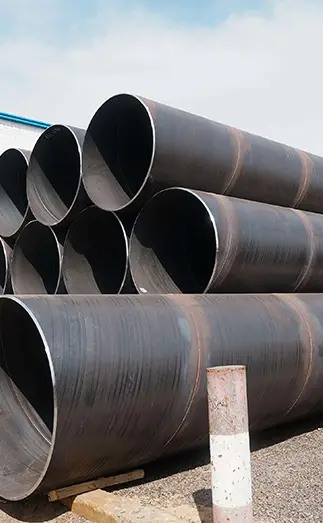
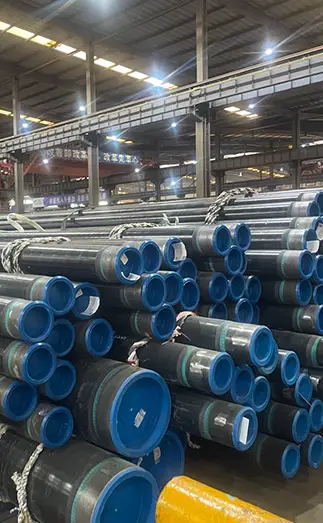
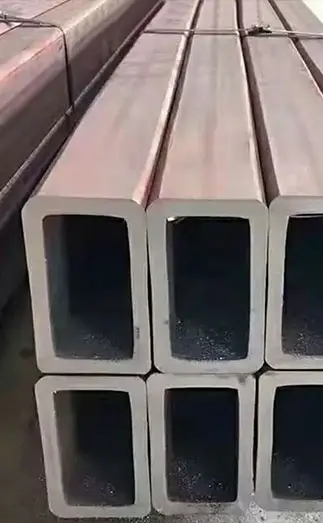
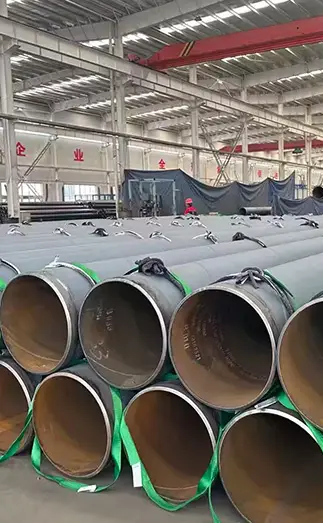
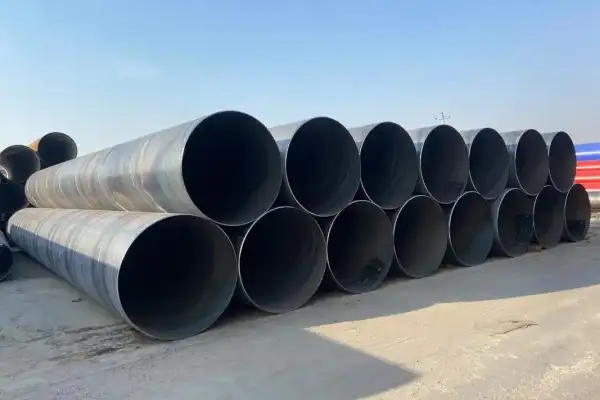
The EN 10219 standard applies to cold-formed welded structural hollow sections made of non-alloy and fine-grained steels. These products represent the most widely adopted and cost-efficient square and rectangular tubes used in modern construction and general mechanical structures. In practice, procuring EN 10219 square tubes is essentially an exercise in balancing cost efficiency, product quality, and supply reliability.
EN 10219 covers square, rectangular, and circular hollow sections. Its technical delivery conditions specify requirements for steel grade, delivery condition, chemical composition, mechanical properties, dimensional tolerances, and weld seam quality, forming a complete quality control framework for cold-formed welded profiles.
Key Considerations When Procuring EN 10219 Cold-Formed Square Tubes
1. Supplier Selection
For standardized, high-volume products such as EN 10219 hollow sections, supply capability and delivery stability are often more critical than project-specific certifications.
Prefer first-tier agents or large-scale distributors with direct and stable supply relationships with major steel mills. These suppliers typically offer full size ranges, sufficient stock, and transparent pricing.
Ensure traceable material certification. Although EN 10219 emphasizes finished-product performance, consistent quality depends heavily on the manufacturer’s production control and process inspection systems.
Evaluate pricing flexibility and risk resistance, particularly the supplier’s ability to respond to raw-material price fluctuations through competitive pricing models or flexible procurement arrangements.
2. Material and Steel Grade Control
EN 10219 uses steel grades similar to EN 10210, such as S235H, S275H, and S355H, where the “H” designation indicates suitability for hollow sections. Because cold-forming introduces work hardening, these profiles are typically delivered in conditions that preserve adequate toughness and weldability.
A common procurement risk is the substitution of “non-standard pipes” marketed as EN or national-standard products. These often achieve lower prices by:
Excessively reducing wall thickness (negative tolerance abuse),
Using steel with downgraded mechanical properties.
Such practices pose significant structural safety risks.
Key Requirement:
Contracts must explicitly require full compliance with EN 10219 for both material properties and dimensional tolerances. Upon receipt, wall thickness inspection should be the first quality check, using random sampling and caliper measurements referenced against the standard tolerance tables. For critical applications, the original mill test certificate should be requested.
3. Dimensions and Tolerances
Wall thickness tolerance is both a major cost driver and a high-risk quality factor in EN 10219 procurement.
Theoretical vs. actual weight settlement:
Settlement by theoretical weight may incentivize delivery at the negative tolerance limit.
Settlement by actual weighed weight is fairer but requires joint supervision during weighing.
Recommended Contract Clause:
“Settlement shall be based on actual weighed weight, and wall thickness shall not be lower than the minimum tolerance permitted by EN 10219.”
This approach establishes both economic and technical safeguards.
4. Machining and Processing Performance
As welded hollow sections, weld seam quality directly affects processing performance.
Visual inspection: Weld seams should be smooth, continuous, and free from defects such as cracks, undercut, or incomplete fusion. After grinding, the seam should be flush with the base material.
Cold-forming adaptability: Due to work hardening, elongation performance should be verified when secondary bending or forming is required, to avoid cracking at bend locations.
Welding preparation: Prior to welding, the seam area must be properly cleaned. Thick-walled sections require qualified welding procedures consistent with material grade and thickness.
5. Surface Treatment Options
Common EN 10219 surface conditions include:
Black steel (as-rolled): Suitable for projects with unified on-site corrosion protection systems.
Hot-dip galvanized: Factory galvanizing offers superior corrosion resistance and minimal maintenance, but at a higher cost.
Spray-coated or powder-coated: Provides enhanced aesthetics with moderate corrosion protection, often used in exposed or architectural applications.
Contract Note:
Surface treatment requirements must be clearly specified, including technical parameters such as minimum zinc coating weight for galvanizing (e.g., ≥275 g/m²).
6. Cost Optimization Strategy
Compare not only unit price, but also freight costs, processing loss rates, and supply-related indirect costs.
Coordinate with structural designers to prioritize standard market sizes and common lengths, reducing lead time and overall procurement cost.
Develop long-term strategic partnerships with core suppliers and consider vendor-managed inventory (VMI) models to reduce capital tied up in stock.
7. Market and Technical Trends
Driven by energy efficiency, sustainability, and lightweight structural design, the use of high-strength EN 10219 grades (e.g., S460) is increasing.
Procurement considerations for high-strength grades:
Stricter welding procedure qualification is required.
Increased springback during forming demands higher precision in processing and fabrication.
For more: EN 10210 hot-formed square tube selection guide


 English
 Español
 Français
 بالعربية