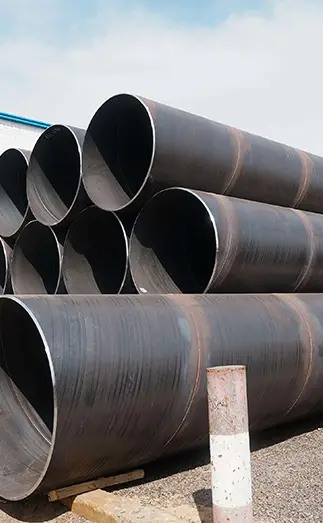
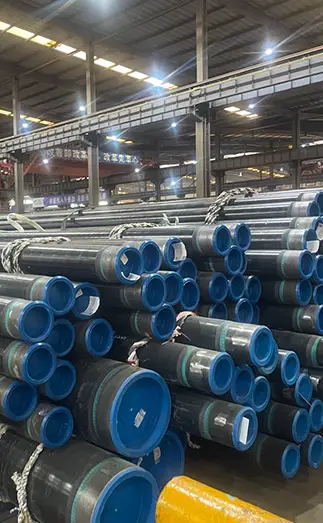
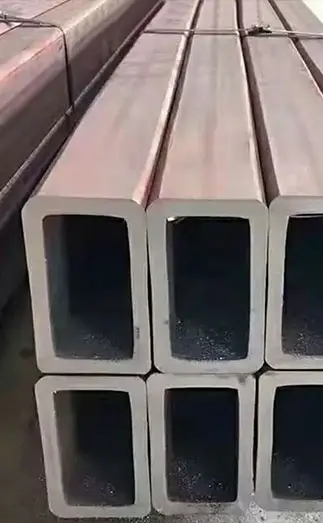
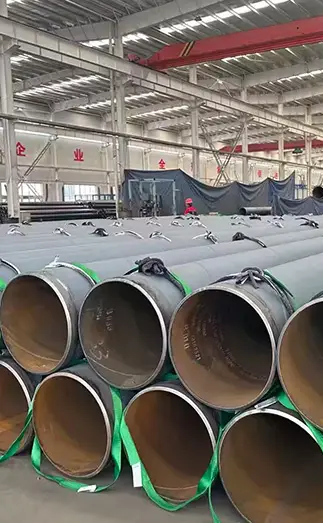
Rectangular tubes (RHS tubes) are a widely used form of structural steel tubing characterized by a rectangular cross-section. Owing to their excellent load-bearing capacity, geometric stability, and fabrication versatility, they are extensively applied in construction, machinery manufacturing, automotive structures, and infrastructure projects. The manufacturing process and applied technologies play a decisive role in determining their dimensional accuracy, mechanical performance, and long-term reliability.
Manufacturing Processes of Rectangular Tubes
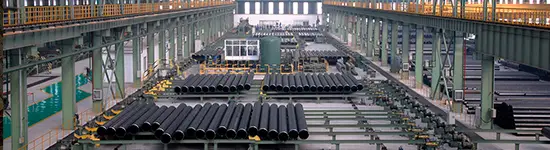
Rectangular tubes are generally produced using two primary manufacturing routes: seamless forming and welded forming. Each process involves specific forming, welding, and post-treatment technologies to satisfy different application requirements.
Seamless rectangular tubes are produced by piercing solid round billets, followed by hot rolling or cold drawing to form a hollow rectangular profile without weld seams.
Welded rectangular tubes are manufactured by cold-forming or hot-forming steel plates or strips into a rectangular shape, after which the open seam is welded longitudinally.
Main Manufacturing Steps of Rectangular Tubes
Raw Material Preparation
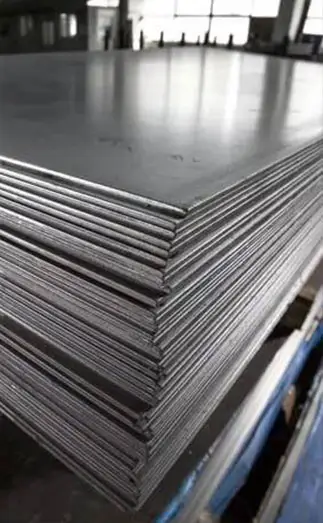
Common materials include carbon steel, alloy steel, and stainless steel. Raw materials are cut to size and may undergo preliminary heat treatment to ensure suitable metallurgical properties for forming.
Hot Rolling or Cold Rolling
Hot rolling is performed at elevated temperatures, enabling efficient deformation and high production output.
Cold rolling is carried out at room temperature, offering superior dimensional accuracy and surface finish.
Cold-rolled rectangular tubes are typically formed from hot-rolled steel strips or plates through multi-pass rolling, bending, and high-frequency welding. Compared with hot rolling, cold rolling eliminates reheating, reduces energy consumption by approximately 40%, and allows for thinner wall thickness with tighter tolerances.
Welding
For welded RHS tubes, the formed edges are joined using resistance welding, arc welding, or laser welding. The welding method directly affects joint strength, surface smoothness, and overall tube performance.
Straightening
Mechanical or hydraulic straightening is applied to correct deformation and ensure straightness and uniformity along the tube length.
Cutting
Tubes are cut to specified lengths using shearing, sawing, or flame cutting, depending on dimensional requirements and production efficiency considerations.
Surface Treatment
Surface treatments such as galvanizing, painting, polishing, or coating are applied to improve corrosion resistance, appearance, and service life.
Key Production Technologies of Rectangular Tubes
Forming Technology
Hot rolling: high efficiency, lower dimensional precision
Cold rolling: higher accuracy, better surface quality
Precision Enhancement
Seamless tubes often undergo cold drawing to further improve dimensional tolerances and surface finish. In welded tube production, automated welding technologies (e.g., laser welding) minimize human error and improve weld consistency.
Surface Treatment Technology
Pickling, passivation, and galvanizing enhance corrosion resistance and improve aesthetic quality.
Heat Treatment
Processes such as annealing, normalizing, or quenching optimize microstructure, adjust hardness, and improve toughness and fatigue resistance.
Process Selection and Performance Impact
Manufacturing process selection depends on material grade, tube dimensions, and end-use application:
Seamless rectangular tubes are preferred for high-pressure or high-temperature environments (e.g., petrochemical and power applications) due to the absence of weld seams.
Welded rectangular tubes offer better cost efficiency and are widely used in building structures and general engineering.
Hot rolling provides cost advantages for large-volume production, while cold rolling and cold drawing are suitable for applications demanding high precision.
Surface treatment directly affects durability; for example, hot-dip galvanizing significantly extends service life in corrosive environments.
Quality Control and Industry Trends
Quality control is embedded throughout the entire production cycle and includes chemical composition analysis, dimensional tolerance inspection, weld non-destructive testing (NDT), and mechanical performance evaluation. Current development trends emphasize automation, energy efficiency, higher precision, and environmentally friendly surface treatment technologies.
Conclusion
The manufacturing process and applied technologies of rectangular tubes are fundamental to achieving consistent quality and reliable performance. Through proper material selection, optimized rolling and welding methods, precise straightening and cutting, and appropriate surface treatment, rectangular tubes can be produced to meet a wide range of structural and industrial application requirements.
FAQ: Rectangular Tube Manufacturing
Q1: What is the main difference between seamless and welded rectangular tubes?
A: Seamless rectangular tubes have no weld seam and offer superior performance under high pressure or temperature, while welded tubes are more economical and suitable for structural and general-purpose applications.
Q2: Why are cold-rolled rectangular tubes more precise than hot-rolled ones?
A: Cold rolling is performed at room temperature, which minimizes thermal deformation and allows tighter dimensional tolerances and better surface finish.
Q3: Which welding method provides the best weld quality for RHS tubes?
A: Laser welding and high-frequency resistance welding offer high weld strength, smooth seams, and consistent quality, especially in automated production lines.
Q4: How does surface treatment affect rectangular tube performance?
A: Surface treatments such as galvanizing or coating significantly enhance corrosion resistance, extend service life, and improve appearance.
Q5: How is quality ensured during rectangular tube production?
A: Quality is controlled through raw material inspection, dimensional checks, weld NDT, mechanical testing, and final surface and performance evaluations.


 English
 Español
 Français
 بالعربية