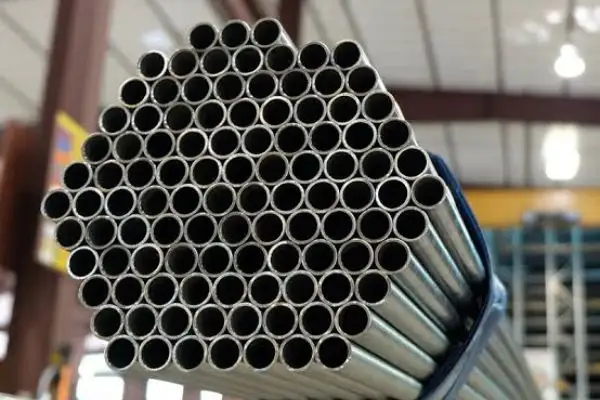
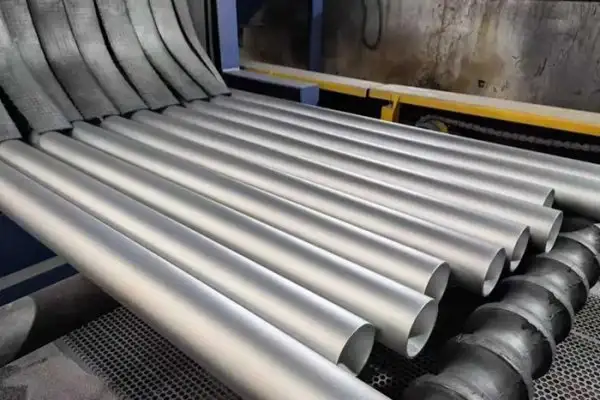
What Is a Galvanized Square Tube?
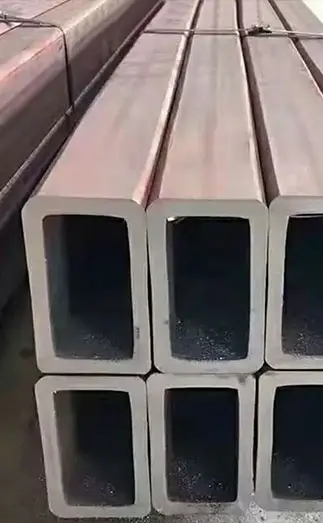
A galvanized square tube is a hollow steel section with a square cross-section, manufactured from hot-rolled or cold-rolled galvanized steel strip or galvanized steel coil. The material is cold-formed into shape and then joined using high-frequency welding.
Alternatively, galvanized square tubes can also be produced by hot-dip galvanizing pre-formed cold-bent square hollow sections.
Through the galvanizing process, a zinc coating is applied to the steel surface, providing an additional protective layer compared with ordinary square tubes. This coating significantly enhances corrosion resistance and extends the service life of the product, especially in outdoor and humid environments.
Base Materials of Galvanized Square Tubes
Galvanized square tubes are typically manufactured from carbon steel or low-alloy structural steel. After forming, their overall performance is further improved through galvanization.
1. Common Steel Grades
Typical base materials include:
Chinese standards: Q195, Q235, Q345
European standards: SS400, S235JR
American standards: ASTM A36, ASTM A500
These steel grades offer good mechanical strength, weldability, and formability, making them suitable for structural and load-bearing applications.
2. Galvanized Coating Material
The key protective element of galvanized square tubes is the zinc (Zn) coating. The zinc layer uniformly covers the tube surface, effectively isolating the steel substrate from air and moisture, thereby preventing oxidation and rust formation.
Material Properties and Corrosion Resistance of Galvanized Square Tubes
The galvanizing process provides enhanced corrosion protection through a dense zinc crystal structure formed on the steel surface. This zinc layer acts as a physical barrier that prevents corrosive substances from penetrating the steel.
In addition to barrier protection, zinc offers cathodic (sacrificial) protection. At cut edges, scratches, or areas where the coating is locally damaged, zinc preferentially corrodes and forms a stable, insoluble oxide layer. This process continues to protect the exposed steel, ensuring long-term corrosion resistance even when the coating is partially compromised.
Applications of Galvanized Square Tubes
Due to their durability and corrosion resistance, galvanized square tubes are widely used in various industries and infrastructure projects, including:
Power plants and electrical facilities
Agricultural and chemical machinery
Glass curtain wall systems
Automobile frames and chassis structures
Airports and transportation infrastructure
Their adaptability and protective performance make them a common structural material in both industrial and civil engineering fields.
Classification of Galvanized Square Tubes
Based on the galvanizing method, galvanized square tubes are generally divided into hot-dip galvanized and cold-galvanized types. Differences in processing result in variations in coating thickness, corrosion resistance, and mechanical properties.
1. Hot-Dip Galvanized Square Tubes
Hot-dip galvanized square tubes are produced by forming and welding steel plates or strips into square tubes, followed by immersion in a molten zinc bath. This process triggers metallurgical reactions that form a thick, tightly bonded zinc coating.
Simple and efficient production process
Wide range of available sizes
Lower equipment and capital requirements
Excellent corrosion resistance, suitable for outdoor use
However, compared with seamless square tubes, their overall structural strength is relatively lower.
2. Cold-Galvanized Square Tubes
Cold-galvanized square tubes use electrochemical principles to apply zinc to the steel surface, typically through electroplating or zinc-rich coatings.
Thinner zinc layer
Corrosion protection relies mainly on electrochemical action
Requires thorough surface preparation to ensure coating adhesion
While cold-galvanized tubes offer basic corrosion resistance, their durability is generally inferior to that of hot-dip galvanized square tubes, especially in harsh environments.
FAQs
What is a galvanized square tube?
A galvanized square tube is a hollow square steel section coated with zinc, providing corrosion protection through barrier and sacrificial effects and extending service life in outdoor environments.
How is a galvanized square tube made?
A galvanized square tube is produced by cold-forming steel strip into a square shape, welding the seam, and applying a zinc coating through hot-dip or cold galvanizing.
Hot-dip vs cold-galvanized square tubes: what’s the difference?
Hot-dip galvanized square tubes have thicker zinc coatings and better corrosion resistance, while cold-galvanized tubes use thinner electrochemical coatings with shorter service life.
Which galvanized square tube is best for outdoor use?
Hot-dip galvanized square tubes are best for outdoor use because their thick zinc coating provides long-term resistance to moisture, rain, and atmospheric corrosion.
What steel grades are used for galvanized square tubes?
Galvanized square tubes are commonly made from Q195, Q235, Q345, SS400, S235JR, ASTM A36, or ASTM A500 structural steel grades.


 English
 Español
 Français
 بالعربية