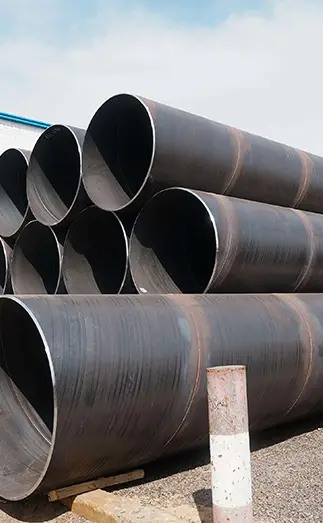
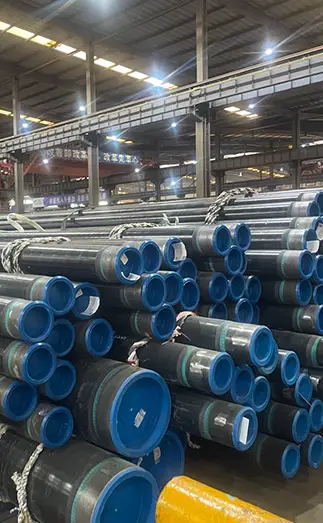
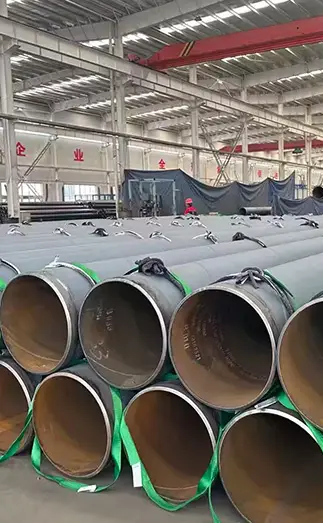
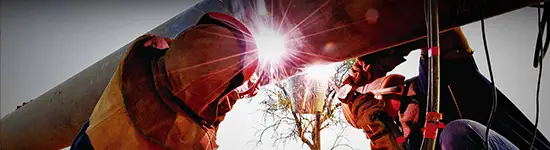
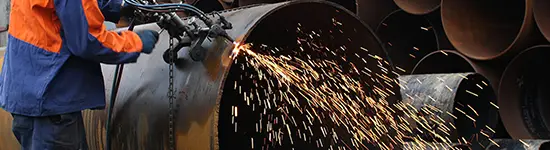
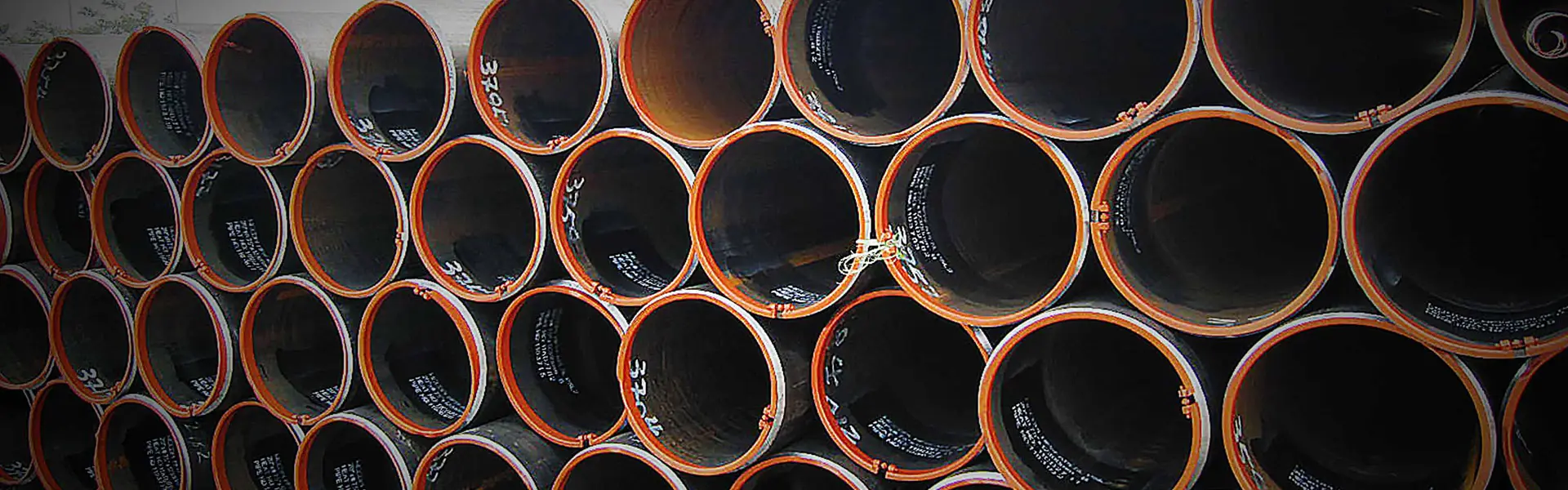
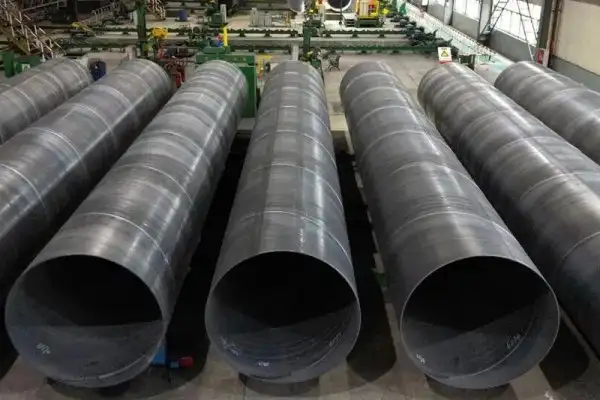
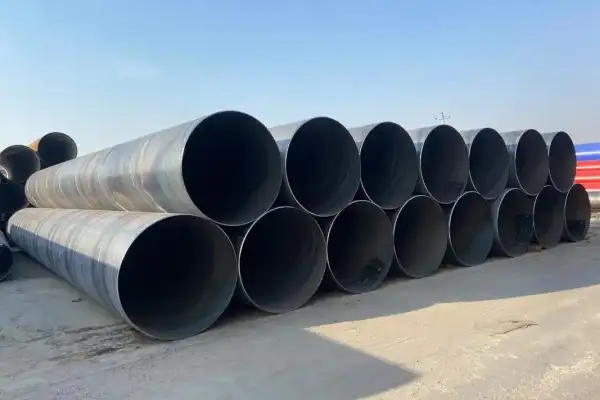
Welding in LSAW steel pipe manufacturing is the process of joining steel plates along a longitudinal seam using controlled heat and/or pressure to form a continuous, high-strength pipe body. Welding quality directly affects the pipe’s mechanical strength, pressure resistance, and long-term service reliability.
What Welding Methods Are Used for LSAW Steel Pipes?
LSAW steel pipes primarily rely on fusion welding, but welding methods can be classified into three technical categories:
Fusion Welding
Fusion welding forms a molten weld pool by heating the base metal. After cooling and solidification, the joint becomes metallurgically bonded. Filler metal may be added if required.
Application in LSAW pipes: Main welding principle used in longitudinal submerged arc welding.
Pressure Welding
Pressure welding joins metals by applying external pressure, with limited or no melting of the base material.
Common types: diffusion welding, high-frequency welding, cold pressure welding.
Key feature: No filler metal and minimal heat-affected zone.
Brazing
Brazing uses a filler metal with a melting point lower than the base metal. The molten filler wets and diffuses into the joint to form a bond.
Typical use: Joining dissimilar or difficult-to-weld metals rather than primary LSAW pipe seams.
What Is the Typical Welding Temperature for LSAW Steel Pipes?
For low-carbon steel LSAW steel pipes, the welding temperature is typically controlled between 1250°C and 1460°C.
This temperature range is suitable for pipe wall thicknesses of approximately 3–5 mm, ensuring proper fusion and penetration.
What Happens If Welding Heat Input Is Insufficient?
If the heat input during LSAW welding is insufficient:
The weld edges may not reach the required welding temperature
Incomplete fusion or insufficient penetration may occur
The joint strength may be reduced, affecting pressure performance
Proper heat input is essential to achieve full metallurgical bonding.
What Are the Risks of Excessive Welding Heat in LSAW Pipes?
Excessive heat input can lead to:
Weld overheating
Grain coarsening in the weld zone
Formation of molten metal droplets
Degradation of mechanical properties
Accurate temperature and heat input control is critical for stable weld quality.
Why Are Pressure Welding Methods Considered Advantageous?
Pressure welding methods share several technical advantages:
No filler metal required
No loss of alloying elements due to melting
Reduced risk of harmful element intrusion
Smaller heat-affected zone (HAZ)
Improved welding safety and process stability
Many materials that are difficult to fusion-weld can be pressure welded to achieve joints with strength comparable to the base metal.
Is Pressure Welding Commonly Used for LSAW Steel Pipes?
Pressure welding is not the primary welding method for LSAW steel pipes.
LSAW pipes mainly use longitudinal submerged arc welding (SAW), while pressure welding techniques are more commonly applied in other pipe manufacturing processes or auxiliary metal joining applications.


 English
 Español
 Français
 بالعربية