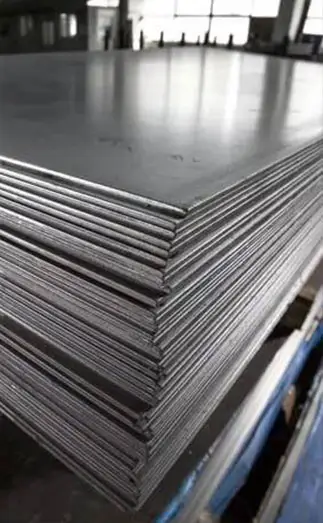
In the steel industry, 304 stainless steel plate is one of the most widely used austenitic stainless steel materials. It is extensively applied in chemical processing plants, oil refineries, natural gas facilities, and wastewater treatment systems, where materials must withstand demanding operating conditions. Thanks to its reliable performance, 304 stainless steel plate helps extend equipment service life while reducing long-term maintenance and replacement costs.
One of the most notable features of 304 stainless steel sheet is its excellent corrosion resistance, which primarily comes from its high chromium content. When exposed to oxygen, chromium reacts to form a dense and stable chromium oxide film on the surface of the steel. This passive layer effectively isolates the base metal from moisture, chemicals, and mild acids, significantly slowing down corrosion.
As a result, 304 stainless steel plate is particularly well suited for applications that involve frequent exposure to humid environments, chemicals, or corrosive media.
What Is 304 Stainless Steel Plate?
304 stainless steel plate is a general-purpose stainless steel grade known for its balanced combination of strength, corrosion resistance, and fabrication performance. It typically contains approximately 18% chromium and 8% nickel, providing strong resistance to rust, oxidation, and many chemical agents.
With a density of about 7.93 g/cm³, 304 stainless steel can maintain stable mechanical properties at temperatures of up to 800°C. In addition, it offers excellent formability and toughness, allowing it to be easily cut, welded, bent, and shaped without compromising structural integrity.
Because of its durability, hygienic surface, and clean appearance, 304 stainless steel sheet is widely used in medical equipment, food processing machinery, kitchenware, architectural components, and decorative applications.
Applications of 304 Stainless Steel Plate in Construction
As a corrosion-resistant, visually appealing, and highly practical material, 304 stainless steel sheet is widely adopted in the construction industry.
1. Building Exterior Walls
304 stainless steel sheet is frequently used for exterior wall cladding and architectural facades. Its resistance to atmospheric corrosion, heat, and environmental aging allows it to withstand harsh weather conditions while maintaining a long service life and modern appearance.
2. Interior Decoration
In interior spaces, 304 stainless steel sheet is commonly applied to wall panels, ceilings, stair railings, and flooring elements. It enhances interior design with a clean, modern, and high-end aesthetic while remaining easy to maintain.
3. Doors, Windows, and Railings
Due to its high strength, corrosion resistance, and ease of cleaning, 304 stainless steel sheet is widely used in door and window frames, handrails, and protective barriers in residential and commercial buildings.
4. Roofing and Roof Drainage Systems
304 stainless steel sheet is also suitable for roofing structures and roof drainage systems, where it resists weather erosion and ensures long-term safety and dryness of the building interior.
Applications of 304 Stainless Steel Plate in the Food Industry
304 stainless steel sheet is widely recognized as a food-grade stainless steel, playing an indispensable role in the food processing industry. It is commonly used to manufacture food processing tables, mixers, conveyors, storage tanks, cooking equipment, and processing vessels.
Its corrosion resistance, smooth surface, ease of cleaning, and non-toxic characteristics help prevent food contamination, ensuring strict compliance with food safety and hygiene standards.
Applications of 304 Stainless Steel Plate in Chemical Equipment
In the chemical equipment industry, where materials are required to withstand aggressive chemical environments, 304 stainless steel plate is often the preferred choice due to its excellent chemical stability.
It is widely used in the fabrication of storage tanks, reaction vessels, pipelines, valves, heat exchangers, and related components. 304 stainless steel plate can resist corrosion from most acids, alkalis, and salts, and it maintains stable performance during long-term operation in environments with a pH range of approximately 2 to 9.
Are the Applications of 304 and 316 Stainless Steel Plates the Same?
304 and 316 stainless steel plates share many overlapping applications, including architectural decoration, food processing equipment, and general chemical machinery. However, their corrosion resistance differs.
304 stainless steel is suitable for indoor, dry, or general outdoor environments, while 316 stainless steel contains added molybdenum, giving it superior resistance to chlorides and harsh chemicals. As a result, 316 stainless steel is more suitable for marine environments, coastal areas, high salt-spray conditions, and strongly corrosive chemical applications.
Summary
Beyond the major applications discussed above, 304 stainless steel sheets are also widely used in automotive manufacturing, where they serve in exhaust systems, body components, windshield wipers, and mufflers. In the furniture industry, they are applied to frames, bases, drawer slides, and structural components, offering wear resistance, oxidation resistance, and long-term durability.
With its excellent overall performance, 304 stainless steel plate has become a cornerstone material in modern industry. As technology advances and application scenarios continue to expand, 304 stainless steel is expected to demonstrate even greater potential in emerging fields such as new energy, biomedicine, and electronic information industries.
FAQ
Q1: Is 304 stainless steel plate suitable for outdoor use?
Yes. 304 stainless steel plate performs well in general outdoor environments with normal humidity and atmospheric exposure. However, in coastal or high-salt environments, 316 stainless steel is usually recommended for better corrosion resistance.
Q2: Can 304 stainless steel plate be welded easily?
Yes. 304 stainless steel has excellent weldability and can be welded using common welding methods without significant loss of corrosion resistance or mechanical properties.
Q3: Is 304 stainless steel safe for food contact applications?
Yes. 304 stainless steel is widely recognized as food-grade material. Its non-toxic nature, smooth surface, and corrosion resistance make it suitable for direct contact with food and beverages.


 English
 Español
 Français
 بالعربية